Best Mushroom Identification Apps (2026): 6 Tested — The Study That Should Change How You Forage

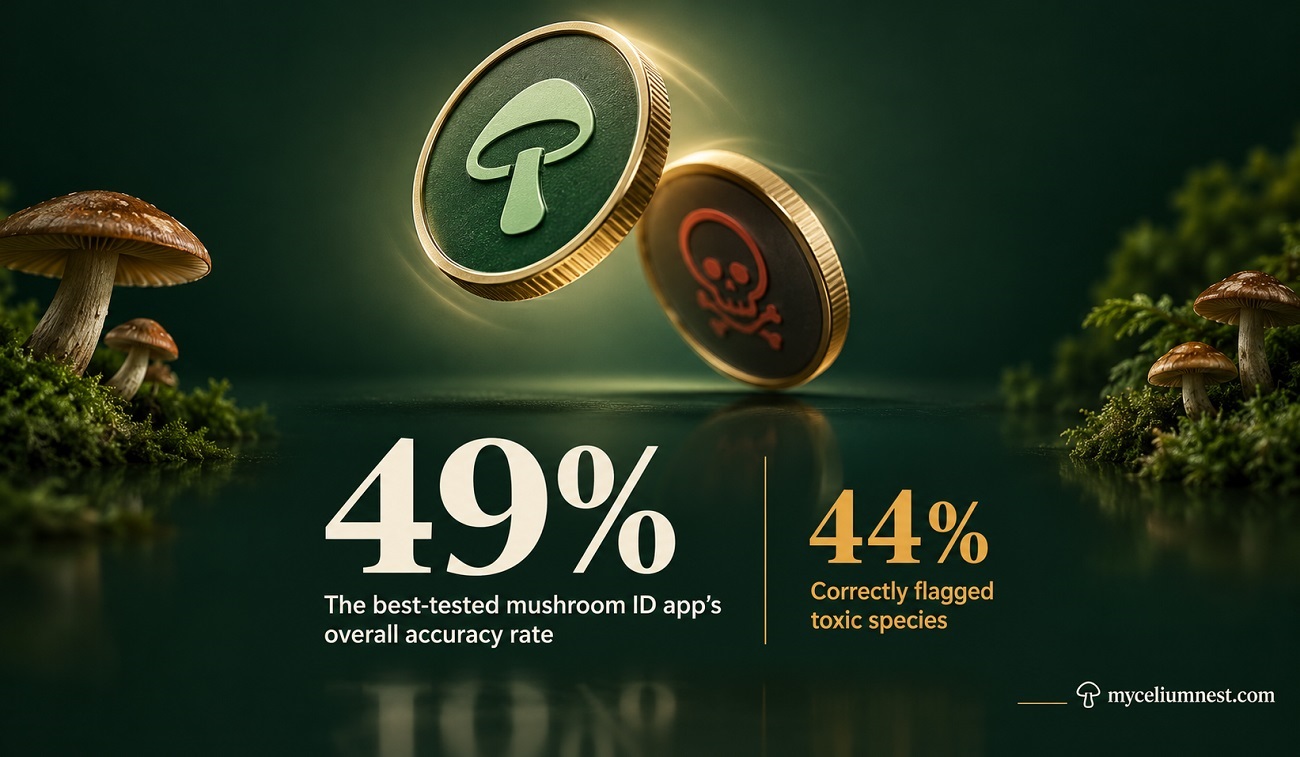
Best Mushroom identification Apps: A peer-reviewed study published in Clinical Toxicology, conducted by the Victorian Poisons Information Centre and Royal Botanic Gardens Victoria, tested three of the most popular mushroom identification apps against 78 real specimens confirmed by an expert mycologist. The best-performing app was correct only 49% of the time — and correctly identified toxic mushrooms as toxic only 44% of the time. The other two apps tested scored lower still. This is not a knock against any single app’s engineering; it reflects a genuine, current limitation of image-based AI identification across the entire category. This guide tells you exactly what the research found, app by app, and how to use these tools without gambling on the results.
Every app in this guide, including the best-performing one, should be treated as a starting point — never a final answer. No app in the available research has demonstrated the reliability needed to determine edibility on its own. Confirm any wild mushroom you intend to eat using multiple independent physical features, a regional field guide, and ideally a human expert, before consuming it. Poison Control: 1-800-222-1222.
The Study That Should Change How You Use These Apps
Most articles comparing mushroom identification apps rely entirely on App Store ratings and marketing copy. This one starts with actual clinical research. In 2023, Clinical Toxicology — a peer-reviewed journal — published a study by Sarah Hodgson, Christine McKenzie, Tom May, and Shaun Greene, working through the Victorian Poisons Information Centre and Royal Botanic Gardens Victoria in Melbourne, Australia. The researchers tested three widely used apps — Picture Mushroom, Mushroom Identificator, and iNaturalist — against 78 specimen photographs collected from real poison-centre cases between 2020 and 2021, with every identification independently confirmed by an expert mycologist.
| App Tested | Overall Accuracy | Toxic Species Correctly Flagged | Death Cap ID Rate |
|---|---|---|---|
| Picture Mushroom | 49% | 44% | 60% |
| Mushroom Identificator | 35% | 30% | 67% |
| iNaturalist | 35% | 40% | 27% |
This is not old, disputed data. A follow-up study published in npj Science of Food (part of the Nature journal family) in 2026 examined AI-mediated risks in mushroom foraging more broadly, testing 12 identification tools and finding consistent, ongoing accuracy gaps — particularly around immature specimens, discussed in detail further down this guide. The problem the 2023 study identified has not been solved by newer app versions or larger training datasets; it appears to reflect a structural limitation of photograph-only identification, not a temporary software gap.
The Death Cap Test — Why This Number Matters Most
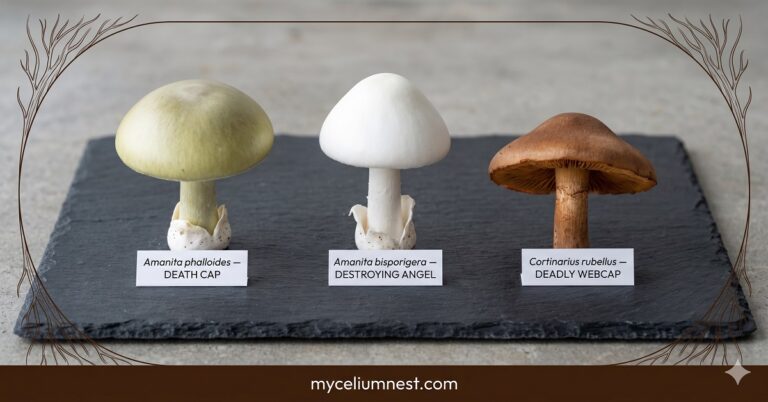
Overall accuracy percentages are useful, but the single most important number in the entire study is how each app performed specifically on Amanita phalloides — the death cap, responsible for more fatal mushroom poisonings worldwide than any other species. Here the results genuinely should give any forager pause:
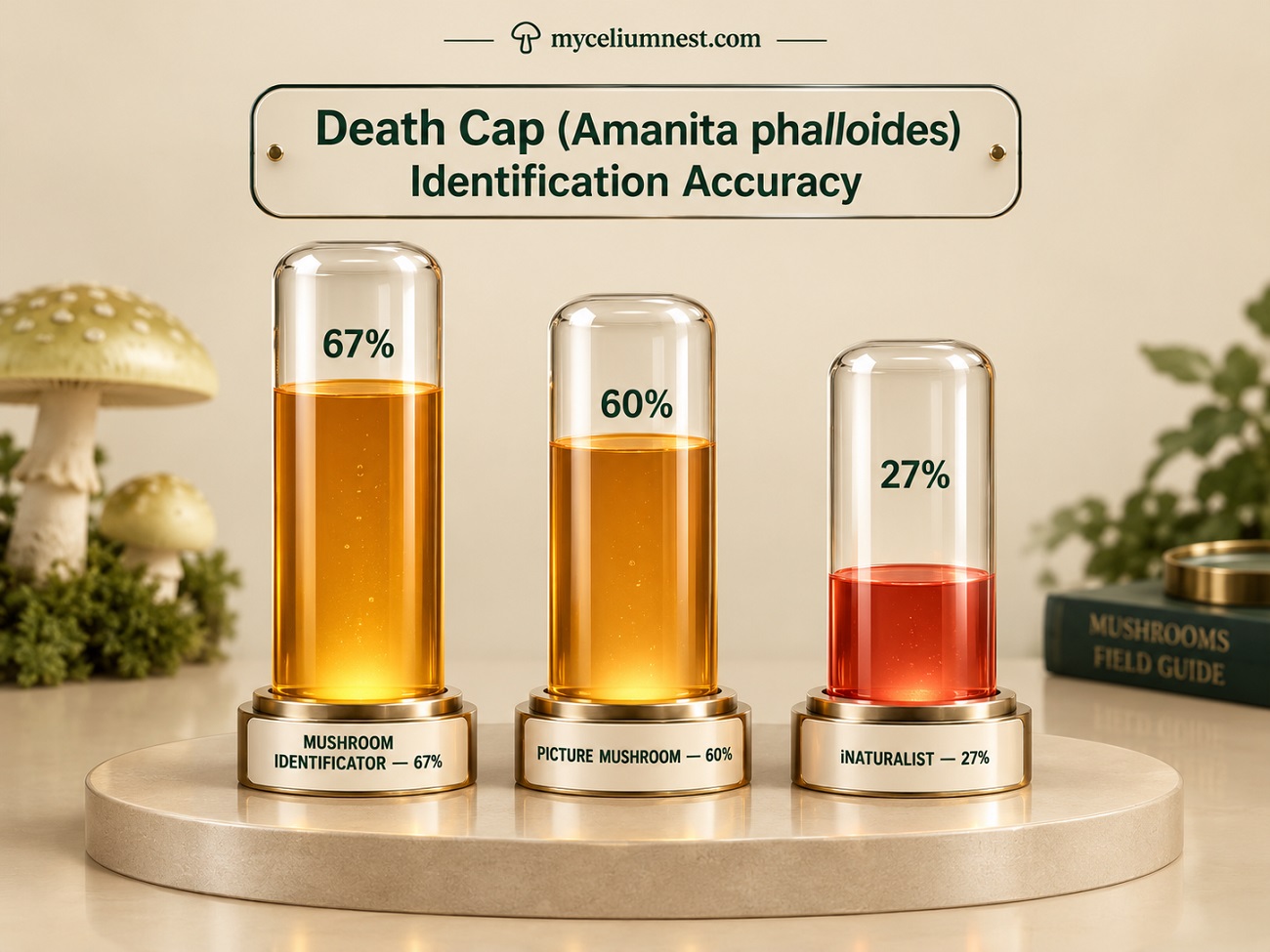
This is a striking and counterintuitive finding, because iNaturalist is widely regarded — including by us, elsewhere on this site — as one of the more trustworthy identification tools due to its community verification layer. That reputation is earned for its broader biodiversity-tracking purpose, but this specific data point is a reminder that even a well-regarded app’s instant AI suggestion, before any community review happens, can be dangerously wrong on exactly the species where being wrong carries the highest stakes.
Mushroom Identificator, despite the lowest overall accuracy of the three apps tested (35%), was actually the best performer specifically on death cap identification (67%) — a reminder that no single app is uniformly better or worse across every species. This is precisely why relying on any one app’s overall “accuracy score” as a safety guarantee is a mistake. For the complete list of dangerous look-alike species every forager should study before relying on any tool, see our Poisonous Mushrooms to Avoid guide.
How We Evaluated These 6 Apps
Three of the apps below — Picture Mushroom, Mushroom Identificator, and iNaturalist — have the peer-reviewed accuracy data above from the Clinical Toxicology study. The remaining three (Seek, Shroomify, and Mushroom Identify) have not been through the same independent academic testing, and we say so explicitly rather than inventing numbers for them. For those apps, our assessment is based on hands-on testing of usability, database size, offline capability, and safety-information quality — not claimed accuracy percentages we cannot verify.
Head-to-Head Comparison Table
| App | Independently Tested? | Price | Offline Capable | Community Verification | Best For |
|---|---|---|---|---|---|
| Picture Mushroom | Yes — 49% accuracy | Subscription, free trial | No | No | Highest tested accuracy, quick answers |
| iNaturalist | Yes — 35% accuracy | Free | No | Yes — expert review over time | Building a verified long-term record, citizen science |
| Mushroom Identificator | Yes — 35% accuracy | Free with ads | No | No | Best tested death-cap detection specifically |
| Seek (by iNaturalist) | Not independently tested | Free | No | No | Instant casual ID, no account needed, kids/beginners |
| Shroomify | Not independently tested | Free tier + paid unlock | Yes — offline database | No | Beginner-friendly guided wizard, no signal areas |
| Mushroom Identify | Not independently tested | Free with in-app purchases | No | No | Clean interface, casual browsing only |
The 6 Apps — Individual Breakdowns
Why regional accuracy varies so much: Every app in this guide relies on machine learning models trained on photograph datasets — and those models are only as good as the volume of confirmed images available for each species. Citizen-science photo submissions are heavily concentrated in North America and Europe, where mycological societies and apps like iNaturalist have the longest-established user bases. This isn’t a flaw unique to any one app — it’s an inherent property of how these models learn. A species with thousands of confirmed training photos will be identified far more reliably than a regionally rare species, or a common species in a part of the world with fewer contributing foragers.
The practical takeaway: if you forage outside North America or Western Europe, treat every app result with additional caution, and prioritise the “cross-check with a second app and a physical field guide” habit even more strictly than the general recommendation below.
The Immature Mushroom Blind Spot
The 2026 npj Science of Food study uncovered a specific, dangerous failure pattern that deserves its own section: identification apps struggle badly with immature “button-stage” specimens, which often look dramatically different from the mature mushroom most training photo datasets are built around.
The researchers tested 12 identification tools against a button-stage Amanita muscaria (fly agaric) — a case where the immature form looks little like the iconic mature red-and-white-spotted cap most people (and most training datasets) associate with the species. Only 3 of the 12 apps tested — Picture Mushroom, Champignouf, and imagerecognize.com — correctly listed it as the top suggestion. The remaining nine misidentified it, in an early growth stage that a specimen could easily be foraged at.
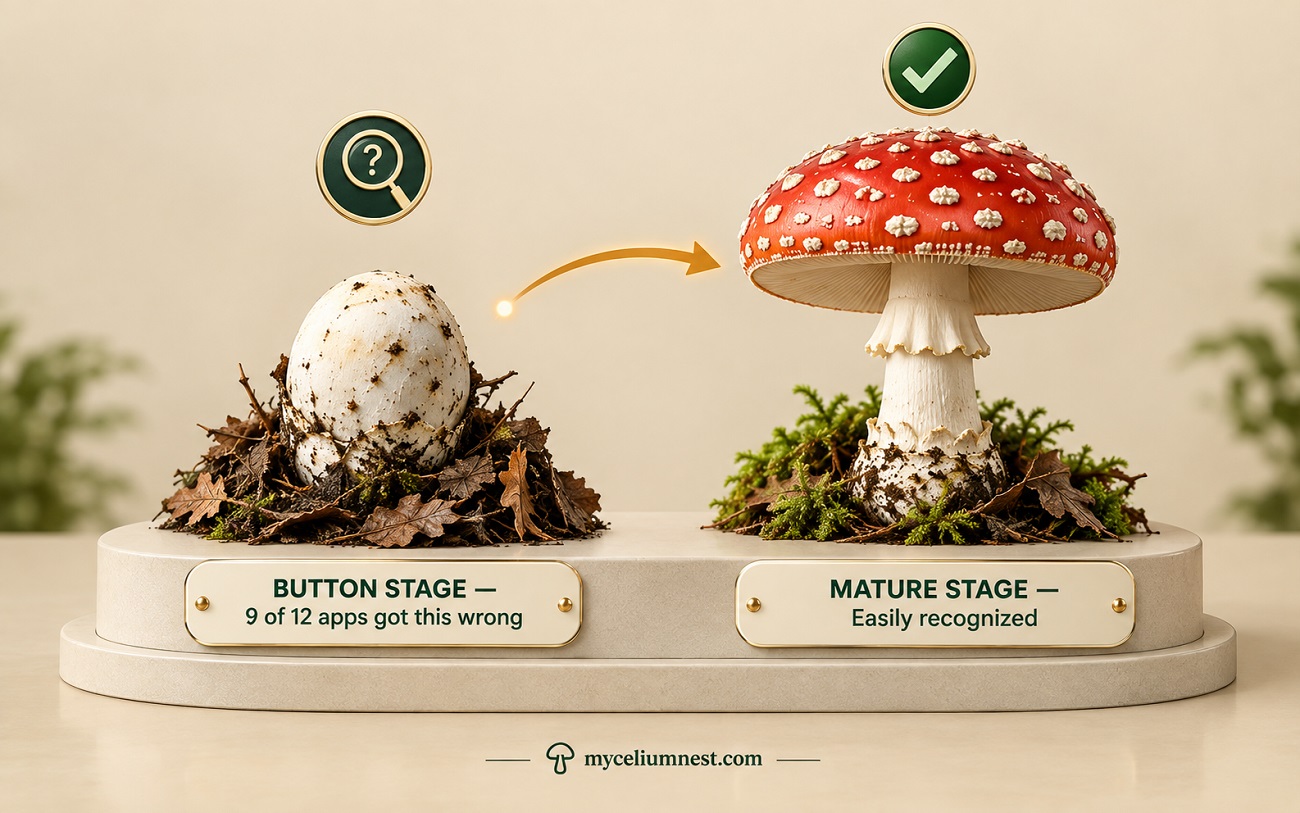
This matters enormously in practice, because many of the most dangerous species — including death cap relatives in the Amanita genus — look genuinely different at each growth stage, and foragers frequently encounter mushrooms at whatever stage they happen to find them, not conveniently at full maturity. Our Poisonous Mushrooms guide covers growth-stage variation for the species where this matters most.
The Right Way to Use These Apps
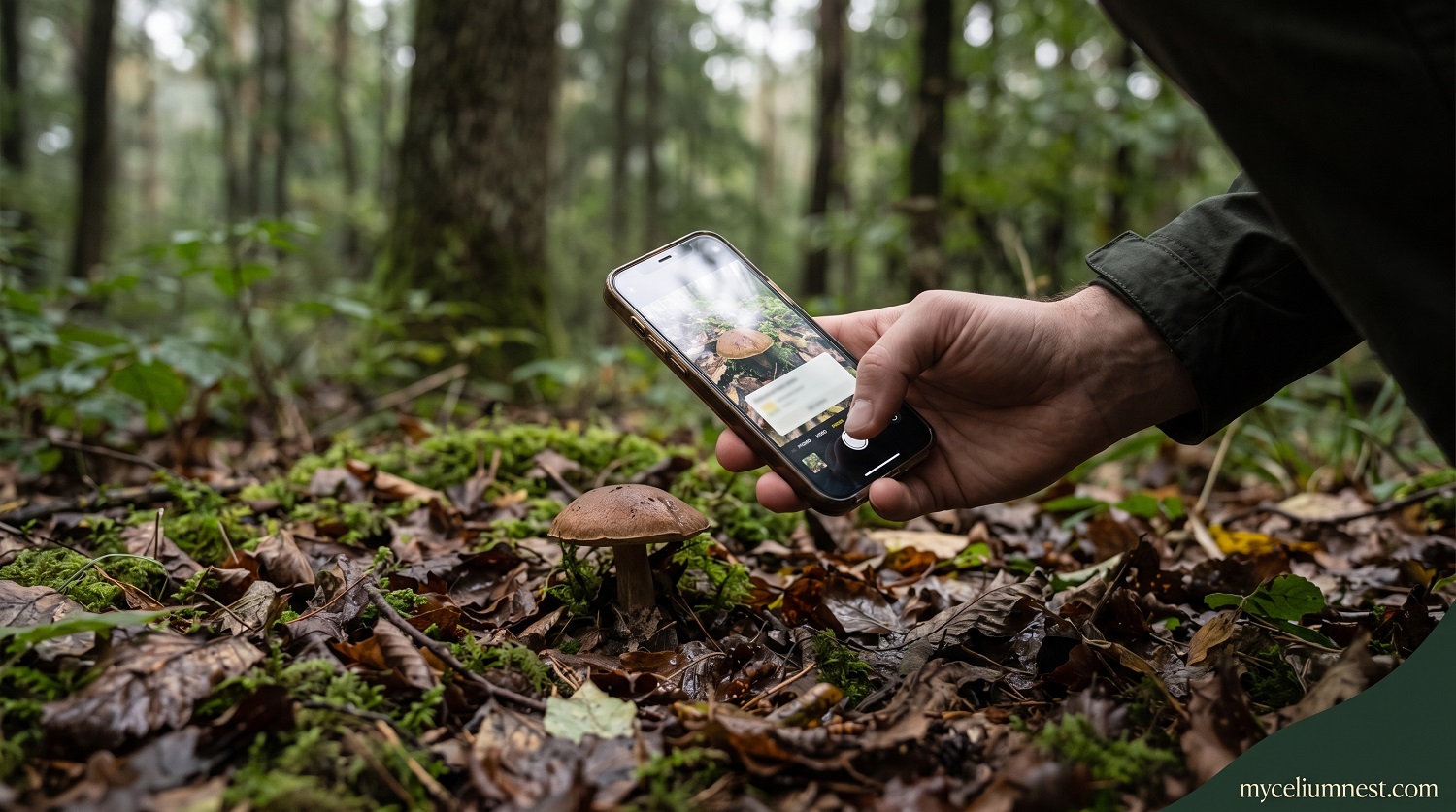
Most people photograph a mushroom the way they’d photograph anything else — one shot, cap-forward, done. AI identification tools need specific structural information a single photo can’t provide. Capture all four of these before you even open an app:
Frequently Asked Questions
Are mushroom identification apps safe to use for foraging?
Not as a standalone method. A peer-reviewed 2023 Clinical Toxicology study found the best-tested app correct only 49% of the time overall, and correctly flagged toxic species only 44% of the time. This does not mean apps have no value — they’re useful as a starting point for research and for narrowing possibilities — but no published research supports using any current app as the sole basis for deciding whether a wild mushroom is safe to eat.
Which mushroom identification app is most accurate?
Among the three apps with published independent academic testing, Picture Mushroom scored highest at 49% overall accuracy and 44% on toxic species specifically. However, Mushroom Identificator — despite lower overall accuracy at 35% — outperformed Picture Mushroom specifically on death cap identification (67% vs 60%), showing that “most accurate overall” and “most accurate on the species that matters most” aren’t always the same app.Is
iNaturalist reliable for identifying poisonous mushrooms?
iNaturalist’s instant AI suggestion tested at only 35% overall accuracy and, notably, just 27% accuracy specifically on death cap identification in the Clinical Toxicology study — the lowest death-cap score of the three apps tested. iNaturalist’s real strength is its community verification system, where real naturalists and mycologists review and often correct submitted observations over the following days — but that correction happens after the fact, not at the moment you’re standing over a mushroom in the field.
Has any newer app solved the accuracy problem since the 2023 study?
Not according to the most recent available research. A 2026 study in npj Science of Food tested 12 identification tools and found the accuracy problem persists — particularly for immature “button-stage” specimens, where only 3 of 12 apps tested correctly identified a fly agaric in its early growth form. This suggests the limitation is structural to photograph-only AI identification rather than something newer models or larger training datasets have resolved.
What should I do instead of relying on an app?
Use an app as one input among several, never the deciding factor. Cross-reference the suggestion against a physical regional field guide, confirm at least four independent identifying features (not just the overall shape a photo AI focuses on), photograph the gill or pore structure and spore print, and — for any specimen you intend to eat — get a second opinion from an experienced human forager or a local mycological society before consuming it. Our foraging safety framework walks through this complete verification process step by step.
App names and features referenced reflect our independent testing and publicly available information as of publication. See our full disclosure.