Black Trumpet Mushroom Identification: How to Find the “Invisible” Mushroom

Black trumpets (Craterellus cornucopioides) are called “the poor man’s truffle” by French chefs and sell for $60–120 per pound fresh — yet they fruit abundantly in beech-oak forests across North America and Europe. They are one of the safest wild mushrooms to identify: no dangerous lookalikes exist anywhere in their range. The challenge is purely visual — black trumpets are one of the most camouflaged organisms on earth, and most foragers walk past thousands of them every season without ever noticing a single one.
Black Trumpet Identification: All Key Features
Black trumpet identification is refreshingly straightforward once you know the species — the challenge is finding them, not identifying them. There is genuinely no other common wild mushroom in North America that looks like a black trumpet:
The “Get Low” Technique: How to Actually Find Black Trumpets
This is the most important practical knowledge in this entire guide — and it’s the knowledge that separates foragers who find black trumpets every season from those who spend years in the right habitat finding nothing.
Why You Walk Past Them
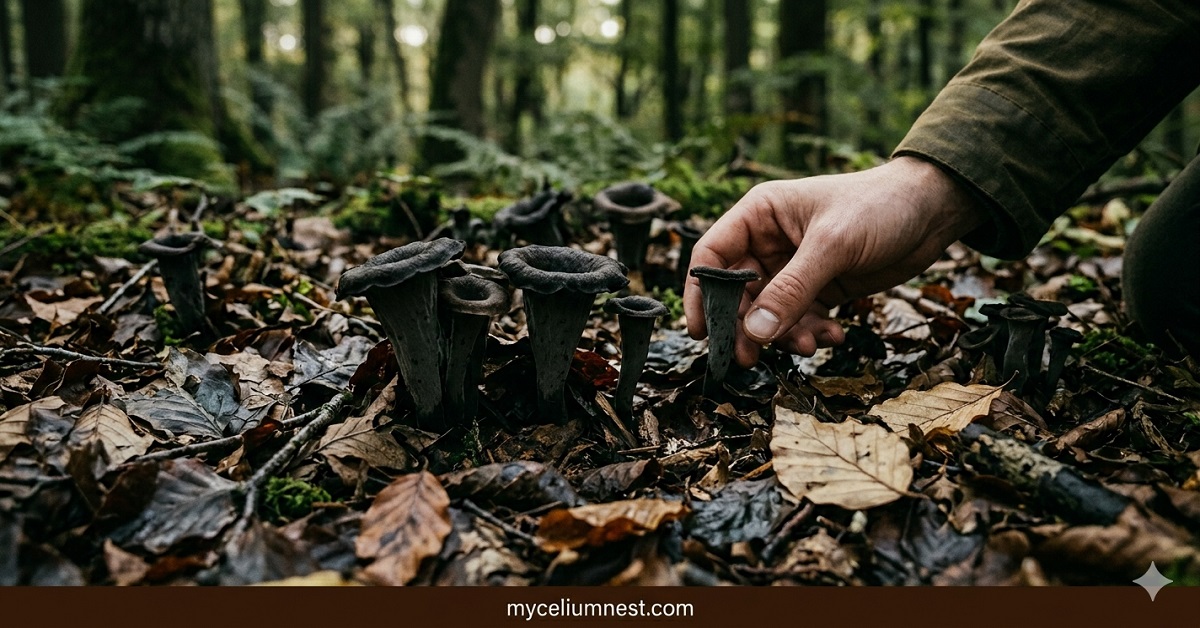
Black trumpets are the same colour as wet dead leaf litter — dark grey to near-black. Their trumpet shape, when viewed from above and filled with fallen leaves, looks exactly like a small depression in the forest floor. Their clustered growth habit makes them appear as a patch of dark soil. From standing height, in dappled light, they are functionally invisible against a forest floor of decomposing beech leaves.
The Technique
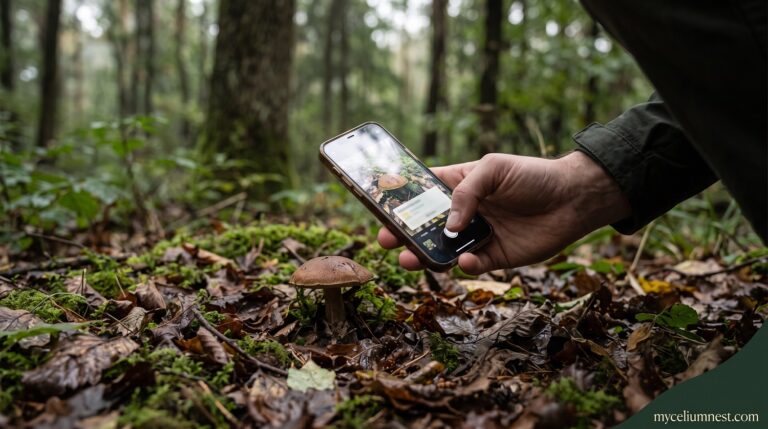
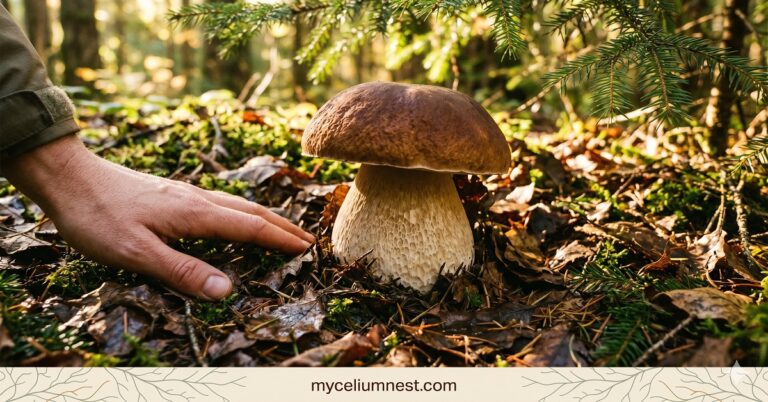
Walk slowly through likely habitat (beech-oak forest with mature trees, summer to autumn). Every 20–30 metres, stop and get down to ground level. Crouch, kneel, or lie prone if necessary. Look horizontally across the forest floor rather than down at it.
At ground level, several things change that make black trumpets suddenly visible:
- The trumpet shapes become three-dimensional and cast visible shadows against the lighter background beyond them
- The lighter grey outer surface of the trumpets catches side light and appears distinctly lighter than the dark wet leaf litter around them
- The clustered growth pattern creates a distinctive “patch” of raised shapes that is recognisable as non-leaf-litter from this angle
Once you find your first patch and get down to see it from ground level, something permanently changes in how you scan forest floors. Your visual system learns the specific shape and contrast pattern. After your first confirmed find, you will start seeing black trumpets from standing height that you would previously have walked past without noticing.
Habitat, Timing & The Chanterelle Connection
One of the most productive search strategies for black trumpets is to look for them in locations where you have previously found chanterelles. The two species share overlapping habitat preferences — mature beech-oak forests, moderate moisture, mycorrhizal tree associations — and often appear within metres of each other. If you find chanterelles in a location, always drop to ground level and do a systematic ground-level scan of the surrounding area. Black trumpets may be fruiting abundantly within arm’s reach of your chanterelle patch.
For more on chanterelle identification and habitat in those shared forest types, see our chanterelle identification guide.
| Region | Peak Season | Trigger Conditions |
|---|---|---|
| Eastern US & Northeast | July–September | Warm summer rain events in established beech-oak forest |
| Pacific Northwest | October–January | First autumn-winter rains in mixed hardwood forest |
| UK & Western Europe | August–November | Late summer through autumn in mature beech woodland |
Why Black Trumpets Have No Dangerous Lookalikes
Black trumpets are genuinely one of the safest edible mushrooms for beginners to forage because the combination of features — hollow trumpet shape, dark grey-black colour, smooth outer surface, growth from forest floor near beech — does not occur in any toxic or dangerous species in North America or Europe.
The most commonly confused species:
- Craterellus fallax (American Black Trumpet): So closely related to C. cornucopioides that they were considered the same species until recently. Equally edible and desirable. The primary field difference is spore print colour (salmon-tinged in C. fallax). Not relevant to edibility.
- Old Chanterelle stems: Darkened, withered chanterelle stems can occasionally resemble small black trumpets from a distance. Close examination confirms the chanterelle’s characteristic forking ridges (false gills) vs. the smooth outer surface of black trumpets.
Flavour Profile & Preservation
Black trumpets have one of the most complex flavour profiles of any wild mushroom — often described as smoky, earthy, and slightly floral, with the most accurate comparison being a mushroom-truffle hybrid flavour. French cuisine has used them as a truffle extender for centuries, and the comparison is apt: like truffles, their flavour is almost more aromatic than it is on-palate — the nose carries the experience as much as the taste.
Drying amplifies everything: Dried black trumpets concentrate their volatile aromatic compounds dramatically. One ounce of dried black trumpets imparts more flavour to a dish than four ounces of fresh. Dry at 45–50°C in a dehydrator until completely desiccated and store in airtight jars. Powdered dried black trumpet is one of the most versatile finishing ingredients in a serious kitchen — add to butter, pasta water, cream sauces, or directly to scrambled eggs.
The mycological community that can help you find your first black trumpets: the North American Mycological Association (namyco.org) hosts regional forays in beech-oak forest habitat where experienced guides know exactly where to look — and how to look.
Frequently Asked Questions
Are black trumpets and horn of plenty the same mushroom?
Yes — horn of plenty is the English common name for the same species, Craterellus cornucopioides. The name comes from the Latin cornucopia (horn of plenty), referencing the trumpet shape. Other regional names include black chanterelle, trompette de la mort (French — “trumpet of death,” a dramatic name for a perfectly safe mushroom), and winter chanterelle. All refer to the same species complex.
How long do black trumpets keep fresh?
Black trumpets keep surprisingly well compared to most wild mushrooms — 5–8 days refrigerated in a paper bag, loose. They are naturally resistant to the rapid deterioration that affects chanterelles, oysters, and other species. This makes them excellent market mushrooms — one reason they command premium prices. However, given the intensity of their dried form and the storage advantage, we recommend drying any harvest beyond what you’ll consume within 3 days.
Always verify identifications with a regional field guide before consuming any wild mushroom. See our full disclosure.