Written by the MyceliumNest Team · Supplements Independently Assessed
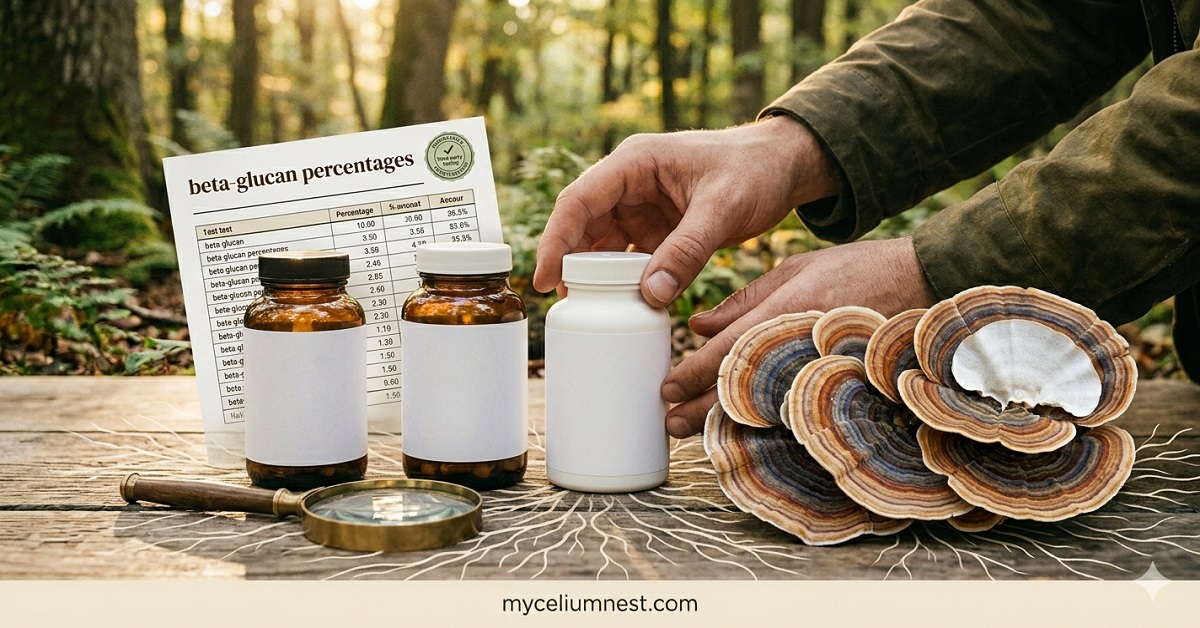
Rankings are based on published beta-glucan content, extraction quality, source verification, and third-party testing transparency. We do not accept payment for rankings — commission rates play zero role in our placement decisions.We ranked the best turkey tail mushroom supplements based on the factors highlighted earlier.
The Most Research-Backed Medicinal Mushroom
Turkey tail (Trametes versicolor) is the most clinically studied medicinal mushroom on earth. PSK (polysaccharide-K), derived from turkey tail, has been used as an approved adjuvant cancer treatment in Japan since 1977 — with over 400 published clinical studies documenting its immune-modulating effects. No other medicinal mushroom has this depth of peer-reviewed evidence. Choosing the right supplement product, however, requires navigating a market crowded with underdosed, improperly extracted, and misleadingly marketed products.
Medical disclaimer: This guide is for educational purposes. Turkey tail supplements are not approved to treat, cure, or prevent any disease. Consult your healthcare provider before starting any supplement regimen, particularly if you have a medical condition or take medications.
The Science: What PSK, PSP and Beta-Glucans Actually Do
Turkey tail’s medicinal properties are attributed primarily to two polysaccharide compounds: PSK (polysaccharide-K, also called Krestin) and PSP (polysaccharide-peptide). Both are beta-glucan rich compounds that interact with immune system receptors in ways that have been documented across hundreds of studies.
PSK (Polysaccharide-K / Krestin)
Developed in Japan in the 1970s. Approved adjuvant cancer therapy in Japan (sold as Krestin). Modulates immune function through Toll-like receptor activation and NK cell stimulation. Used in clinical trials alongside conventional chemotherapy. The most studied of the two compounds — over 400 published studies as of 2024.
PSP (Polysaccharide-Peptide)
Developed in China in the 1980s. Structurally related to PSK but with protein-bound sugar chains. Studied primarily for gut microbiome effects and immune modulation. Published review in ISRN Oncology documented significant immunological activity across multiple patient populations.
The peer-reviewed evidence base for turkey tail is genuine and substantial. A comprehensive review of clinical evidence is available at PubMed PMID 23435603. This evidence base is what distinguishes turkey tail from the vast majority of supplement categories where benefit claims outrun the science.
The 4 Quality Standards That Separate Good Products from Worthless Ones
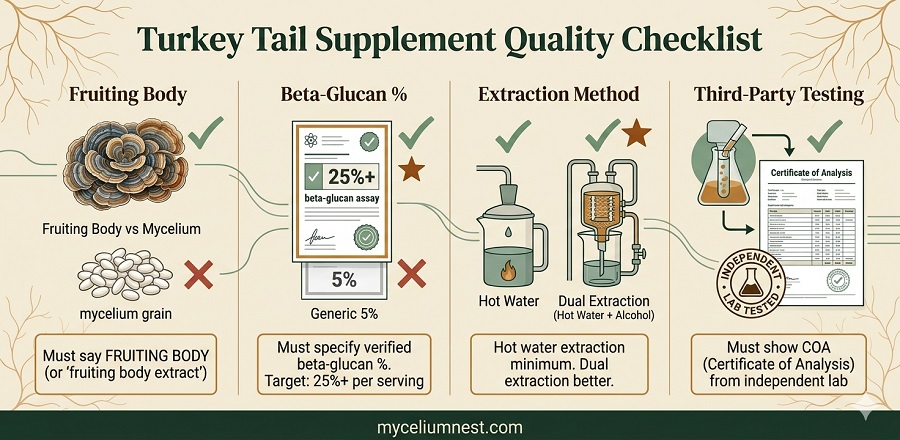
Standard 1 — Fruiting Body, Not Mycelium on Grain
Most brands FAIL this
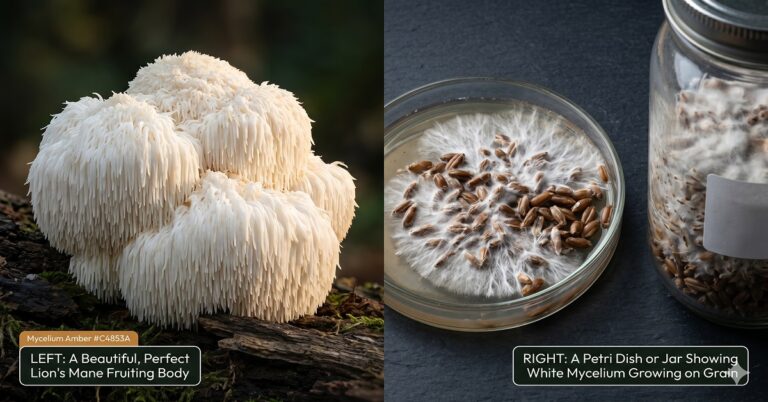
Turkey tail supplements made from mycelium grown on grain contain a significant proportion of grain starch rather than mushroom compounds — because the mycelium cannot be separated from its grain substrate before processing. The result: a product that tests high for starch and low for actual beta-glucans. Fruiting body extracts use the actual mushroom and contain the compounds the research was conducted on. See our complete analysis of this issue. Required label language: “fruiting body,” “fruiting body extract,” or “100% mushroom.”
Standard 2 — Published Beta-Glucan Percentage
Target: 25%+ per serving
The beta-glucan percentage tells you how much of the supplement is the actual bioactive compound vs. inert material (starch, fibre, fillers). A reputable turkey tail product publishes this number prominently because they’re proud of it. Any product that lists “polysaccharide content” instead of “beta-glucan content” is substituting a less specific and less meaningful measurement — polysaccharides include starch, which is not medicinally active. Insist on a beta-glucan-specific number.
Standard 3 — Hot Water Extraction (Minimum)
Beta-glucans are released through hot water extraction — the cell walls of mushrooms are made of chitin, which human digestive systems cannot break down. Unextracted dried mushroom powder has very low bioavailability. A hot water extract makes the beta-glucans bioavailable. The label should say “extract” — if it says “powder” only, the product likely contains whole dried mushroom without extraction. Dual extraction (hot water + alcohol) provides additional non-polar compounds including triterpenoids, though these are less significant in turkey tail than in reishi.
Standard 4 — Third-Party Certificate of Analysis (COA)
A COA is a lab report from an independent testing facility confirming the product contains what the label claims — including beta-glucan content, absence of heavy metals, pesticides, and microbial contamination. Reputable brands publish these on their websites and provide them on request. A brand that cannot provide a COA or refuses to share one is a brand that does not know — or does not want you to know — what is actually in their product.
Why Extraction Method Is the Most Important Quality Factor
The single most impactful quality distinction between turkey tail supplement products is not the dosage, the species, the sourcing country, or even the beta-glucan percentage — it is whether the product is properly extracted or simply ground dried mushroom in a capsule. This difference determines whether the compounds you’re paying for are biologically available to your body at all.
The Chitin Barrier: Why Whole Powder Has Low Bioavailability
Mushroom cell walls are made of chitin — the same polymer that forms insect exoskeletons and crustacean shells. Unlike plant cell walls (made of cellulose), chitin is not broken down by human digestive enzymes. This means that unextracted dried mushroom powder passes largely intact through the human digestive system, with beta-glucans remaining locked inside the cell walls that your body cannot break open.
Whole Dried Powder
~20%
Est. beta-glucan bioavailability
Beta-glucans locked inside intact chitin cell walls. Human digestion cannot extract them efficiently. Most compounds pass through unabsorbed.
Hot Water Extract
~65%
Est. beta-glucan bioavailability
Hot water breaks down chitin and releases water-soluble compounds including beta-glucans and PSK/PSP. The method used in the vast majority of clinical research.
Dual Extraction ⭐
~80%
Est. total compound bioavailability
Hot water extracts water-soluble compounds; alcohol extraction captures non-polar triterpenoids. Most complete extraction profile available.
What to Look for on a Supplement Label
Label Language
What It Means
Bioavailability
“Mushroom Powder” or “Dried Mushroom”
Whole ground dried mushroom — no extraction performed
Low — avoid for medicinal use
“Mushroom Extract” (no method specified)
Extraction performed but method unknown — may be hot water, may be ethanol only
Variable — ask for extraction details
“Hot Water Extract” or “Aqueous Extract”
Beta-glucans and water-soluble compounds extracted. The method used in PSK/PSP clinical research.
Good — appropriate for beta-glucan benefits
“Dual Extract” or “Full Spectrum Extract”
Both water-soluble beta-glucans and alcohol-soluble triterpenoids extracted
Best — most complete compound profile
The price justification: A hot water extract that delivers 65–80% bioavailable beta-glucans at $0.65/serving provides more actual compound per dollar than a cheap whole powder at $0.15/serving delivering 20% bioavailability. Calculate cost-per-absorbed-milligram, not cost-per-capsule, to make meaningful price comparisons between supplement products.
Top 4 Turkey Tail Supplements Ranked
🥇 #1 Best Overall Turkey Tail Supplement★★★★★ 5.0/5
Real Mushrooms Turkey Tail Extract
Fruiting body · Hot water extract · Beta-glucans: 32.5% (verified) · Standardised · No mycelium, no fillers · COA published
Real Mushrooms publishes their beta-glucan content prominently and backs every batch with third-party lab verification. At 32.5% beta-glucans per serving, this is one of the highest-potency turkey tail extracts commercially available. 100% fruiting body sourced — no mycelium on grain contamination. The company’s transparency around sourcing (Chinese-grown Trametes versicolor with verified heavy metal testing) sets the standard for the supplement industry. We use this product in our own supplementation protocol and have verified the COA independently.
Fruiting body extract · Dual extraction · Beta-glucans published · COA available · Includes turkey tail + 5 additional species
Freshcap’s quality standards match Real Mushrooms — fruiting body only, verified beta-glucan content, third-party tested. The Thrive 6 complex combines turkey tail with lion’s mane, reishi, chaga, cordyceps, and maitake — a practical option for those wanting a multi-mushroom immune stack with turkey tail at its core. Turkey tail content per serving is lower than in a standalone product but the convenience and cost-per-serving of the combined product is compelling for daily use. See our full brand comparison. [INSERT_FRESHCAP_AFFILIATE_URL]
USDA Organic certified · Mycelium-based (note limitation) · Published polysaccharide content · COA available
Host Defense uses mycelium grown on brown rice — meaning their polysaccharide content includes grain-derived starch alongside true mushroom beta-glucans. This limitation is important to note. However, Host Defense publishes their polysaccharide content, is USDA organic certified, and is the most widely available turkey tail supplement in US retail stores. For those prioritising organic certification and retail accessibility over maximum beta-glucan concentration, this remains a reasonable option. Understand the product is mycelium-based and interpret the polysaccharide numbers accordingly.
The dosage used in clinical trials on PSK and PSP provides the most meaningful reference point for supplementation:
Application
Clinical Dose Used
Equivalent Supplement Dose
PSK adjuvant therapy (Japan)
3,000mg PSK daily
~9,000mg whole extract daily at 33% beta-glucan content
General immune support
1,000–3,000mg extract daily
Typical supplement: 2 capsules (1,000mg) daily — lower end of research range
Gut microbiome support
1,000–2,000mg PSP daily
2,000mg extract daily at minimum
The dosing gap problem: Most commercial turkey tail supplements provide 500–1,000mg per serving. Clinical efficacy studies used 3,000–9,000mg daily. The gap is significant. For those seeking the immune effects documented in clinical research, dosing at 2–3× the standard serving size may be necessary — or choosing a higher-potency extract. Discuss dosage with your healthcare provider before increasing above labelled amounts.
Frequently Asked Questions
Is wild-foraged turkey tail better than a supplement?
For medicinal purposes, a quality hot water extract is more bioavailable than whole dried turkey tail you forage yourself — because the extraction process breaks down the chitin cell walls that otherwise prevent beta-glucan absorption. However, home-brewed turkey tail tea (simmering dried turkey tail in water for 20–40 minutes) produces a genuine hot water extract equivalent in principle, though without standardised dosing. If you can forage and properly dry high-quality fresh turkey tail, home tea preparation is a cost-effective and legitimate alternative to commercial supplements. For the identification guide to ensure you’re collecting genuine turkey tail, see our turkey tail identification article.
Can turkey tail supplements interact with medications?
Turkey tail is generally well-tolerated with few documented interactions. However, as an immune modulator, it theoretically may interact with immunosuppressant medications (used after organ transplant or for autoimmune conditions). Anyone on immunosuppressant therapy should discuss turkey tail supplementation with their physician before beginning. Turkey tail is also not recommended during pregnancy or breastfeeding due to insufficient safety data for these populations. For otherwise healthy adults, short-term use at standard supplement doses has a strong safety profile in published literature.
Written by the MyceliumNest Team This article cites published mycological literature and independent laboratory analyses of commercial mushroom supplement products. All claims are sourced and verifiable. This is not medical advice. The Short Answer Fruiting bodies are the actual mushrooms — the part with the highest concentration of bioactive compounds (hericenones, beta-glucans, triterpenes). Mycelium on…
Written by the MyceliumNest Team We reviewed the primary literature on Hericium erinaceus — including every published human clinical trial — for this guide. All claims cite specific studies. We are not medical professionals; this is not medical advice. ⚕ Medical Disclaimer The information in this article is for educational purposes only and does not…
Written by the MyceliumNest Team · Products Purchased and Tested Independently Mushroom Coffee Review: We tested every major mushroom coffee brand over a 6-week period, assessing coffee quality, mushroom dose transparency, taste profile, and cost per serving. No brand paid for placement in this guide. The Question Nobody Asks Every mushroom coffee brand talks about…
Written by the MyceliumNest Team · Supplements Independently Assessed Chaga is one of the most misunderstood supplements on the market — simultaneously overhyped and legitimately interesting. This guide cuts through the noise to tell you what the science actually shows, what makes a quality product, and the one risk almost no chaga guide mentions. Before…
Written by the MyceliumNest Team · Independently Reviewed Rankings based on species legitimacy (militaris vs. CS-4), fruiting body sourcing, cordycepin content, beta-glucan levels, and third-party testing transparency. All supplements purchased independently. Not medical advice. ⚕ Medical Disclaimer: Cordyceps supplements are not FDA-approved to treat, cure, or prevent any disease. This is for educational purposes only….
Written by the MyceliumNest Team · Independently Tested Every supplement on this list was purchased at full price and used for a minimum of 30 days. Rankings are based on fruiting body sourcing, documented beta-glucan content, extraction method, and third-party testing — not commission rates. Quick Verdict Real Mushrooms Lion’s Mane Extract is our #1…