Written by the MyceliumNest Team
Portobello is the mushroom with the most undeserved reputation problems — waterlogged, dark-staining, disappointing. All of those problems are technique failures, not species failures. This guide addresses every one.
The Most Important Portobello Truth
Portobello Mushroom Recipes: Portobello is simply a mature crimini, which is a mature button mushroom — all Agaricus bisporus at different harvest stages. The deeply flavoured, dense, meaty experience that makes portobello the most popular “mushroom steak” candidate comes from its accumulated umami compounds during maturation. But portobello also has more water than most mushrooms, and if that water doesn’t cook out, the result is the notoriously soggy, bland portobello that gives this species a bad name.
The Gill Debate: Settled Once and For All
The most-asked portobello question: should you remove the dark gills before cooking? The answer is situation-dependent:
Leave Gills In — For These Uses
- Grilling whole caps on a barbecue (gills hold flavouring)
- Stuffed portobello (gills provide flavour base for the stuffing)
- Roasted portobello served whole as a main course
- Any recipe where the portobello is a standalone centrepiece and the dark colour is aesthetically acceptable
Remove Gills — For These Uses
- Any cream or white sauce application — gills turn everything dark purple-brown
- Portobello pasta where sauce colour matters
- Sandwiches and burgers where dark bleed-through on bun and toppings is unwanted
- Any recipe where visual presentation is critical
How to remove gills cleanly: Use a spoon and scrape from outer edge inward with light pressure. The entire gill layer lifts off cleanly in 10–15 seconds. Rinse lightly if needed. The scraped cap is now a clean, pale, neutral surface that won’t stain your sauces.
For the full nutritional breakdown of portobello (Agaricus bisporus), the USDA FoodData Central database provides complete data including the notable selenium and B vitamin content.
🔬
Science Note: Always Cook Your Portobello — The Agaritine Fact
✗ Raw Portobello — Limited Use
Raw Agaricus bisporus (buttons, criminis, and portobellos) contains agaritine — a hydrazine-class compound present in all Agaricus species. While the amounts in normal dietary consumption are small, agaritine is classified as a probable carcinogen in high concentrations by some regulatory bodies. Eating occasional raw mushroom in salads is not a meaningful risk for healthy adults — but it is the basis for the general culinary recommendation to cook Agaricus species rather than eat them raw habitually.
✓ Cooked Portobello — Recommended
Cooking destroys 50–90% of agaritine content depending on temperature and method. Sautéing, roasting, grilling, or any standard cooking method at normal temperatures reduces agaritine to trace levels with no meaningful dietary concern. The practical takeaway is simple and aligns with what every recipe in this guide recommends anyway: cook your portobello. Properly cooked portobello is nutritious, safe, and significantly more flavourful than raw.
Note: Oyster mushrooms, shiitake, lion’s mane, and other non-Agaricus species do not contain agaritine and have different raw-consumption safety profiles. This consideration is specific to the Agaricus genus.
The Portobello Water Problem — Solved
Portobello releases significant water during cooking — often so much that it stews in its own liquid rather than browning. The solution requires two steps:
- Pre-roast or microwave the cap for 3 minutes before the primary cooking method. This expels the majority of the portobello’s water before it can interfere with browning. Microwave 60 seconds on high, gill-side up, then blot dry. Or roast at 200°C for 4 minutes per side before finishing with your chosen technique.
- Salt liberally and rest 10 minutes before cooking. Salt draws surface moisture out through osmosis. Blot dry before the pan hits heat.
The Marinade Science: What Actually Penetrates vs What Just Sits on the Surface
Portobello’s firm, dense structure means that most marinades don’t penetrate beyond 2–3mm. The flavour you taste is almost entirely surface. This means marinade contact area matters more than marinade time. Maximize contact area by:
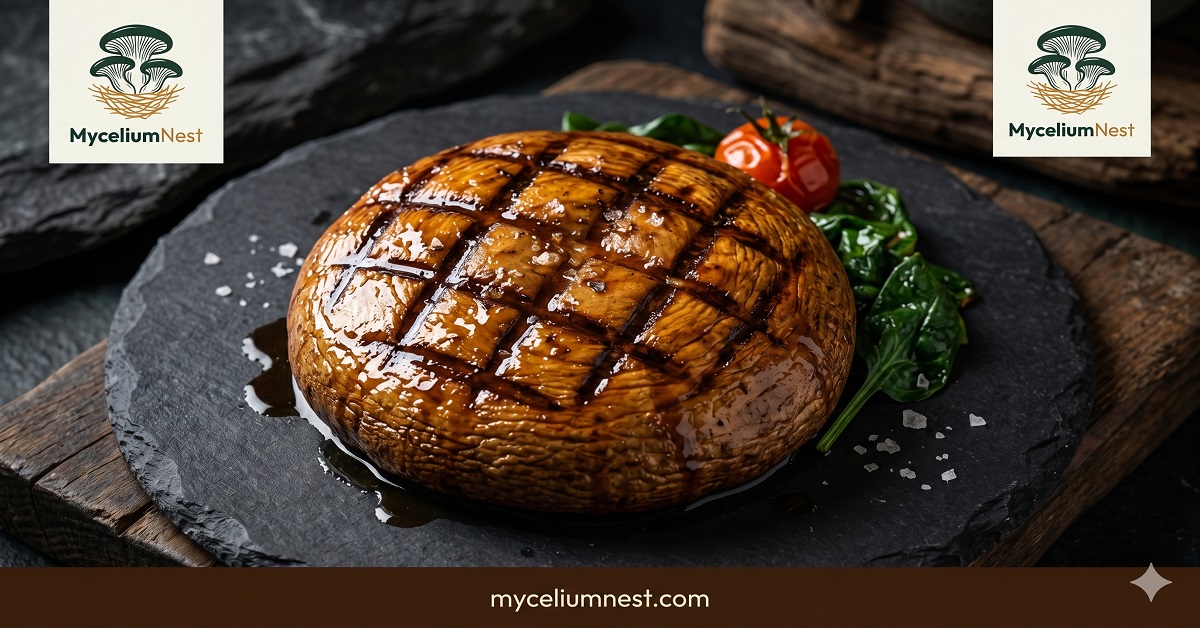
- Scoring the cap surface with crosshatch (5mm pattern) to increase surface area by ~40%
- Marinating gill-side down so the gill surface (more porous) has maximum contact
- Using acidic marinade components (balsamic vinegar, lemon, wine) which partially break down cell walls and allow slightly deeper penetration
Best portobello marinade formula: 3 tbsp balsamic vinegar, 2 tbsp olive oil, 1 tbsp soy sauce, 1 tsp Dijon mustard, 2 cloves garlic (grated), 1 tsp fresh thyme. Marinate 20–30 minutes minimum; overnight for deepest penetration on scored caps.
7 Portobello Recipes Worth Making
1. The Portobello Steak — The Main Course That Needs No Apology
Marinate large caps overnight in balsamic marinade. Pre-roast to expel water. Finish in screaming hot cast-iron, cap-side down first, 3 minutes each side. Baste with herb butter in final minute. Plate as a standalone main with roasted vegetables and a wine reduction. The combination of marinade depth, pre-roasting, and high-heat sear eliminates every portobello failure mode simultaneously.
2. Classic Stuffed Portobello
Remove stems and chop finely. Sauté stems with shallots, garlic, sun-dried tomatoes, and spinach. Add cream cheese and Parmesan. Fill caps and top with breadcrumbs. Roast at 200°C for 20 minutes. The cap forms a perfect bowl; the stuffing fills and slightly overflows. Serve with a simple green salad.
3. Portobello Burger
Remove gills to prevent bun staining. Marinate and grill on high heat. Serve on a brioche bun with aged cheddar (melted over the mushroom in the final minute of cooking), caramelised onions, rocket, and garlic aioli. The key detail most burgers miss: toast the bun cut-side down in the mushroom’s cooking butter — it soaks up the basting flavours and prevents the bun from becoming soggy from the mushroom moisture.
4. Portobello Fajitas
Slice caps into 1.5cm strips. Season with cumin, smoked paprika, chilli powder, garlic, salt. High-heat sauté with sliced peppers and onions until edges char. The key: cook in batches — a crowded pan produces steamed fajita filling, not charred. Serve in warm flour tortillas with guacamole, sour cream, pico de gallo, and lime.
5. Portobello Wellington
The centrepiece dish. Marinate and roast caps to expel moisture. Make mushroom duxelles from chopped portobellos, shallots, and herbs — cook until completely dry (this is critical — any moisture splits the pastry). Spread duxelles on puff pastry, place portobello cap, wrap and seal. Egg wash. Bake at 200°C for 25 minutes. The duxelles barrier protects the pastry from moisture while concentrating the mushroom flavour.
Real Mushrooms — Exclusive Discount
Use our link to save 15%–20% on all extracts. Third-party tested, beta-glucan verified.
Shop & Save 15%–20% →
🌱
Store-bought portobello arrives in plastic — the exact storage mistake
this guide warns against.
The waterlogged, rubbery portobello experience that gives this
species its poor reputation almost always traces back to plastic
packaging in transit — condensation damage before the mushroom
even reaches your kitchen. Home-grown portobello, harvested
at the right stage and cooked within hours, is a categorically
different ingredient. At $5–12/lb retail, it is also one of the
better value cultivation targets for a home setup.
Grow Your Own Portobello Mushrooms →
More Mushroom Recipe Guides
See our full disclosure.