Oyster Mushroom Recipes: 10 Quick & Irresistible Ways to Cook Them

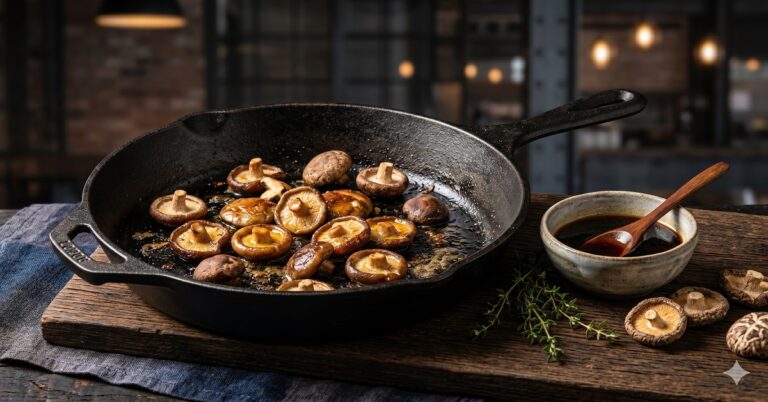
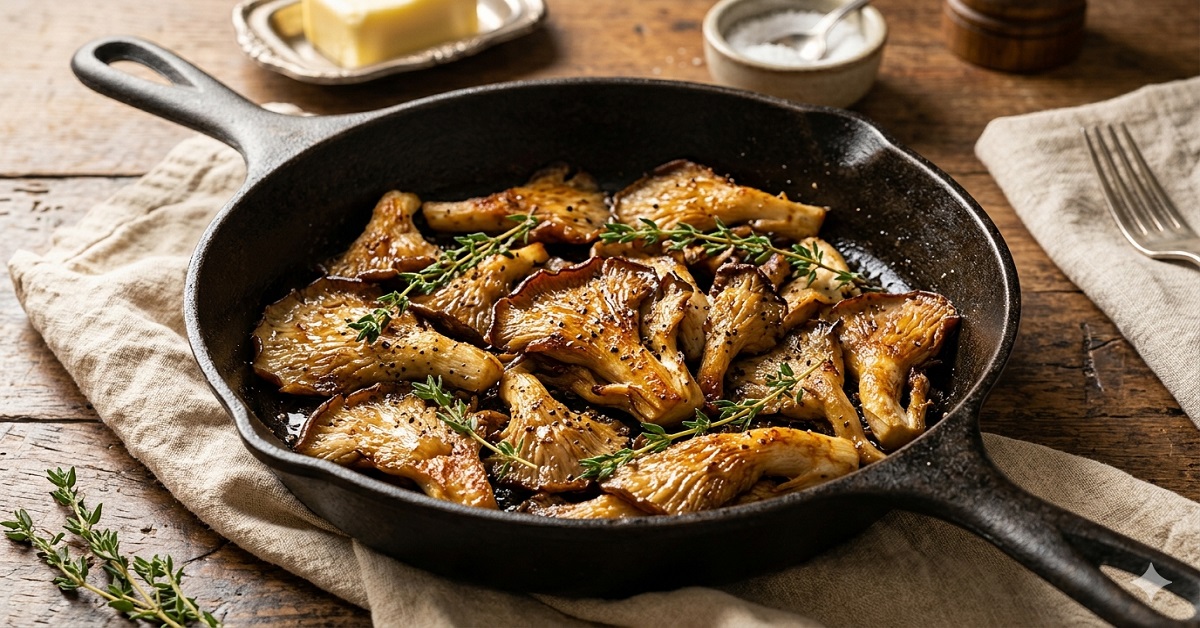
High heat. No crowding. No stirring. Oyster mushrooms are 85–90% water. A cold or crowded pan steams them into grey, soggy disappointment. A screaming-hot, well-oiled pan with mushrooms in a single layer — left untouched for 3–4 minutes — produces golden, caramelised, deeply savoury results that make oyster mushrooms one of the most rewarding ingredients in any kitchen.
The single biggest upgrade to any oyster mushroom recipe is cooking mushrooms you’ve grown yourself — harvested and used within the hour. Home-grown oyster mushrooms have a sweetness and intensity of flavour that commercially stored mushrooms simply cannot match. If you haven’t started your own grow yet, our complete oyster mushroom growing guide shows you how to get your first flush in as little as 14 days — no experience needed.
Oyster mushrooms are the gateway culinary mushroom — mild and adaptable enough to work with almost any cuisine, meaty enough to satisfy as a main ingredient, and remarkably responsive to technique. Understanding a few key principles unlocks dozens of excellent dishes from the same humble cluster of fans.
Beyond flavour, oyster mushrooms are nutritionally significant. A 2024 study in Frontiers in Nutrition confirming the nutritional profile of Pleurotus ostreatus found substantial protein, fibre, and micronutrient content — including high vitamin B2 levels and notable potassium, iron, and magnesium — placing oyster mushrooms firmly in the functional food category alongside their culinary appeal.
Whether you’ve harvested your own from a home grow (see our complete oyster mushroom growing guide) or picked them up at a farmers market, these 10 recipes will do full justice to every flush.
- Perfect Sautéed Oyster Mushrooms — The Foundation Recipe
- Garlic Butter Oyster Mushrooms on Toast
- Crispy Pan-Fried Oyster Mushrooms
- Oyster Mushroom Pasta (Tagliatelle)
- Pink Oyster Mushroom Tacos
- Oyster Mushroom “Bacon” (Baked)
- Oyster Mushroom Stir-Fry with Ginger & Scallion
- Oyster Mushroom Miso Soup
- Oyster Mushroom Fried “Chicken”
- Oyster Mushroom Risotto
How to Prepare Oyster Mushrooms: Three Things to Know First
Cleaning
Brush off any substrate debris with a dry pastry brush or barely-damp paper towel. If you must rinse, do so very briefly under cold running water and pat completely dry immediately with a clean towel. Never soak oyster mushrooms — they absorb water rapidly and waterlogged mushrooms steam rather than sear, regardless of how hot your pan is.
Tearing vs. Cutting
For most applications, tear oyster mushrooms along the natural grain of their fibres rather than cutting. Tearing creates irregular, textured surfaces with more contact area — which means more caramelisation when seared, better sauce absorption when braised, and a more satisfying, natural appearance on the plate. Reserve cutting for applications where uniform slices are specifically required (mushroom bacon strips, stir-fry).
Pan Temperature Is Everything
The pan must be genuinely hot before the mushrooms make contact. Test it: add a single drop of water — it should evaporate with a sharp sizzle within half a second. If it sits and bubbles, the pan isn’t hot enough. The mushrooms should sizzle aggressively on contact and immediately start releasing steam from the heat, not from slow cooking.
1. Perfect Sautéed Oyster Mushrooms — The Foundation Recipe
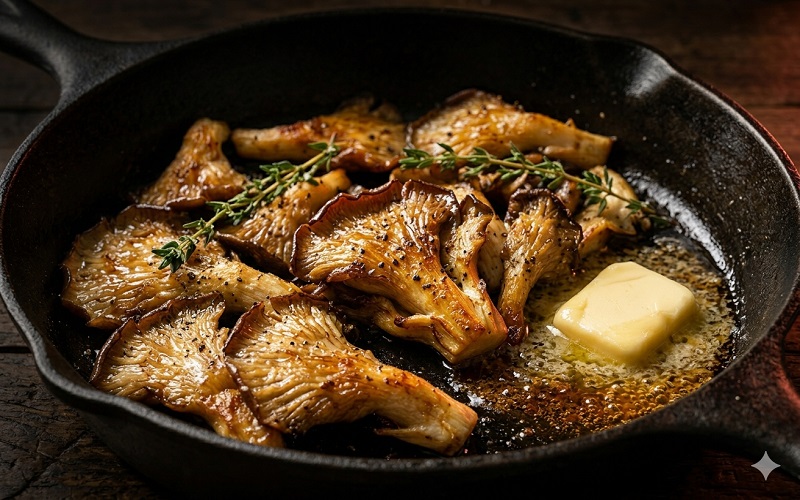
Master this one recipe and every other oyster mushroom dish falls into place. The principle is simple and non-negotiable: extreme heat, single layer, do not stir.
2. Garlic Butter Oyster Mushrooms on Toast
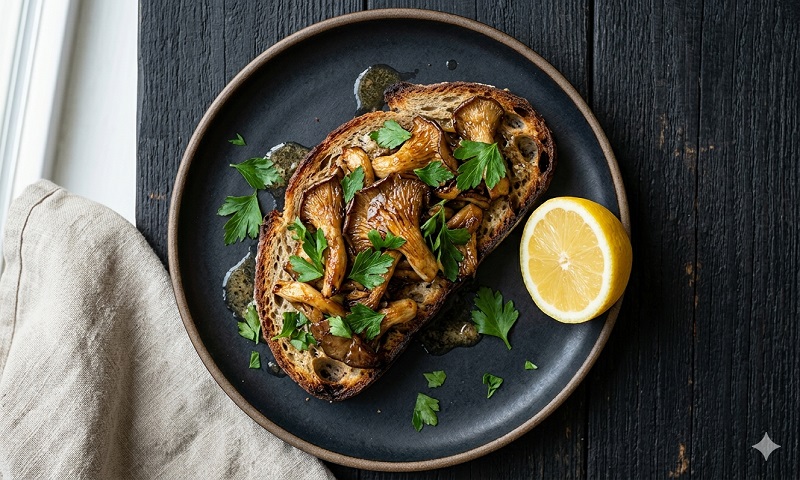
The greatest 10-minute lunch in mushroom cookery. Use the foundation sauté technique above, then serve the golden mushrooms piled high on thick-cut sourdough toast that has been rubbed with a halved raw garlic clove while still warm from the toaster. Drizzle the pan butter — all of it — over the mushrooms. Scatter fresh flat-leaf parsley and a pinch of flaky salt. A poached or soft-boiled egg alongside turns this into a complete, genuinely satisfying meal.
3. Crispy Pan-Fried Oyster Mushrooms
4. Oyster Mushroom Tagliatelle with Parmesan & Lemon
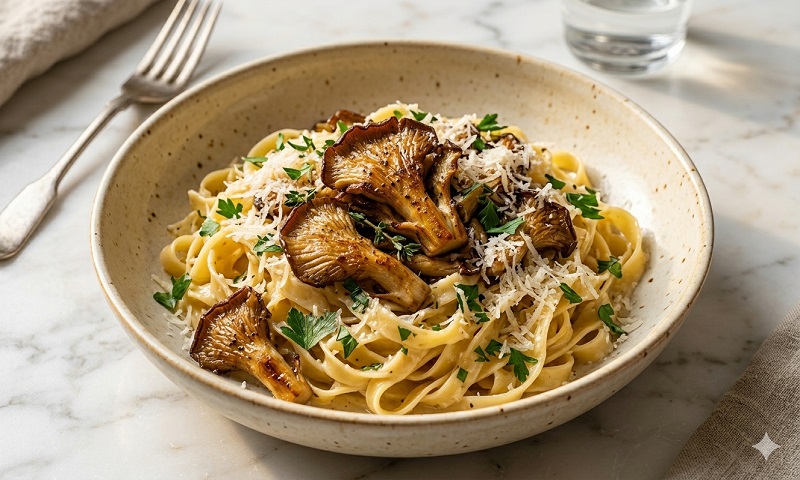
The secret to a great mushroom pasta is building umami in layers and using pasta water as the sauce binder. Here’s the technique that produces restaurant-quality results every time:
- Cook tagliatelle in heavily salted water until just under al dente. Reserve 2 full cups of pasta water before draining — this starchy liquid is the key to the sauce.
- Meanwhile, sauté oyster mushrooms using the foundation recipe until deeply golden. Set aside.
- In the same pan, add a knob of butter and 2 sliced garlic cloves. Deglaze with a splash of dry white wine and reduce by half.
- Add a ladle of pasta water and bring to a simmer.
- Add the drained pasta directly to the pan. Toss vigorously over medium heat, adding more pasta water as needed, until the sauce emulsifies into a glossy, clinging coating.
- Add the reserved sautéed mushrooms, a handful of grated parmesan, lemon zest, and a squeeze of lemon juice. Toss once more. Serve immediately in warmed bowls.
5. Pink Oyster Mushroom Tacos
Pink oyster mushrooms are visually extraordinary — their vivid flamingo-pink caps fade to a beautiful salmon-orange when cooked, making them perfect for tacos where presentation matters. Season heavily with cumin, smoked paprika, garlic powder, and a pinch of chipotle. Sear hard in a very hot cast iron pan until caramelised. Serve in warm corn tortillas with shredded red cabbage, fresh avocado, pickled jalapeños, lime crema (sour cream + lime juice + salt), and a generous handful of fresh coriander. The meaty texture and bold seasoning make this genuinely satisfying as a plant-based taco. For more ideas with this species, see our pink oyster mushroom recipes.
6. Oyster Mushroom “Bacon” (Baked Method)
7. Oyster Mushroom Stir-Fry with Ginger & Scallion
A true weeknight-fast dish: 8 minutes from cold pan to table. Heat a wok until smoking. Add a generous tablespoon of neutral oil and let it rip. Add 300g torn oyster mushrooms — they’ll spit and sizzle aggressively. Toss for 2 minutes until catching colour on the edges. Add 2cm of fresh ginger (julienned or very thinly sliced) and 4 scallions (cut into 3cm batons, white and green parts separated — whites go in now, greens at the end). Deglaze with a mixture of: 2 tbsp soy sauce, 1 tbsp Shaoxing rice wine (or dry sherry), 1 tsp sesame oil, and ½ tsp sugar. Toss 30 seconds more. Add the scallion greens. Serve immediately over steamed jasmine rice with chilli oil on the side.
8. Oyster Mushroom Miso Soup
Tear oyster mushrooms into small, bite-sized pieces. Simmer for 4 minutes in a simple dashi (kombu + water, or instant dashi powder for speed). Remove from heat. Whisk in 2 generous tablespoons of white or red miso paste — never boil the soup after adding miso, as boiling destroys the live cultures and significantly dulls the flavour. Add silken tofu cubes (cut to 1.5cm), thinly sliced scallions, and optionally a few drops of sesame oil. The oyster mushrooms take on the broth beautifully, becoming silky and intensely savoury. One of the most nourishing and quick meals in this entire guide.
9. Oyster Mushroom Fried “Chicken”
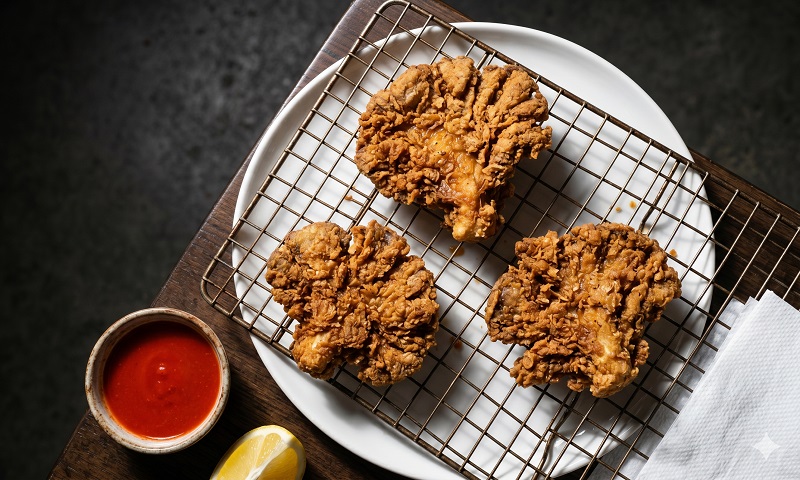
Large oyster mushroom clusters — kept whole with the stem base intact — produce a fried “chicken” so convincing that it genuinely surprises people who taste it blind. The fibrous stem structure mimics chicken breast; the breading provides the satisfying shatter of proper fried chicken.
- Soak: Submerge whole mushroom clusters in a mixture of 1 cup buttermilk (or plant-based milk + 1 tbsp apple cider vinegar, left 5 minutes to curdle) for 20–30 minutes.
- Season your flour: Mix 1 cup plain flour with 2 tsp smoked paprika, 1 tsp garlic powder, 1 tsp onion powder, 1 tsp dried oregano, ½ tsp cayenne, 1 tsp salt, and ½ tsp black pepper.
- Dredge: Remove mushrooms from buttermilk, allowing excess to drip. Press firmly into the seasoned flour coating all surfaces. Return briefly to the buttermilk, then back into the flour for a second coat — this creates the thick, craggly crust.
- Fry: Deep-fry in neutral oil at 180°C (350°F) for 4–5 minutes until deeply golden, or air-fry at 200°C for 12–15 minutes, flipping halfway. The interior mushroom should be fully tender — cut one open to check.
- Serve immediately with coleslaw, pickles, hot sauce, and a squeeze of lemon.
10. Oyster Mushroom Risotto with Tarragon
Use the classic slow risotto method: sweat finely diced shallots and garlic in a generous amount of butter until translucent and sweet. Add arborio rice and toast, stirring constantly, until the edges look translucent. Add a splash of dry white wine and stir until absorbed. Add warm mushroom stock (or vegetable stock) one ladleful at a time, stirring slowly and continuously, allowing each ladle to absorb before adding the next — 18–22 minutes of patient stirring.
Cook your oyster mushrooms separately using the foundation sauté — keeping them in large clusters with good colour. Add them to the risotto only at the very end, folding them in gently so they retain their texture rather than breaking down into the rice. Finish with cold unsalted butter stirred in off the heat (the mantecatura — this makes it creamy without cream), grated parmesan, a generous squeeze of lemon, and fresh tarragon leaves. The tarragon’s anise quality and the mushroom’s mild sweetness together create something genuinely extraordinary.
Storage, Freshness & What to Look for When Buying
Buying Fresh Oyster Mushrooms
- Look for: Firm, dry caps with clean, unbroken edges. The gills on the underside should be pale cream to white. The overall mushroom should feel springy when gently pressed — not soft or mushy.
- Avoid: Slimy surfaces, dark spots, an ammonia or fish smell, caps that are beginning to darken or show slick surfaces. These are past their peak.
- Best source: Farmers markets with local growers, where the mushrooms are often harvested same-day. Supermarket oyster mushrooms can be 3–5 days from harvest. Home-grown mushrooms cooked within an hour of harvest are in a completely different category.
Storage
- Fresh: Loosely in a paper bag in the refrigerator. Never in an airtight container — they need to breathe. Use within 5–7 days of harvest (3–4 days if store-bought, which may already be several days old at purchase).
- Frozen: Sauté briefly in butter until just cooked through, cool completely, then freeze flat on a baking tray before transferring to freezer bags. Frozen cooked oyster mushrooms are excellent in soups, stews, and pasta but will not crisp up when reheated.
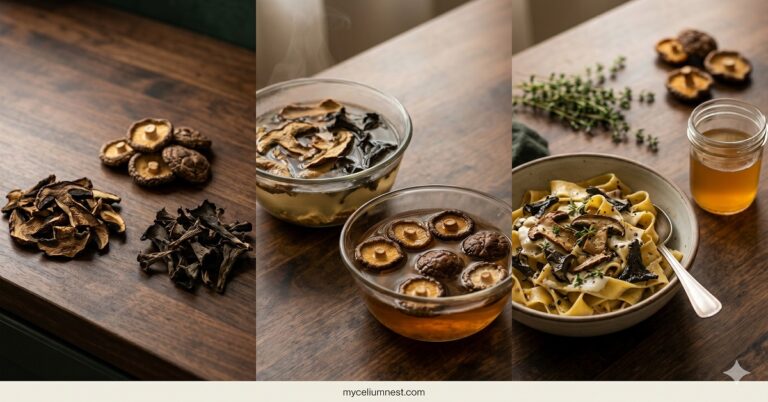
- Dried: Slice thin and dry at 45–50°C in a food dehydrator until completely brittle. Dried oyster mushrooms are excellent rehydrated in stocks and risotto. Store in an airtight jar away from light — indefinite shelf life.
For the complete nutritional profile of oyster mushrooms — including protein, B-vitamin, and mineral content per 100g serving — the USDA FoodData Central database entry for raw oyster mushrooms is the authoritative reference. Pleurotus ostreatus provides approximately 3.3g protein, 4.2mg niacin, and only 33 calories per 100g fresh weight — making it one of the most nutritionally dense low-calorie ingredients in this guide.
Frequently Asked Questions
Why do my oyster mushrooms always end up wet and rubbery?
Almost always caused by one or more of: pan not hot enough when mushrooms hit it, pan overcrowded so mushrooms steam rather than sear, or adding too much oil too early before the surface moisture has cooked off. The pan should be genuinely smoking hot. The mushrooms should sizzle aggressively on contact. And they should be in a single layer with space around each cluster — not piled on top of each other. Work in batches if needed. Patience here is non-negotiable.
Do you wash oyster mushrooms before cooking?
For home-grown mushrooms, a dry brush-off with a pastry brush is all that’s needed. For store-bought mushrooms that may have visible soil or debris, a very brief rinse under cold water followed by immediate, thorough patting dry with a clean towel is acceptable. Never soak or submerge oyster mushrooms in water for cleaning — they absorb water rapidly and will steam rather than sear no matter how hot your pan is. The exception is the fried chicken recipe, where a buttermilk soak is intentional — the long marinating time allows the exterior to hydrate for the breading.
Can you eat oyster mushroom stems?
Yes — oyster mushroom stems are entirely edible, though they can be slightly tougher than the caps. The main stem base where the cluster attaches to the substrate is the densest part and can be fibrous if the mushroom is mature. For most recipes, the entire mushroom including the stems is used. For the fried “chicken” recipe specifically, the larger stem sections are what create the convincing chicken-breast texture. Only the very base where the mycelium attached (which can taste slightly earthy or woody) is typically trimmed away.
What do oyster mushrooms taste like?
Fresh, properly cooked oyster mushrooms have a mild, delicate flavour with subtle umami depth. They’re often described as slightly sweet with a faintly anise-like quality when raw, becoming more savoury, nutty, and deeply satisfying when caramelised. The flavour is significantly more complex and intense when seared at high heat than when steamed or braised — the Maillard reaction compounds (formed during caramelisation) add layers of flavour not present in the raw mushroom. Home-grown oyster mushrooms harvested at peak and cooked immediately have a sweetness and complexity that commercially stored mushrooms simply cannot match.
Disclosure: This article may contain Amazon affiliate links. We earn a small commission at no extra cost to you. See our full disclosure.