Lion’s Mane Mushroom Recipes: How to Cook It So It Tastes Like Crab

Squeeze out the moisture first. Lion’s mane holds an enormous amount of water. Before searing, place slices between paper towels and press firmly. Then cook in a dry pan first to drive off remaining moisture before adding fat. This two-step process is what produces the golden, crispy exterior and dense, crab-like interior that makes lion’s mane extraordinary — rather than a soggy, waterlogged disappointment. This guide reveals the secret to perfect Lion’s mane mushroom recipes
For the very best results in any of these recipes, harvest your lion’s mane just as the outermost spine tips show the first hint of yellowing and cook within 30–60 minutes of harvest. Home-grown lion’s mane cooked at peak is in a different flavour league from any commercially stored specimen. If you haven’t started growing your own yet, our complete lion’s mane cultivation guide walks you through every step — from substrate preparation to harvest timing for ideal culinary quality.
Lion’s mane mushrooms (Hericium erinaceus) are genuinely unlike any other edible mushroom. Their dense, globular fruiting bodies — those beautiful cascading white spines — have a texture so close to crab or lobster meat when properly cooked that they have become the plant-based seafood substitute of choice for chefs and home cooks worldwide.
The key word is “properly cooked.” Undercooked or improperly prepared lion’s mane is rubbery and wet. Perfectly cooked lion’s mane — all moisture driven off, exterior caramelised, interior dense and sweet — is one of the most extraordinary things you can put on a plate. If you’re growing your own, our complete lion’s mane growing guide will get you there. These recipes will show you what to do once you’ve harvested.
How to Prepare Lion’s Mane for Cooking: The Essential Steps
Step 1: Trim and Slice
Using a sharp knife, trim the base where the lion’s mane was attached to the substrate (this area can be slightly tough). Slice the entire fruiting body into 1.5–2cm thick “steaks” — cross-sections that reveal the dense, sponge-like interior. The slabs should hold together; if they crumble, the mushroom is either overripe or has been stored too long.
Step 2: Press Out Moisture (Non-Negotiable)
Place the slices on a layer of paper towels. Cover with another layer of paper towels and press firmly with your palm. Repeat with fresh paper towels until the towels are no longer visibly wet when pressed. This step separates good lion’s mane cooking from great lion’s mane cooking. Skipping it guarantees steaming rather than searing.
Step 3: The Dry-Pan Technique
For a true sear, begin cooking in a dry pan — no oil. Press the lion’s mane slices flat against the hot surface with a spatula. The remaining moisture will steam off in the first 2 minutes. Once the pan is dry and the surface of the mushroom is beginning to colour, then add butter or oil and finish the sear. This two-stage technique produces the best results consistently.
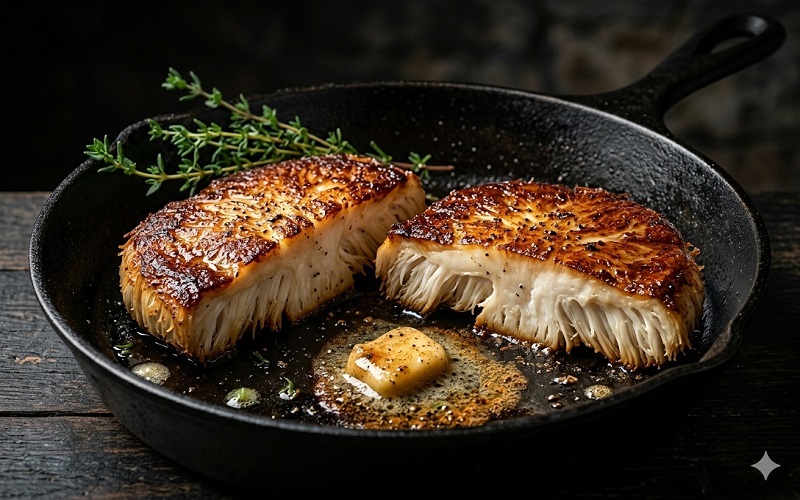
1. Seared Lion’s Mane Mushroom “Steak” — The Foundation Technique
- 1 large lion’s mane (400–500g), sliced into 2cm steaks
- 2 tbsp unsalted butter
- 1 tbsp neutral oil (grapeseed or avocado)
- 3 cloves garlic, smashed
- 4 sprigs fresh thyme or rosemary
- Flaky sea salt and cracked black pepper
- Squeeze of lemon to finish
- Press moisture from slices using paper towels until barely damp.
- Heat a cast iron skillet until smoking hot. No oil yet.
- Add lion’s mane steaks. Press flat with a spatula. Cook 3–4 min until golden underneath — do not move.
- Add butter, oil, garlic, and herbs. Flip the steaks.
- Baste the steaks with the foaming butter for 2–3 more minutes.
- Season with salt and pepper. Finish with lemon juice.
2. Lion’s Mane “Crab” Cakes
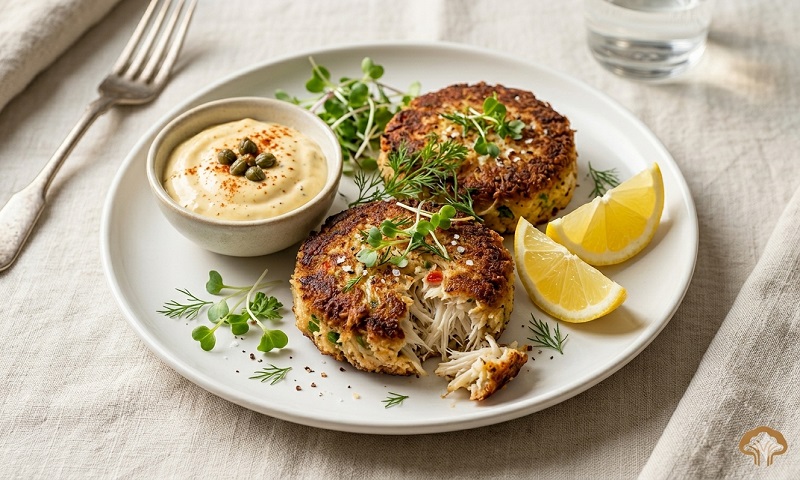
This is the recipe that converts lion’s mane sceptics. The fibrous, stringy texture of pressed and shredded lion’s mane so closely mimics lump crab meat that this dish has genuinely fooled people in blind tastings. The key is shredding by hand rather than cutting — the irregular fibres create the crab-like texture.
- 500g lion’s mane mushrooms
- 3 tbsp mayonnaise (or vegan mayo)
- 1 egg (or 1 tbsp flaxseed + 3 tbsp water)
- 2 tbsp Dijon mustard
- 1 tsp Old Bay or seafood seasoning
- 1 tsp Worcestershire sauce
- ½ tsp smoked paprika
- 3 tbsp panko breadcrumbs + more for coating
- 2 tbsp fresh chives or parsley, chopped
- Zest and juice of ½ lemon
- Salt and pepper
- Neutral oil for frying
- Cook lion’s mane in a dry pan over high heat, pressing with spatula, until all moisture is gone and it begins to caramelise — 6–8 minutes. Let cool.
- Using your hands, tear the cooked lion’s mane into shreds. The texture should resemble pulled crab meat.
- Combine shredded mushroom with mayo, egg, mustard, Old Bay, Worcestershire, paprika, panko, herbs, and lemon. Season well.
- Form into 6 equal cakes. Refrigerate 30 minutes (this helps them hold together).
- Coat lightly in extra panko. Pan-fry in a generous layer of oil over medium-high heat, 3–4 minutes per side until deeply golden.
- Drain briefly. Serve immediately with remoulade or lemon aioli.
The lion’s mane crab cake recipe is already almost entirely plant-based — only two ingredients need swapping to make it 100% vegan without any sacrifice in texture or flavour:
3 tbsp mayonnaise — used for moisture and richness
3 tbsp vegan mayo (Hellmann’s Vegan or Just Mayo) — same texture, same richness
3. Brown Butter & Herb Lion’s Mane
The simplest preparation that showcases lion’s mane’s natural sweetness. Sear slabs using the foundation technique until deeply golden. While still in the pan, add a generous amount of butter and cook until it turns nutty and brown — the milk solids caramelising into something extraordinary. Add fresh sage leaves (they’ll crisp immediately in the butter) and thyme. Serve over creamy polenta or mashed white beans. The brown butter and lion’s mane’s natural sweetness together create a dish that is somehow simultaneously rich and delicate.
4. Lion’s Mane Pasta with Lemon Cream
Sear lion’s mane steaks using the foundation method, then cut into 2cm chunks. Separately, make a simple cream sauce: sweat shallots in butter, add double cream, reduce by half, add lemon zest and a generous squeeze of lemon juice, season with salt and white pepper. Toss with cooked linguine and the lion’s mane chunks, adding pasta water to loosen if needed. Finish with fresh tarragon, parmesan, and a drizzle of good olive oil. The lemon lifts and brightens what could otherwise be a heavy dish, while the cream amplifies lion’s mane’s natural seafood quality.
5. Lion’s Mane “Lobster Roll” Sandwich
This is the recipe that will genuinely surprise guests. Cook lion’s mane steaks until deeply golden, then cut into rough chunks and toss while warm with: 3 tbsp mayonnaise, 1 tsp Dijon, a squeeze of lemon, celery finely diced, fresh tarragon and chives, salt and white pepper. Pile generously into a toasted split-top hot dog bun brushed with butter. The mayo-dressed chunks have the same temperature, texture, and visual appearance as a true lobster roll. Serve with kettle chips and a pickled cucumber spear for full effect.
6. Lion’s Mane Ramen Topping
Sear a thick lion’s mane steak until deeply golden on both sides. Glaze briefly with a mixture of soy sauce, mirin, and a pinch of sugar in the pan until sticky. Slice thinly and fan across the top of a bowl of rich tonkotsu or miso ramen broth. The caramelised, glazed lion’s mane absorbs the broth beautifully and provides the meaty element that makes ramen satisfying. Far superior to standard chashu pork for anyone who has never tried mushroom ramen — and genuinely competitive with it even for devoted carnivores.
7. Crispy Lion’s Mane Tacos
Sear 1cm-thick lion’s mane slices until very crispy — more aggressive than the steak technique, allowing the edges to become genuinely crunchy. Season with ancho chilli, cumin, garlic powder, and smoked salt. Serve in warm corn tortillas with pickled red onion, avocado crema (blended avocado + lime + a little sour cream or yoghurt), thinly shredded cabbage, and a handful of fresh coriander. The crunch of the lion’s mane against the soft tortilla and creamy avocado is one of the most satisfying texture contrasts in mushroom cooking.
Storage, Freshness & Buying Tips
Freshness Indicators
- Fresh (best): Pure white throughout, firm and dense, no browning anywhere, pleasant mild smell. Harvest within 1–2 days of first appearance of yellow tip discolouration.
- Acceptable: Very slight yellowing at the very tips of outer spines. Interior still white and firm. Use immediately — cook the same day.
- Avoid: Brown or orange colouration spreading from tips inward. Soft, waterlogged, or mushy texture. Sour or ammonia smell. These are past their prime and will taste bitter.
For the complete nutritional breakdown of fresh Hericium erinaceus — protein, fibre, B-vitamin, and mineral content per serving — the USDA FoodData Central database is the authoritative reference. Lion’s mane is notably high in potassium and B vitamins relative to its low calorie count — making it one of the most nutritionally dense ingredients in any of the recipes above.
Storage
- Fresh: 3–5 days in a paper bag in the refrigerator. Lion’s mane deteriorates faster than oyster or shiitake — use quickly after purchase or harvest.
- Cooked: Seared lion’s mane chunks store well in the refrigerator for 3–4 days. Reheat in a hot dry pan to restore some crispness.
- Frozen: Cook using the dry-pan technique first, cool completely, freeze flat. Reheats acceptably but loses some crispness. Best used in soups, pasta, or braises when frozen.
- Dried: Slice and dry at 45°C until completely brittle. Rehydrates for soups and braises. The flavour concentrates but texture differs significantly from fresh.
For the deepest possible flavour — and the satisfaction of growing your own ingredient — see our complete guide to growing lion’s mane mushrooms indoors. Lion’s mane harvested and cooked within an hour has a sweetness and delicacy that no commercially stored specimen can match.
Frequently Asked Questions
Why does my lion’s mane end up rubbery and wet?
Almost always caused by one or more of: not pressing out enough moisture before cooking, using a pan that isn’t hot enough, overcrowding the pan so mushrooms steam rather than sear, or adding fat before the moisture has cooked off. Follow the two-step method: dry pan first to remove moisture, then add butter/oil to build the crust. The pan needs to be genuinely smoking hot — not just warm.
Does cooking lion’s mane destroy its health benefits?
Beta-glucans are largely heat-stable — cooking does not significantly reduce their content. Hericenones are also relatively heat-stable at normal cooking temperatures. For the underlying science, see the peer-reviewed research on NGF synthesis from Hericium erinaceus compounds (PubMed PMID 24266378). For those taking lion’s mane specifically for cognitive support rather than culinary enjoyment, a dual-extracted supplement provides more concentrated and bioavailable compounds than fresh-cooked mushrooms. See our research review and supplement guide for details.
Can you eat lion’s mane raw?
Technically yes — unlike morels or elderberries, lion’s mane has no documented toxicity when raw. However, raw lion’s mane is waterlogged, texturally unrewarding, and has a mild, slightly astringent taste that gives little indication of its cooking potential. There is no culinary reason to eat it raw. Additionally, cooking improves the bioavailability of beta-glucans by breaking down the chitin cell walls. Always cook for both culinary and nutritional reasons.
Disclosure: This article may contain affiliate links. See our full disclosure.