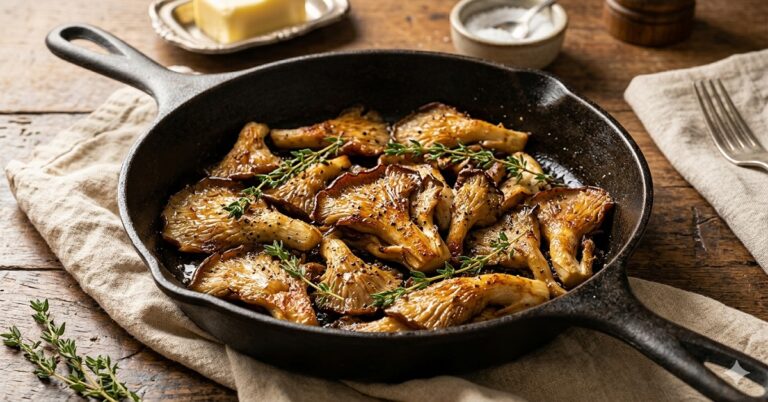
King Oyster Mushroom Recipes: King oyster is the chef’s mushroom — the species that professional kitchens use when they want a mushroom with genuine presence on a plate. The techniques here are how restaurant kitchens actually cook it.
Cook the Stem, Not Just the Cap
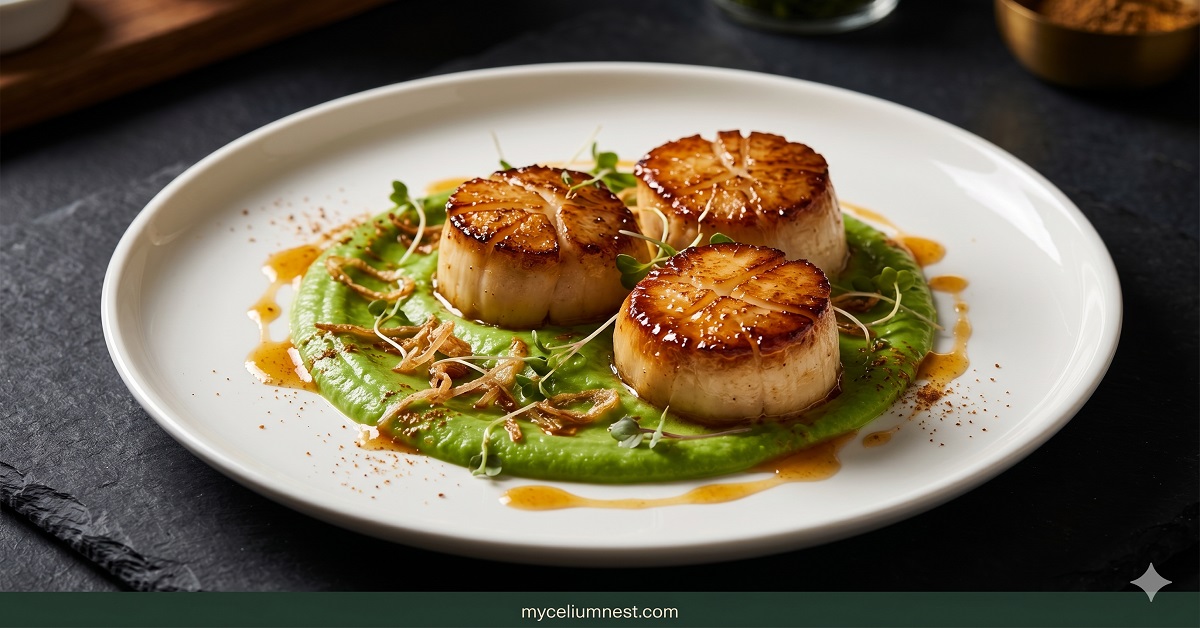
Every king oyster recipe begins with the same reorientation: the stem is the prize, not the cap. The cap is good but thin and flat; the thick, dense, meaty stem is what makes king oyster unique in the mushroom world. A 2cm cross-section of king oyster stem, properly seared, has the visual appearance, texture, and mouthfeel of a seared sea scallop. For a full cultivation guide producing restaurant-quality thick stems, see our king oyster growing guide.
This is the preparation that defines king oyster cooking — and the technique details make the difference between a convincing scallop substitute and a disappointing result
King Oyster “Scallop” — The Professional Method
Preparation
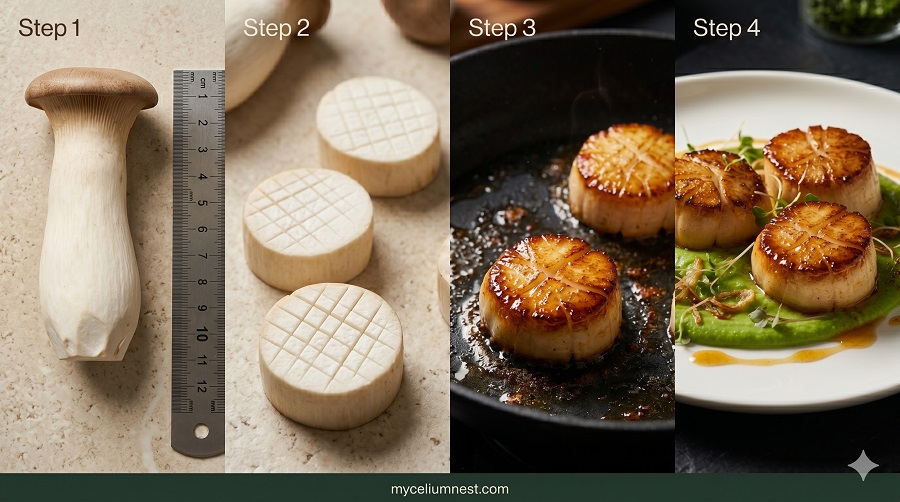
Select stems with 2–3cm diameter — the ideal “scallop” size
Cut cross-sections exactly 2–2.5cm thick — the depth-to-width ratio matters for even cooking
Score both flat surfaces with a 5mm crosshatch (or crosshatch one side only for visual clarity)
Season with fine salt and white pepper on both sides
Dry with paper towels — completely dry surface is essential for browning
Cooking Method
Heat neutral oil in stainless steel or cast-iron pan until shimmering-hot
Add rounds scored-side down — do not move for 3 minutes
Check: the cooked side should be deep golden-brown, not pale
Rest 1 minute before plating — carryover cooking finishes the centre
Why it fools diners: The crosshatch scoring creates the same caramelised surface grid as a properly seared sea scallop. The 2cm thickness produces an exterior that is fully caramelised while the interior remains tender and slightly translucent — identical in cross-section to a scallop. The butter-basting adds the fat richness that mimics marine shellfish. This is not a simple approximation — presented correctly, it genuinely surprises experienced diners.
For nutritional data on king oyster mushrooms, the USDA FoodData Central database provides complete macronutrient and micronutrient data per 100g serving.
Plant-Based Special Occasion Dish
King Oyster Vegan Sea Scallops — The Dinner Party Recipe
🌱 100% Plant-Based
This is the recipe that king oyster was born for. Cross-cut stems seared to golden perfection with a lemon-butter (or vegan butter) baste, served on pea purée with crispy capers — it is the most convincing vegan scallop preparation available from any plant-based ingredient. The crosshatch scoring, butter basting, and exact timing produce a result that routinely surprises non-vegan diners at the table.
Ingredients (Serves 2 as starter, 4 as amuse)
4–6 large king oyster stems (2–3cm diameter)
2 tbsp neutral oil (avocado or grapeseed)
2 tbsp vegan butter (or regular for non-vegan)
2 garlic cloves, smashed
Juice of ½ lemon
Fresh thyme sprigs
Flake salt + white pepper
For the pea purée: 200g frozen peas, 1 tbsp butter, mint, salt
Vegan Scallop Method
Cut stems into 2.5cm rounds; score both faces with 5mm crosshatch
Season with fine salt and white pepper; dry thoroughly with paper towels
Heat oil in stainless steel pan until smoking — higher heat than you think necessary
Place rounds scored-side down; press gently with spatula. 3 minutes undisturbed
Finish with lemon juice off heat. Rest 1 minute before plating
The Pea Purée — 5-Minute Restaurant Base
Blanch 200g frozen peas in salted boiling water for 2 minutes. Drain, transfer to blender with 1 tbsp vegan butter, 3 mint leaves, pinch of salt. Blend until completely smooth — 90 seconds minimum. Pass through a fine sieve for restaurant texture (optional but significant). Season with white pepper and lemon. The purée’s sweetness is the perfect foil for the savoury-umami scallop. Serve warm in a swoosh under each round.
The “Scallop” Indicators ✓Golden-brown caramelised surface grid · Tender centre · Slightly translucent when cut · Buttery exterior crust
Garnish OptionsCrispy capers · Micro herbs · Lemon zest · Pea shoots · Crumbled nori for ocean flavour
Most Common Failure ✗Pale, grey, soft result = pan not hot enough + surface not dry enough. The pan must be smoking before the stems go in.
5 More King Oyster Techniques
2. King Oyster Chashu-Style (Japanese Braised)
Halve king oyster stems lengthwise. Braise in a mixture of soy sauce, mirin, sake, and sugar for 20 minutes until deeply flavoured and slightly glazed. Chill, then slice and torch (or sear) the cut face before serving. The chashu-style preparation produces a deeply flavoured, glossy mushroom that works as ramen topping, rice bowl garnish, or a standalone dish. The long fibre of the stem absorbs the braising liquid beautifully.
3. Pulled King Oyster (BBQ Technique)
The other classic king oyster substitute technique. Shred large stems along their natural fibre by pulling apart (never cut — cutting breaks the fibre structure). Toss with smoked paprika, cumin, garlic powder, salt, and a little oil. Roast at 200°C for 15–18 minutes, tossing halfway, until edges are charred and crispy. Toss with your favourite BBQ sauce. The long fibres and meaty texture produce the most convincing pulled pork substitute available from any vegetable source.
4. King Oyster Katsu (Japanese Breaded Cutlet)
Slice large stems lengthwise into 1.5cm cutlets. Score with crosshatch, press lightly flat. Dredge in flour, egg, then panko breadcrumbs. Deep-fry at 170°C for 3–4 minutes until golden. Serve with tonkatsu sauce and shredded cabbage on white rice. The dense stem holds its structure through the breading process where a softer mushroom would disintegrate.
5. King Oyster in Cream Sauce with Pasta
Slice stems into rounds (1cm thick) and sauté until golden. Remove. In the same pan with the mushroom fond, add shallots, white wine, and heavy cream. Reduce until coating. Return mushrooms. The cream sauce clings to the scored mushroom surface and the fond from the mushroom sear adds depth to the sauce. Finish with Parmesan, black pepper, and fresh tarragon. Serve with pappardelle or tagliatelle.
6. Grilled King Oyster with Herb Oil
King oyster excels on a hot grill or griddle pan where it develops char and smokiness that no pan cooking can replicate. Halve stems lengthwise, brush with olive oil, season. Grill on high heat 3–4 minutes per side. Serve with a blended herb oil (parsley, basil, chives, garlic, olive oil). The char adds the outdoor cooking flavour that makes grilled king oyster one of the great summer barbecue sides.
🌱
The scallop technique only works with thick stems — and store-bought
king oyster rarely delivers them.
Commercial king oyster is grown at high CO₂ to produce fast, tall
specimens — often with stems under 1.5cm diameter. Home-grown king
oyster in a well-managed fruiting chamber produces the 2–3cm thick
stems the scallop technique requires. At $15–25/lb retail versus
under $1.50/100g home-grown, you also keep the economics of every
dinner party dish on your side.
Written by the MyceliumNest Team We cultivate shiitake on logs in our own garden and cook with both home-grown and purchased dried shiitake regularly. The techniques in this guide address the most common shiitake cooking mistakes — and why getting shiitake right is worth the effort. Why Shiitake Is Different Shiitake contains the highest naturally…
Written by the MyceliumNest Team We grow our own lion’s mane — which means we’ve cooked with it dozens of times and developed these recipes specifically for home-grown and farm-fresh specimens. Every technique has been tested and refined. The Secret to Perfect Lion’s Mane Squeeze out the moisture first. Lion’s mane holds an enormous amount…
Written by the MyceliumNest Team Dried mushrooms are the most underused and most powerful ingredient in most home kitchens. This guide gives you the complete technical foundation — and once you have it, the soaking liquid alone will change how you cook. The Most Wasted Ingredient in Cooking Most cooks who use dried mushrooms soak…
🕒 The Pink Oyster Harvest-to-Pan Countdown Most Perishable Cultivated Mushroom ✨ Hour 0–12 Peak condition. Striking pink colour. Firm, fresh, mild tropical scent. Best for all preparations including raw presentation. ✓ Hour 12–24 Still excellent. Colour slightly duller. All cooked preparations work perfectly. Best overall window for buying from markets. ⚠ Hour 24–48 Declining. Cook…
Written by the MyceliumNest Team Mushroom Soup Recipes: Mushroom soup is the dish where technique separates transformative from forgettable. The double-mushroom method in this guide is the single change that elevates every mushroom soup recipe regardless of the specific species you use. The Double Mushroom Secret The depth difference between a good mushroom soup and…
Written by the MyceliumNest Team Every recipe here has been developed and cooked in our kitchen — many using oyster mushrooms harvested from our own growing blocks. We grow what we cook and cook what we’ve grown. The Key Technique High heat. No crowding. No stirring. Oyster mushrooms are 85–90% water. A cold or crowded…