Written by the MyceliumNest Team
We cultivate shiitake on logs in our own garden and cook with both home-grown and purchased dried shiitake regularly. The techniques in this guide address the most common shiitake cooking mistakes — and why getting shiitake right is worth the effort.
Why Shiitake Is Different
Shiitake contains the highest naturally occurring concentration of guanylate (GMP) and glutamate of any cultivated mushroom — the compounds that create the deep, lingering umami that makes shiitake irreplaceable in Asian cooking. Fresh shiitake has good flavour; dried shiitake has extraordinary flavour — because drying concentrates glutamates by a factor of 7–10 and develops additional aromatic compounds through enzymatic activity during the drying process.
The Umami Science: Why Shiitake Tastes So Deep
Shiitake (Lentinula edodes) contains three compounds that synergistically create its characteristic deep flavour:
🧬
Glutamic Acid (Glutamate)
The primary umami compound. Fresh shiitake: ~70mg/100g. Dried shiitake: ~1,000mg/100g. Activated by heat — cooking releases bound glutamates from cell walls.
🔬
Guanylic Acid (5′-GMP)
The synergistic multiplier. 5′-GMP amplifies glutamate perception 7–8 fold. Shiitake has the highest GMP content of any cultivated mushroom. Explains why shiitake tastes more intensely umami than equivalent glutamate sources.
🌸
Lenthionine
Volatile sulphur compound responsible for shiitake’s distinctive aroma. Develops during drying from lentinic acid precursor. Highest in properly dried Japanese donko-grade shiitake.
For the full nutritional profile of shiitake, the USDA FoodData Central database provides the complete data including protein, B vitamins, and mineral content.
Fresh vs Dried Shiitake: Which to Use When
| Application |
Fresh Shiitake |
Dried Shiitake |
| High-heat sauté | Best — holds texture, caramelises beautifully | Use rehydrated — softer texture, less suitable |
| Broths and stocks | Good but less flavour depth | Superior — concentrated glutamates create profound dashi-style broth |
| Pasta and risotto | Fresh caps for texture; stems for sauce | Soaking liquid as the umami base — irreplaceable |
| Stuffing | Best — maintains structure when filled | Not suitable — too soft when rehydrated |
| Umami seasoning | Limited | Powder from ground dried caps — one of the most versatile umami seasonings |
🗄
Why Are My Shiitake Slimy? The Storage Answer
Slimy shiitake is not a quality problem with the mushroom — it is a storage problem. Mushrooms are 85–90% water and produce condensation when stored in airtight containers. That condensation creates the microenvironment where enzymatic breakdown and bacterial activity accelerate dramatically. The solution is simple and permanent once you know it.
✗ PLASTIC BAG or AIRTIGHT CONTAINER
Creates condensation → water pools on mushroom surface → enzymatic breakdown and bacterial activity → slimy texture within 2–3 days. The visual cue: water droplets on the inside of the bag means your shiitake is already deteriorating.
How long it lasts: 2–3 days before sliminess
✓ PAPER BAG — The Correct Method
Paper is breathable and wicks moisture away from the mushroom surface, maintaining the dry surface condition that prevents bacterial growth. A paper bag in the main body of the refrigerator (not the crisper drawer, which is too humid) keeps shiitake in excellent condition for 7–10 days.
How long it lasts: 7–10 days, firm and fresh
No paper bag available?
Wrap loosely in a sheet of paper kitchen towel, then place in an open (unsealed) plastic bag. The paper towel wicks moisture; the open bag allows airflow. Not as good as a paper bag but significantly better than sealed plastic.
Slightly slimy — still usable?
Yes, in most cases. A lightly slimy shiitake cap that still smells fresh (earthy, not sour or ammonia-like) is perfectly usable for stocks, soups, and sauces where texture is secondary to flavour. The sliminess disappears with cooking. Avoid using slimy shiitake in dry-sauté applications where surface texture matters.
When to discard
A shiitake that smells sour, ammonia-like, or otherwise unpleasant has begun bacterial decomposition and should be discarded. The smell is the definitive indicator — not the visual texture. A slimy mushroom that smells fresh is recoverable; a firm mushroom that smells off is not.
The Stem Question — Don’t Throw Them Away
Shiitake stems are tough, fibrous, and unpleasant to chew — but they are loaded with the same glutamates and GMP that make the caps extraordinary. Most recipes discard them, and this is a culinary waste:
The correct treatment for shiitake stems: Collect all stems as you cook, freeze them in a zip-lock bag, and use them as the base of mushroom stock. Simmer a large handful of frozen shiitake stems with a strip of kombu, some garlic, and water for 45 minutes. Strain and reduce slightly. The resulting liquid is as flavour-intense as commercial dashi and adds extraordinary depth to any braise, soup, or sauce base. This is the “secret” that differentiates home cooking from restaurant cooking in shiitake-heavy dishes.
8 Essential Shiitake Recipes & Techniques
1. Miso-Glazed Shiitake “Steaks”
SIGNATURE RECIPE
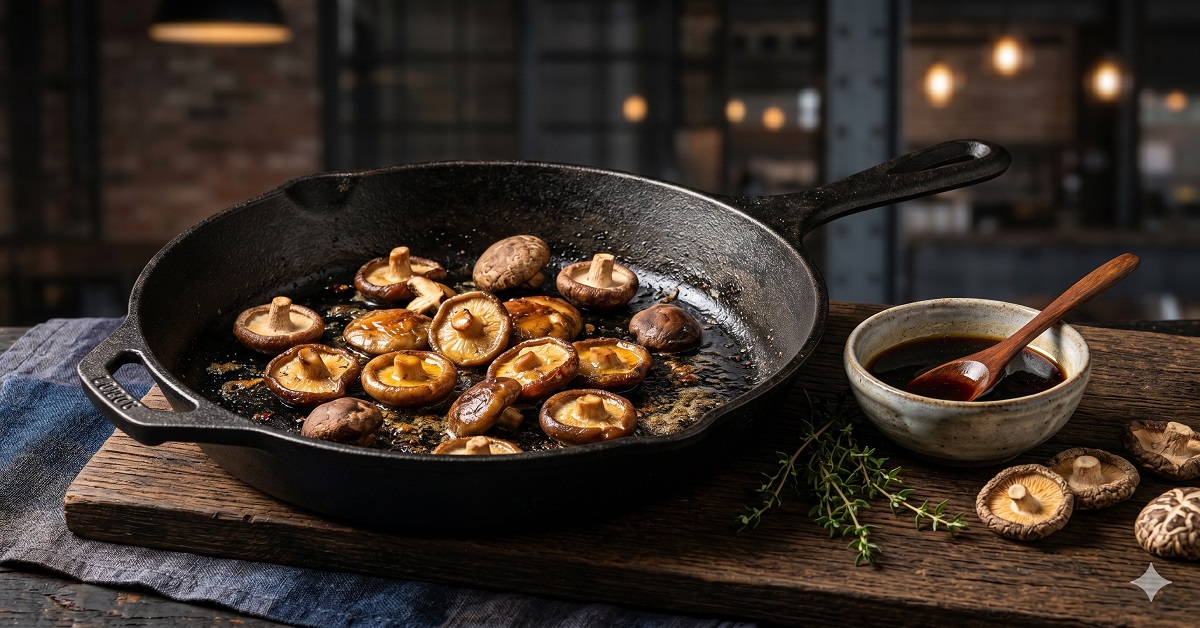
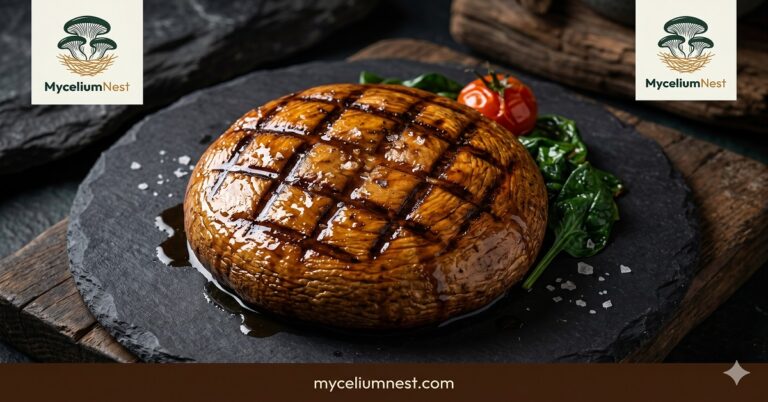
The flagship shiitake recipe that converts sceptics. Large fresh shiitake caps scored in a crosshatch pattern, seared in a very hot cast-iron pan until golden, then finished with a miso-mirin-butter glaze. The scored surface creates maximum Maillard browning and the glaze clings to every channel.
Ingredients (serves 2): 6 large fresh shiitake caps, 2 tbsp white miso, 2 tbsp mirin, 1 tbsp butter, 1 tbsp neutral oil, 1 tsp soy sauce, spring onion to garnish.
Key technique: Score caps with 5mm crosshatch before cooking. Dry the caps thoroughly — any moisture prevents browning. Pan must be smoking hot before the caps go in, cap-side down first. 3 minutes undisturbed, then flip and add glaze. Do not stir.
2. Shiitake Dashi — The Essential Japanese Stock
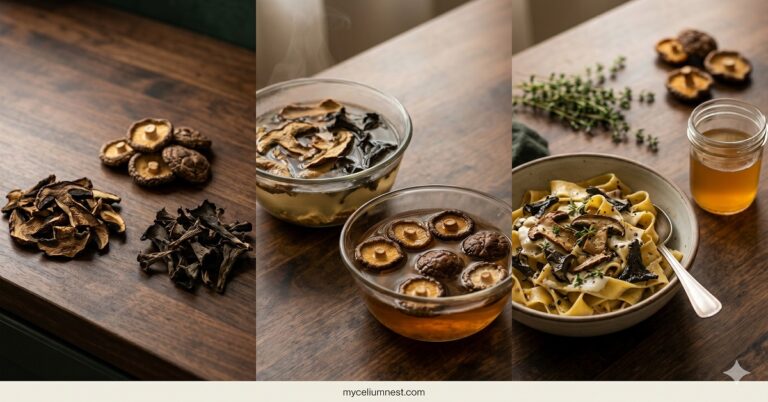
The foundation of Japanese cooking. Combine 4 dried shiitake caps with a 10cm strip of kombu in 1 litre cold water. Cold-steep overnight in the refrigerator (cold extraction produces a cleaner, sweeter dashi than hot). Heat gently to 60°C for 15 minutes — do not boil. Strain. The resulting liquid is the most umami-rich stock in cooking, containing glutamate from kombu AND guanylate from shiitake — a synergistic umami combination that has no equivalent.
Application: Use as the base for ramen broth, udon soup, risotto, pan sauces for fish, or Japanese braised dishes. Freeze in ice cube trays — a frozen shiitake dashi cube into any pan sauce adds immediate depth.
3. Crispy Shiitake Chips (The Snacking Technique)
Slice fresh shiitake caps 3mm thick. Toss with 1 tbsp olive oil, 1/2 tsp salt, 1/4 tsp each of garlic powder and nutritional yeast. Spread in a single layer on a baking sheet. Roast at 180°C for 18–22 minutes, checking at 15 minutes, until completely crispy and dark golden. The caps will shrink dramatically and become crackling-crisp. Cool on a rack — they crisp further as they cool. Season immediately. These keep for 3 days in an airtight container.
Critical point: A single layer with space between pieces is non-negotiable. Overlapping shiitake steams rather than crisps. Use two baking sheets if needed.
4. Shiitake Mushroom Pasta
Sauté fresh shiitake with garlic and thyme in brown butter. Reserve shiitake soaking liquid from dried caps as pasta cooking water substitute — the glutamates in the liquid incorporate into the final sauce. Finish with Parmesan and a small amount of pasta water for emulsification. The shiitake soaking water doubles the umami depth compared to plain pasta water.
5. Shiitake Stirfry with Black Bean
High-heat wok technique — oil smoking, shiitake in a single layer, 90 seconds undisturbed before tossing. Fermented black bean sauce, oyster sauce, ginger, and spring onion. The single-layer wok rest achieves the “wok hei” caramelisation that distinguishes restaurant Chinese cooking from home attempts.
6. Stuffed Shiitake Caps
Remove stems (save for stock). Fill large caps with a mixture of cream cheese, minced stems, garlic, and herbs. Roast at 200°C for 12 minutes. The cap acts as a natural bowl that concentrates the filling flavours. Excellent with a soy-honey glaze drizzled over at serving.
7. Shiitake Powder Umami Seasoning
Grind fully dried shiitake caps in a spice grinder to fine powder. Store in a sealed jar. Add 1/2 tsp to popcorn, pasta, scrambled eggs, or any dish requiring depth. This powder has an ORAC antioxidant score and glutamate concentration that makes it functionally equivalent to MSG — without the controversy.
Frequently Asked Questions
Why is my shiitake rubbery instead of golden-brown?
Three causes: (1) Wet mushrooms — shiitake releases significant moisture during cooking; if the pan and mushroom are not hot and dry enough, they steam rather than sear. Dry thoroughly before cooking and heat the pan until smoking. (2) Overcrowded pan — too many mushrooms drop the pan temperature below the Maillard reaction threshold (~140°C). Cook in batches. (3) Too much oil — oil that is too abundant creates a simmering effect. Use just enough to coat. The solution to all three: very hot dry pan, single layer, undisturbed for 3 minutes before first toss.
How long do fresh shiitake mushrooms keep?
Fresh shiitake keeps 7–10 days refrigerated in a paper bag — significantly longer than oyster or lion’s mane. Avoid plastic bags or airtight containers which cause condensation and rapid deterioration. If shiitake begins to shrivel or develop dark spots, it is still perfectly usable for stocks and sauces where texture is less critical — the flavour remains intact and actually concentrates slightly. Only discard shiitake that smells sour or shows visible mould. If you grow your own, see our shiitake log cultivation guide.
🌱
Tired of paying $15–20/lb for fresh shiitake?
Home-grown shiitake on hardwood logs produces 300–800g per log annually
at approximately $0.80–1.50 per 100g — a fraction of grocery prices.
The flavour of fresh-harvested home-grown shiitake is
categorically different from store-bought.
Grow Your Own Shiitake on Logs →
More Mushroom Recipe Guides
See our full disclosure.