How to Grow Lion’s Mane Mushrooms Indoors (No Experience Required)

Lion’s mane mushrooms (Hericium erinaceus) are one of the most extraordinary fungi you can grow at home — and one of the most misunderstood in terms of difficulty. Many beginners assume the dramatic appearance of lion’s mane (those impossibly beautiful cascading white spines) means an equally demanding grow. It doesn’t.
This guide explains exactly how to grow lion’s mane mushrooms indoors, from choosing your substrate through to harvesting and triggering second flushes. By the end, you’ll understand why experienced growers often describe lion’s mane as more forgiving than shiitake and nearly as easy as oyster — and why it might be the second species you ever grow.
What Is Lion’s Mane & Why Grow It?
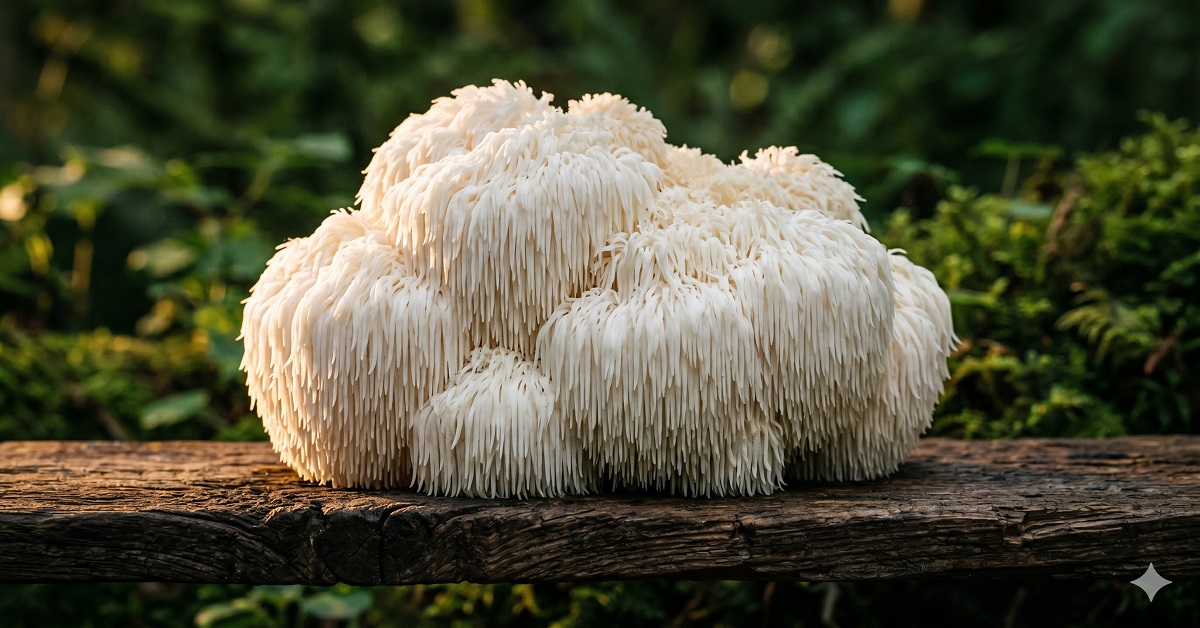
Lion’s mane (Hericium erinaceus) is a tooth fungus — unlike the cap-and-gills structure of most mushrooms, it produces a dense mass of fine, downward-cascading spines that resemble, unmistakably, a white lion’s mane or a coral reef creature. It grows naturally on the wounds of hardwood trees, primarily oaks, beeches, and maples, across North America, Europe, and Asia.
The Case for Growing Lion’s Mane at Home
- Extraordinary flavour. Fresh lion’s mane has a seafood-like flavour — often compared to crab or lobster — with a satisfying, meaty texture. It’s one of the most gastronomically interesting edible mushrooms in existence. Browse our lion’s mane mushroom recipes to see what’s possible.
- Strong research interest. Lion’s mane contains compounds called hericenones and erinacines that have shown in preliminary research to support nerve growth factor (NGF) synthesis. If the growing science is the reason you’re here, read our deep dive into what the research actually shows.
- Genuinely beginner-accessible. On hardwood sawdust substrate with a spawn rate above 15%, lion’s mane colonises reliably and pins with relatively modest environmental management compared to many other species.
- Significant cost savings. Fresh lion’s mane retails for $20–$40 per pound at farmers markets and specialty grocers. Growing your own cuts this to under $3 per pound in substrate and spawn costs once you’re producing consistently.
What You’ll Need
Option A: Lion’s Mane Grow Kit (Recommended for First Grow)
A fully colonised lion’s mane grow kit removes the most technically demanding steps — substrate preparation, sterilisation at 121°C (which requires a pressure cooker), and inoculation. For a first grow, we strongly recommend starting with a kit to build confidence before scaling up to scratch grows.
North Spore’s Lion’s Mane Spray-and-Grow Kit uses certified organic hardwood substrate, produces reliable pins within 5–10 days, and is available via Amazon here. See our full mushroom grow kit comparison for alternative options at different price points.
Option B: Growing Lion’s Mane From Scratch
- Hardwood fuel pellets (HWFP) — 850g per block
- Wheat bran or oat bran — 15–20% supplement
- Gypsum — 1% of dry weight
- Pressure cooker (15+ PSI, 23+ quart capacity)
- Quart mason jars or mushroom grow bags
- Lion’s mane grain spawn (or liquid culture)
- 70% isopropyl alcohol + nitrile gloves
- Digital hygrometer/thermometer
Note on pressure cookers: Unlike oyster mushrooms, lion’s mane on supplemented hardwood substrate requires sterilisation (121°C / 15 PSI for 2.5 hours) not just pasteurisation. This is because the supplements (bran) are rich in nutrients that bacteria and competing fungi thrive on. A pressure cooker is non-negotiable for scratch grows on supplemented substrate. See our pressure cooker guide for the best models. The Presto 23-Quart Pressure Canner is our top pick and handles a full batch of jars efficiently.
The Best Substrate for Lion’s Mane
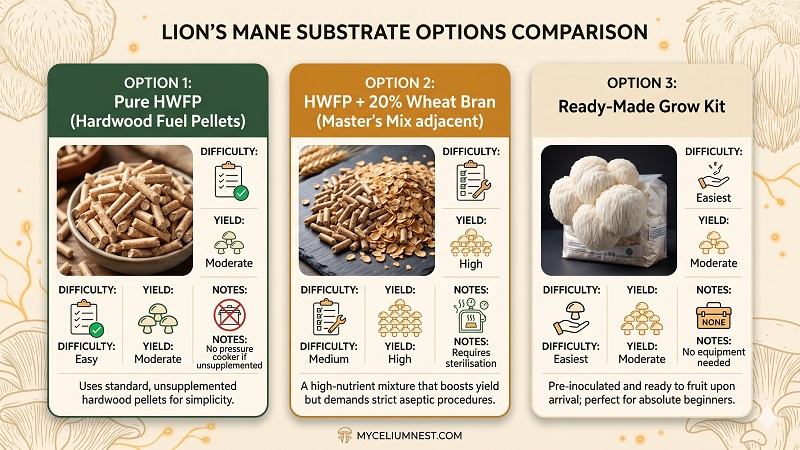
Lion’s mane is a lignin-decomposing wood-lover (saprotrophic on hardwoods). It requires a hardwood-based substrate and — unlike oyster mushrooms — benefits significantly from nutritional supplementation.
Master’s Mix: The Gold Standard for Yield
Master’s Mix is the most widely used supplemented hardwood substrate in hobby mycology. It produces exceptional yields and colonises reliably with lion’s mane. The formula is simple:
• 50% hardwood fuel pellets (by dry weight)
• 50% soybean hulls (or wheat bran as an accessible substitute)
• Water to 60–65% field capacity
• Requires pressure sterilisation at 121°C / 15 PSI for 2.5–3 hours
Simpler Alternative: HWFP Only (No Pressure Cooker Required)
If you don’t have a pressure cooker yet, pure (unsupplemented) hardwood fuel pellets can be pasteurised at 82°C for 90 minutes and used successfully for lion’s mane — yields will be 30–40% lower than Master’s Mix, but the process is far simpler. This is an excellent option for a first scratch grow before investing in pressure cooking equipment.
Step-by-Step Guide: How to Grow Lion’s Mane Mushrooms Indoor
Step 1: Prepare and Sterilise Your Substrate
- Mix HWFP and wheat bran dry, then add water gradually until you reach 60–65% moisture (a firm handful should release no more than a few drops when squeezed hard)
- Pack into quart mason jars or polypropylene grow bags — do not overfill; leave 15–20% headspace for mycelium respiration
- Add a polyfill or Tyvek lid (for jars) or seal bags and place in a pressure cooker
- Sterilise at 15 PSI for 2.5 hours minimum. Let the cooker depressurise naturally — do not force-cool
- Allow jars/bags to cool completely to room temperature (24 hours minimum) before inoculating
Step 2: Inoculate
- Wipe your entire work surface with 70% isopropyl alcohol. Wear nitrile gloves. Spray gloves with IPA before handling spawn or jars.
- Work as quickly and confidently as possible — the longer jars or bags are open, the higher the contamination risk
- Introduce grain spawn at 15–20% of substrate weight. Lion’s mane benefits from a higher spawn rate than oyster — it colonises more slowly and needs the competitive advantage
- Mix spawn thoroughly through the substrate if using bags; shake jar well if using jars
- Seal immediately. Shake once more to distribute
Step 3: Incubate
Place inoculated jars or bags in a warm, dark location for incubation.
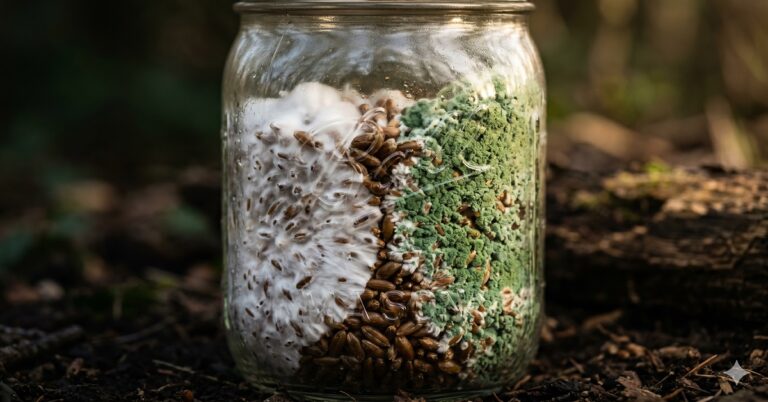
Lion’s mane mycelium is white and tends to grow in thick, rope-like strands rather than the fluffy cottony growth of oyster mushrooms. This is normal — healthy lion’s mane mycelium often looks more dense and organised than other species. Watch for any green, black, or pink colouration which signals contamination — consult our mushroom contamination guide if you see these signs.
Step 4: Initiate Fruiting
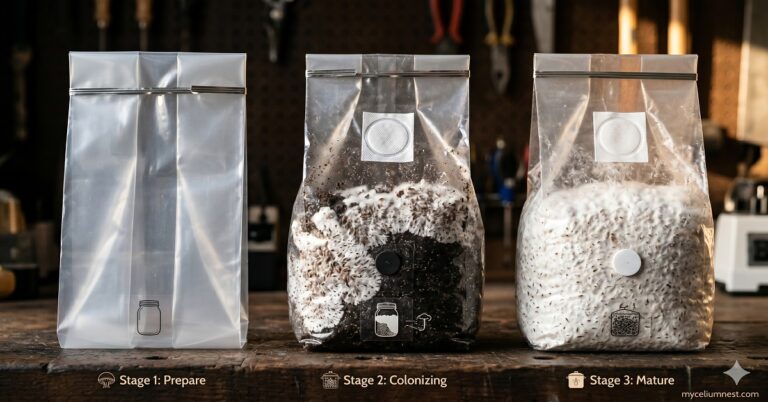
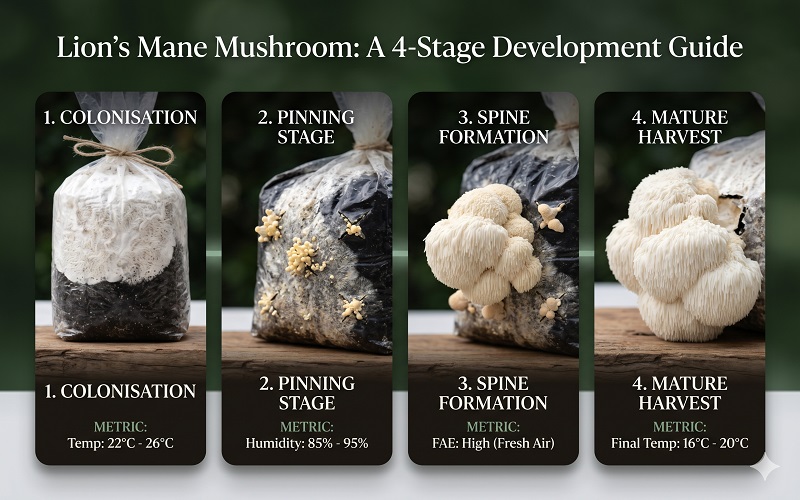
Once your block or jar is completely white — no visible substrate colour showing through — it’s ready to fruit. Lion’s mane fruiting initiation is simpler than many other species because it doesn’t require a dramatic temperature drop. The key triggers are:
- Introduce fresh air: Cut a 5–8cm X or square opening in the bag, or remove the jar lid and replace with damp paper towel or a loose foil cover
- Raise humidity to 85–95%: Begin misting the fruiting site 2–3 times daily, or move to a fruiting chamber
- Indirect light: 12 hours of ambient indirect light daily helps direct growth orientation — the lion’s mane grows toward light
- Keep temperature at 18–22°C: A slight drop from incubation temperature helps trigger pinning
Fruiting Conditions: The Critical Details
Lion’s mane is more sensitive to fruiting environment than oyster mushrooms in one specific way: it is highly sensitive to elevated CO₂ levels.
CO₂ and Lion’s Mane: Why Fresh Air Exchange Is Non-Negotiable
In nature, lion’s mane grows on exposed tree wounds where fresh air is abundant. In cultivation, elevated CO₂ causes the spines to elongate and the fruiting body to become loose and icicle-like rather than the dense, compact pom-pom shape that commands premium prices at markets — and tastes best in the kitchen.
Practical guide: if your lion’s mane is developing long, drooping spines rather than a compact ball, increase fresh air exchange immediately. This means enlarging your bag opening, adding a small fan on a timer nearby (not blowing directly onto the mushroom), or moving to a better-ventilated space.
For detailed environmental parameters across the full mushroom lifecycle, see our complete fruiting conditions guide. For building an enclosed fruiting space with controlled FAE and humidity, read our fruiting chamber build guide.
Lion’s Mane Fruiting Problem Solver
Ideal Lion’s Mane Fruiting Environment
A digital hygrometer and thermometer combo is essential for monitoring your fruiting environment. This is a $12–$20 investment that removes guesswork entirely.
Harvesting Lion’s Mane Correctly
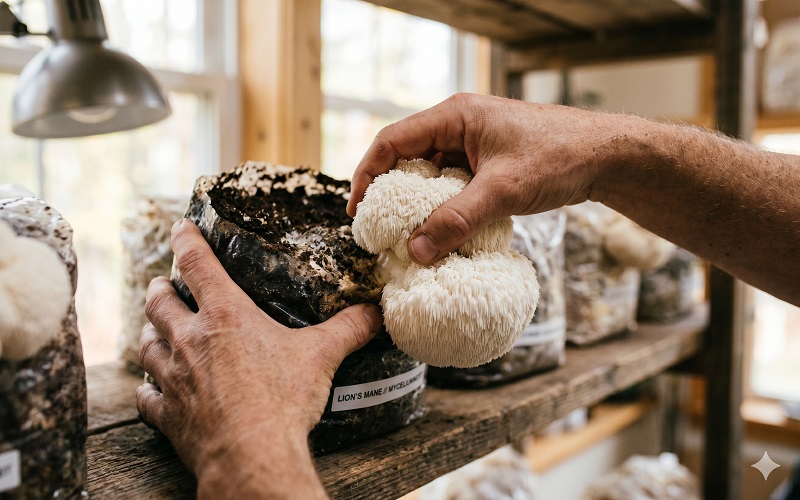
When to Harvest
Harvest timing for lion’s mane is different from most mushrooms — you watch for colour, not size or cap shape.
Harvest immediately when you notice the very tips of the outermost spines beginning to show the faintest yellow or tan tinge. At this point the mushroom is at peak flavour, peak density, and peak nutritional content. Do not wait until the browning is obvious — by then, the outer spines have already begun to break down and the flavour becomes noticeably more bitter.
How to Harvest
- Clean your hands thoroughly or wear gloves
- Grasp the base of the entire fruiting body firmly
- Twist gently while pulling — it should detach cleanly in one piece
- Remove any attached substrate from the base with a clean brush or dry cloth
- Clean the harvest site on the block — remove any remaining mycelium stumps cleanly
Storage
Fresh lion’s mane should be used within 3–5 days. Store loosely wrapped in a paper bag in the refrigerator — never in an airtight container (it needs to breathe). For longer storage, slice thinly and dry in a food dehydrator at 40–50°C until completely crisp — dried lion’s mane rehydrates beautifully in stocks and soups.
Why People Grow Lion’s Mane: What the Research Shows
Many growers start their lion’s mane journey after encountering claims about brain health, nerve regeneration, or cognitive enhancement. These claims are not baseless — but they require careful framing.
The Science (Plain Language)
Lion’s mane contains two classes of bioactive compounds not found in other mushrooms: hericenones (in the fruiting body) and erinacines (in the mycelium). Both have shown in laboratory and some human studies to stimulate the synthesis of nerve growth factor (NGF) — a protein critical for the survival and maintenance of neurons.
A 2009 double-blind, placebo-controlled clinical trial published in Phytotherapy Research found significant improvement in mild cognitive impairment scores in participants taking lion’s mane extract versus placebo. A 2023 Australian study found improved processing speed and stress indicators in young adults after 28 days of supplementation.
These results are promising but preliminary. The research base is still small, and most studies used specific extract preparations — not the whole fruiting body you’ll harvest. For our complete, evidence-based analysis of what the research does and does not support, read our full deep dive into lion’s mane research.
If you’re interested in taking lion’s mane as a supplement rather than (or in addition to) growing it, our best lion’s mane supplement guide ranks the top brands by fruiting body content, beta-glucan concentration, and third-party testing.
Common Lion’s Mane Growing Problems
Problem: Long, Drooping, Icicle-Like Spines
Cause: Elevated CO₂ — the single most common lion’s mane fruiting problem.
Solution: Increase fresh air exchange immediately. Enlarge your bag opening, add gentle airflow (fan on a timer, not directed at the mushroom), or move to a more ventilated location. The growth will self-correct within 12–24 hours once CO₂ levels drop.
Problem: Browning Tips Before Harvest Size
Cause: Usually humidity too low (below 80% RH) or direct airflow drying the outer spines.
Solution: Increase misting frequency. Check your hygrometer — if you don’t have one, install one today. Point any fans away from the block. Brown tips do not mean the mushroom is ruined — harvest immediately and trim the brown portions. The interior will still be white and fresh.
Problem: Block Fully White But No Pins After 10+ Days of Fruiting Trigger
Cause: Usually humidity too low, CO₂ too high, or temperature outside the ideal range. Lion’s mane can be slow to initiate pinning compared to oyster mushrooms.
Solution: Verify environmental conditions with a hygrometer/thermometer. Try cutting a larger opening in the bag. Some growers have success with a brief cold shock — moving the block to a cooler location (10–15°C) for 12 hours before returning to fruiting conditions.
Is lion’s mane harder to grow than oyster mushrooms?
Lion’s mane from scratch on supplemented hardwood is moderately more demanding than oyster mushrooms on straw — primarily because it requires sterilisation (pressure cooker) rather than pasteurisation, and it’s more sensitive to CO₂ levels during fruiting. However, with a grow kit, lion’s mane is just as beginner-accessible as oyster mushrooms. We recommend growing oyster mushrooms first (guide here), then moving to lion’s mane as your second project.
How long does it take to grow lion’s mane from inoculation to harvest?
Expect 3–5 weeks from inoculation to first harvest on scratch-grown blocks. The timeline is approximately: 14–21 days colonisation + 5–10 days fruiting initiation + 4–7 days fruit body development = 23–38 days total. Using a grow kit, you skip straight to fruiting — expect 5–10 days from opening the kit to harvest.
Can I grow lion’s mane without a pressure cooker?
Yes — using unsupplemented hardwood fuel pellets only (no bran), you can pasteurise at 82°C for 90 minutes rather than sterilising. Yields will be lower (30–40% less than supplemented), but contamination rates are also lower due to the absence of nutrient-rich supplements. This is an excellent approach for your first scratch grow before investing in a pressure cooker.
How many flushes will I get from a lion’s mane block?
Typically 2–3 flushes from a well-prepared block, with the first flush being the largest. Lion’s mane produces fewer flushes than oyster mushrooms because it doesn’t recover as aggressively after harvesting. Many growers find the second flush produces a more intensely flavoured but slightly smaller fruiting body. After the third flush, yields are usually too small to justify continued maintenance.
What does lion’s mane mushroom taste like?
Fresh lion’s mane has a mild, slightly sweet flavour with a remarkable resemblance to seafood — particularly crab or lobster — when cooked correctly. The texture is dense and meaty, absorbing flavours well and holding its shape during cooking better than most other edible mushrooms. The key is high heat — a very hot cast iron pan with butter or oil until deeply golden produces the best results. See our lion’s mane recipes for technique guides.
Does growing lion’s mane at home produce the same compounds as supplements?
Your home-grown lion’s mane fruiting bodies contain hericenones (the compounds found in fruiting bodies with NGF-stimulating potential in research). However, erinacines — the other key compound — are primarily found in the mycelium, not the fruiting body. Most research-grade supplements use dual-extraction methods to capture both compound classes. So while fresh-grown lion’s mane is nutritious and delicious, it’s not a direct substitute for a well-made supplement if cognitive support is the specific goal. Read our best lion’s mane supplement review for the brands that deliver documented potency.
Can lion’s mane be grown on coffee grounds or straw?
Lion’s mane strongly prefers hardwood-based substrates and does not perform well on straw or coffee grounds compared to oyster mushrooms. On straw, lion’s mane typically colonises poorly and yields very little. Coffee grounds blended with hardwood at no more than 25% can work for a single flush, but are not recommended as a primary substrate. Stick to hardwood fuel pellets with or without supplementation for reliable results.
Disclosure: This article contains affiliate links to Amazon. We earn a small commission at no extra cost to you. See our full disclosure.