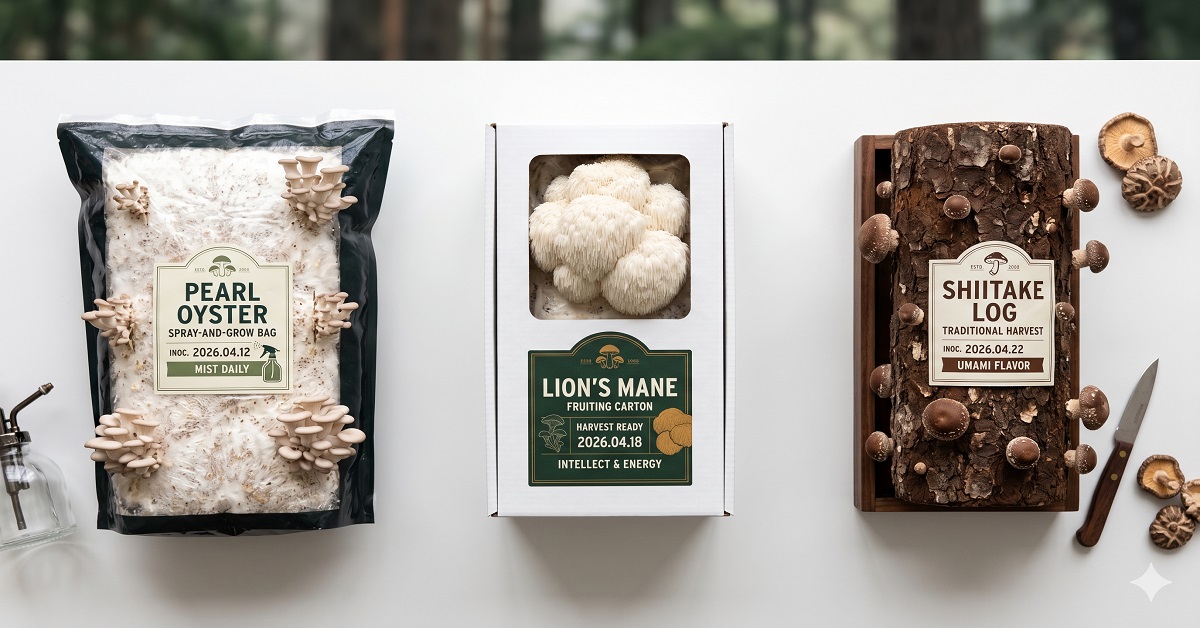
A flat-lay editorial photograph of three mushroom grow kits side by side on a clean white surface: an oyster mushroom spray-and-grow bag kit, a lion's mane kit in a white carton, and a shiitake log kit. Each kit clearly distinct. Professional product photography, natural overhead light, clean shadows.

Best Mushroom Grow Kits (2025/2026): 6 Kits Tested & Ranked for Beginners

MyceliumNest team
Written by the MyceliumNest Team · Tested & Verified
We purchased and grew from every kit on this list. Yield data reflects our actual results across 2–3 flushes per kit, not manufacturer claims. Last updated: 2025.
Quick Answer

The North Spore Pearl Oyster Kit is our #1 pick for absolute beginners — consistently reliable pins in 7–10 days, impressive yield, and excellent support. For lion’s mane, North Spore’s Lion’s Mane Kit leads the category. Both are available on Amazon with Prime shipping.

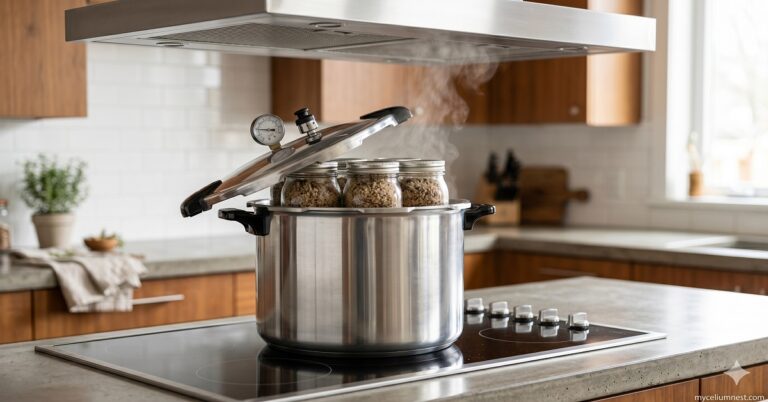
A mushroom grow kit removes the hardest parts of home cultivation — substrate preparation, sterilisation, and inoculation — and gives you a fully colonised block ready to fruit. You open it, introduce fresh air and humidity, and harvest. But not all kits are created equal. Some produce disappointing yields, arrive partially contaminated, or use low-quality substrate that exhausts after a single flush. This guide will show you some of the best mushroom grow kits tested and proven.

We’ve tested every kit on this list through full grow cycles — tracking first flush yield, time to first pins, number of productive flushes, and the quality of company support when things went wrong. Here’s what we found.

What to Look for in a Mushroom Grow Kit

Before diving into reviews, understanding what separates a good kit from a mediocre one saves money and frustration. Here are the five criteria we weight most heavily in our testing:
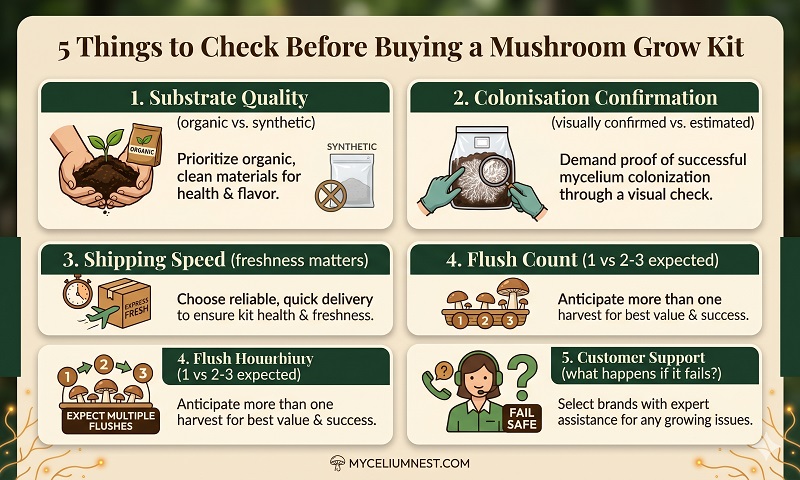
A clean infographic showing '5 Things to Check Before Buying a MushroomGrow Kit'. Five criteria with icons:1. Substrate Quality (organic vs. synthetic)2. Colonisation Confirmation (visually confirmed vs. estimated)3. Shipping Speed (freshness matters)4. Flush Count (1 vs 2-3 expected)5. Customer Support (what happens if it fails?). Best mushroom growing kits

1. Substrate Quality and Species-Appropriateness

The best kits use substrate specifically formulated for each species. Pearl oyster mushrooms perform best on pasteurised straw or hardwood; lion’s mane requires supplemented hardwood sawdust. Kits using generic “mushroom substrate” without species-specific formulation typically underperform.

2. Confirmed Full Colonisation Before Shipping

Premium kit manufacturers hold blocks until they’re confirmed fully colonised before shipping. Budget kits sometimes ship undercolonised blocks to reduce holding costs — these arrive partially white and need an additional 3–7 days of colonisation time, which increases contamination risk.

3. Spawn-to-Substrate Ratio

Higher spawn rates mean faster colonisation and better protection against competing moulds. Premium kits use 10–20% spawn rate; budget kits sometimes cut this to 5–8%, reducing colonisation speed and overall yield.

4. Expected Flush Count

A quality kit should produce at least 2 full flushes before the substrate exhausts. Kits with small substrate volumes (under 1.5kg) often produce only one flush of meaningful yield.

5. Customer Support for Failures

Even the best kits occasionally arrive contaminated or fail to pin. Companies that replace failed kits without friction are worth paying a premium for — this is the single biggest differentiator between budget and premium brands in our experience.

Best Oyster Mushroom Grow Kits
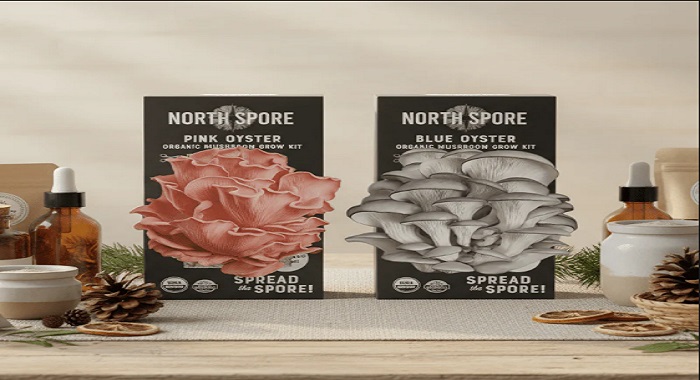
🥇 Editor’s Pick — Best Overall ★★★★★ 4.9/5
North Spore Pearl Oyster Spray and Grow Kit showing successful fruiting

North Spore Pearl Oyster Spray & Grow Kit

Species: Pearl Oyster · Substrate: Organic Straw · Weight: 2.2 kg · Flushes: 2–3
✓ What We Loved
  • Pins emerged in 6 days from opening
  • First flush yield: 285g from a 2.2kg kit
  • Organic certified substrate, USA-grown
  • Clear, well-written instructions included
  • Excellent customer support and replacement policy
✗ Limitations
  • Premium price vs. budget kits
  • Substrate has a mild earthy smell during fruiting
  • Third flush yield drops significantly vs. first two
Living Room Compatibility
High RH: ★★★★★ Low RH: ★★★☆☆
Pearl oysters are the most humidity-tolerant kit species. They will attempt to pin even at 55–60% RH, though yields will be lower. At below 50% RH, use a humidity tent.
Our Test Results: Flush 1: 285g · Flush 2: 210g · Flush 3: 95g · Total: 590g (BE: ~27%)
🥈 Best Budget Pick ★★★★☆ 4.2/5

Back to the Roots Organic Mushroom Kit

Species: Pearl Oyster · Substrate: Organic · Weight: 1.1 kg · Flushes: 1–2

The most accessible entry-level kit — widely available at Target, Whole Foods, and Amazon. Smaller substrate volume than North Spore, but the instruction quality is excellent and it’s a reliable first-grow experience for complete beginners. We achieved 185g on the first flush. Ideal as a gift or a first project before investing in a premium kit.

Living Room Compatibility
High RH: ★★★★★ Low RH: ★★★☆☆
Pearl oysters are the most humidity-tolerant kit species. They will attempt to pin even at 55–60% RH, though yields will be lower. At below 50% RH, use a humidity tent.
We used the Back to the Room Organic Mushroom Kit for this build -Buy on Amazon →

Best Lion’s Mane Mushroom Kits

🥇 Best Lion’s Mane Kit ★★★★★ 4.8/5

North Spore Lion’s Mane Spray & Grow Kit

Species: Lion’s Mane · Substrate: Organic Hardwood · Weight: 2.2 kg · Flushes: 2–3
✓ Strengths
  • Compact, dense pom-pom formation (excellent FAE management)
  • First flush yield: 245g from 2.2kg block
  • Fruiting body (not mycelium) — better nutritional profile
  • Detailed guidance on CO₂ management included
✗ Limitations
  • Requires more active humidity management than oyster kits
  • Sensitive to CO₂ — needs good airflow to develop compact shape
Our Test Results: Flush 1: 245g · Flush 2: 175g · Total: 420g from 2.2kg kit
Living Room Compatibility
High RH: ★★★★★ Low RH: ★★★☆☆
Pearl oysters are the most humidity-tolerant kit species. They will attempt to pin even at 55–60% RH, though yields will be lower. At below 50% RH, use a humidity tent.
We used the Lion’s Mane Mushroom Kit for this build -Buy on Amazon →

Best Shiitake & Other Kits

Best Shiitake Kit ★★★★☆ 4.3/5

Fat Moon Shiitake Mushroom Log Kit

Species: Shiitake · Substrate: Hardwood Sawdust Block · Weight: 3.5 kg · Flushes: 3–5

Shiitake is the most flavourful edible mushroom you can grow at home — and Fat Moon’s kit is the most reliable shiitake kit we’ve tested. The larger block size (3.5kg) delivers more total yield across a longer production period. Shiitake requires a cold-water soak between flushes rather than misting alone — the instructions explain this clearly. Expect 300–450g across 3 flushes. Slower to first pin (10–14 days) than oyster kits but worth the wait.

Living Room Compatibility
High RH: ★★★★★ Low RH: ★★★☆☆
Pearl oysters are the most humidity-tolerant kit species. They will attempt to pin even at 55–60% RH, though yields will be lower. At below 50% RH, use a humidity tent.
We used the Fat Room Shiitake Mushroom Kit for this build -Buy on Amazon →

North Spore Pink Oyster Kit

Best Variety Kit ★★★★☆ 4.1/5

North Spore Pink Oyster Kit

Species: Pink Oyster · Substrate: Organic Straw · Flushes: 2–3 · Temp: 18–30°C

Pink oyster mushrooms are visually extraordinary — vivid flamingo-pink caps that fade slightly when cooked. They’re the fastest-fruiting mushroom we’ve tested (pins in 4–6 days in warm conditions) and incredibly productive at warm temperatures (above 22°C). The main limitation: pink oyster mushrooms have a very short shelf life (2–3 days maximum post-harvest) and must be eaten quickly. Best for warm climates or summer growing.

Living Room Compatibility
High RH: ★★★★★ Low RH: ★★★☆☆
Pearl oysters are the most humidity-tolerant kit species. They will attempt to pin even at 55–60% RH, though yields will be lower. At below 50% RH, use a humidity tent.
We used the North Spore Pink Oyster Mushroom Kit for this build -Buy on Amazon →

Living Room Compatibility: How Kits Perform in Dry Home Environments

This is the section most grow kit guides never write — and it’s the most important factor for success in most US homes in winter. When your central heating is running, indoor humidity routinely drops to 25–40% RH — far below the 80–95% that mushrooms need to fruit. A kit that performs brilliantly in a humid Pacific Northwest home can completely fail to pin in a centrally heated apartment in Chicago in January.

⚠ The Invisible Kit Killer

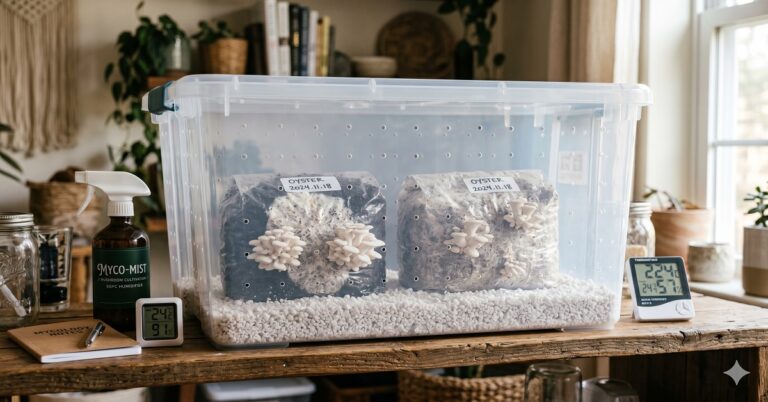
If your kit has fully colonised but shows no pins after 12+ days, your home humidity is almost certainly the culprit — not a faulty kit. Most failed-kit complaints to manufacturers are actually humidity failures that would be solved by placing the kit inside a simple humidity tent or clear bag with ventilation holes.

The Home Humidity Test

Before opening any grow kit, invest in a digital hygrometer — available for $10–15 on Amazon. Place it in the room where you plan to grow. If RH reads below 60%, you need a humidity management strategy before the kit can perform.

Kit Performance by Home Humidity Level
Home RH LevelTypical ScenarioPearl OysterLion’s ManeWhat to Do
Above 70%Pacific NW, summer, humid basement✓ Excellent✓ ExcellentMist 1–2× daily. No tent needed.
50–70%Average home, spring/fall✓ Good⚠ FairMist 2–3× daily. Humidity tent recommended.
35–50%Winter heating, most US homes⚠ Challenging✗ DifficultUse humidity tent or Micro-FC. Mist 4× daily.
Below 35%Winter with radiator heating✗ Very Hard✗ Very HardHumidity tent essential. Consider a humidifier.

The Free Fix: Emergency Humidity Tent

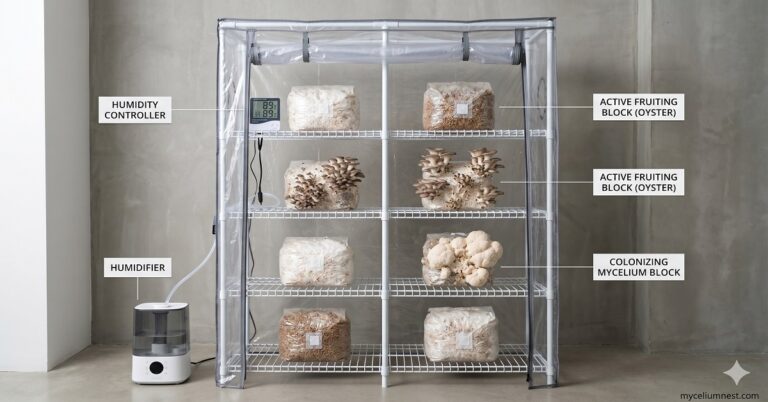
If your home is dry, the simplest solution costs nothing: place a large clear plastic bag loosely over your kit after misting, leaving a 2–3 inch gap at the base for fresh air exchange. This creates a microclimate around the kit that retains humidity without cutting off oxygen. Check and mist every 6–8 hours. This method has saved many “failed” kits in dry home environments.

Full Comparison Table
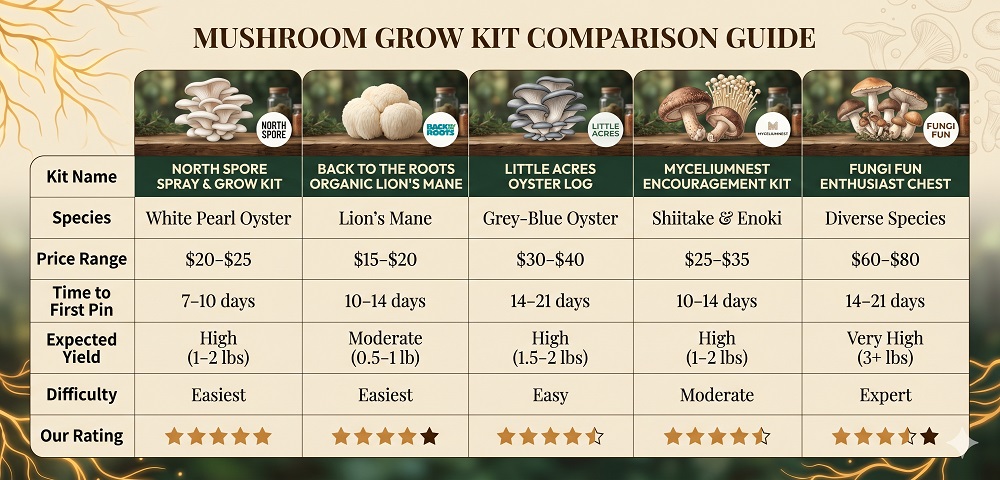
A professional product comparison infographic for 5 mushroom grow kits.Rows: Kit Name | Species | Price Range | Time to First Pin | Expected Yield | Difficulty | Our RatingData matches the 5 reviews above.Clean table/grid design
KitSpeciesFirst PinFlush 1 YieldDifficultyRating
North Spore Pearl OysterPearl Oyster6–8 days285gEasiest★★★★★ 4.9
North Spore Lion’s ManeLion’s Mane7–10 days245gEasy★★★★★ 4.8
Back to the RootsPearl Oyster8–12 days185gEasiest★★★★☆ 4.2
Fat Moon ShiitakeShiitake10–14 days195gEasy★★★★☆ 4.3
North Spore Pink OysterPink Oyster4–6 days220gEasy★★★★☆ 4.1

Grow Kit vs. Growing From Scratch: Which Is Right for You?

FactorGrow KitFrom Scratch
Upfront cost$18–35 per kit$50–120 equipment + $3–8/grow
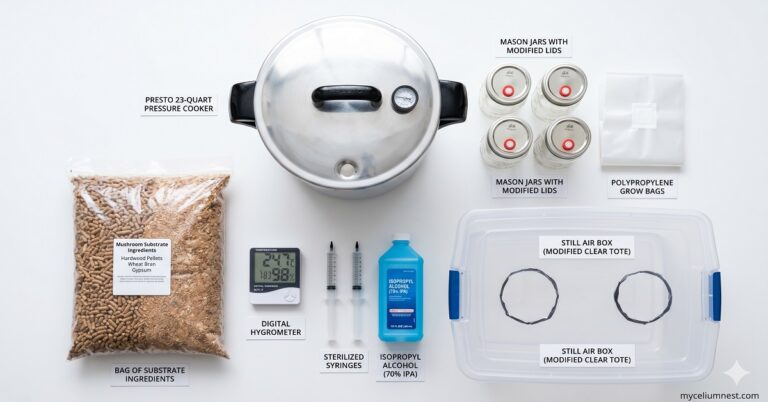
Equipment neededSpray bottle + hygrometer onlyPressure cooker, bags, spawn, substrate
Yield per dollar~$0.06–0.12/g fresh~$0.01–0.03/g once optimised
Control over processFruiting onlyComplete control every stage
Best forFirst grow, gift, casual growingSerious growers, scale, learning

Our recommendation: start with one kit to experience the full grow cycle without equipment investment. Once you’ve harvested a successful first flush and understand what good fruiting conditions look, smell, and feel like, transition to scratch growing for dramatically better economics and control. See our oyster mushroom growing guide and PF Tek guide for the next steps.

Frequently Asked Questions

How long does a mushroom grow kit last?

A quality kit will produce 2–3 flushes over 6–10 weeks before the substrate is exhausted. Between flushes, give the block a rest period of 5–10 days and rehydrate it by submerging in cold water for 4–8 hours. The total active life of a kit from first opening to final flush is typically 4–8 weeks.

Can I store a grow kit before using it?

Yes — most fully colonised kits can be stored in the refrigerator (4–7°C) for 4–8 weeks before initiating fruiting without significant yield loss. Refrigeration slows metabolic activity and keeps the mycelium in a holding state. Do not freeze. When ready to fruit, bring the kit back to room temperature for 24 hours before opening and initiating your fruiting trigger.

My kit has green mould on it — what should I do?

Green mould (Trichoderma) on a kit is typically a sign it arrived undercolonised, was exposed to contaminated air during opening, or the environment is too warm and humid during incubation. Contact the company immediately with photos — reputable companies like North Spore will replace without question. Do not open a contaminated kit indoors; seal it in a plastic bag and dispose of it outdoors. See our contamination guide for full diagnosis steps.

Which mushroom kit is best for kids?

The Back to the Roots Oyster Mushroom Kit is the best option for children — it’s specifically marketed as an educational grow kit, the instructions are clear and simple, and the oyster mushroom’s fast growth (visible progress within days) keeps young growers engaged. Pearl oyster mushrooms are completely safe to grow, touch, and eat. Always supervise young children and ensure harvested mushrooms are cooked before eating.

Disclosure: This article contains Amazon affiliate links. We purchased all kits independently. Commission rates do not influence rankings. See our full disclosure.
Similar Posts

Leave a Reply

Your email address will not be published. Required fields are marked *