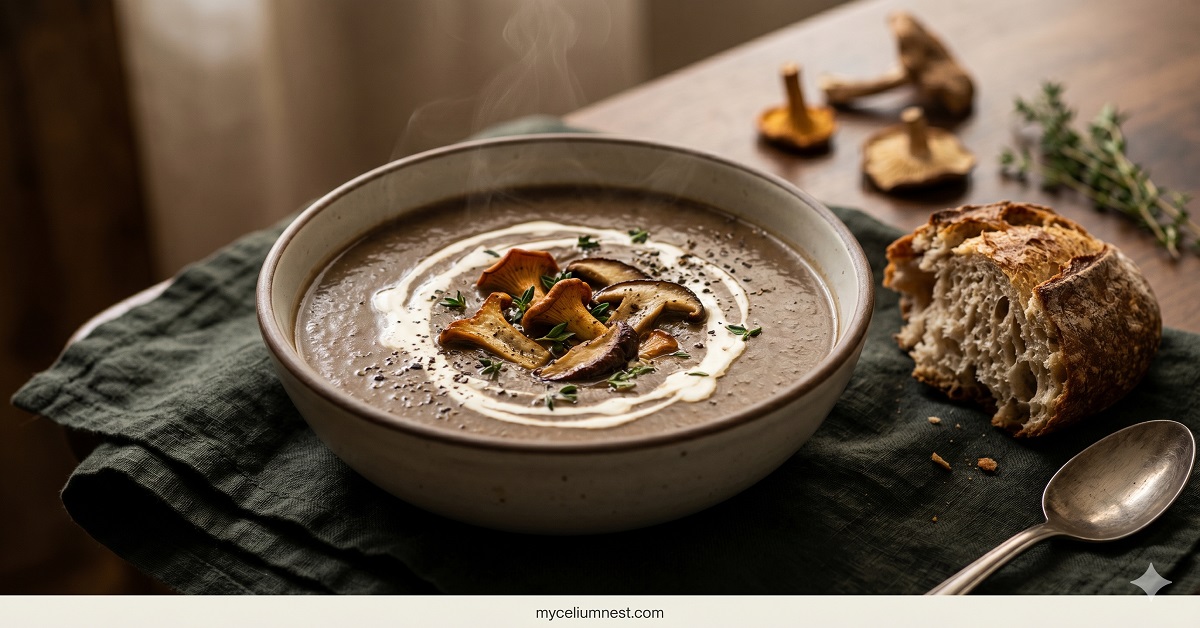
Mushroom Soup Recipes: 6 Definitive Versions from Silky Cream to Hearty Broth

The depth difference between a good mushroom soup and a great one comes from using two forms of mushroom simultaneously: fresh or rehydrated mushrooms for body and texture, and a concentrated dried mushroom stock for depth and umami. A soup made with fresh mushrooms alone, no matter the quantity, cannot match the layered flavour of one where dried mushroom soaking liquid forms the base.
The Double Mushroom Foundation Technique
Before any of the six recipes below, master this technique — it applies to all of them:
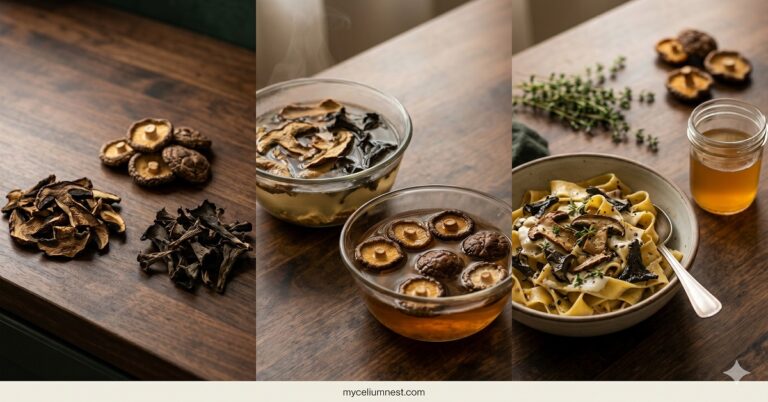
- Soak 20g dried shiitake (or mixed dried mushrooms) in 750ml warm water for 20 minutes
- Remove mushrooms (squeeze gently, reserve). The soaking liquid is your mushroom stock — it is deep amber, intensely flavoured, and contains concentrated glutamates
- Strain through a fine sieve to remove grit
- Use this liquid as your soup base instead of plain stock
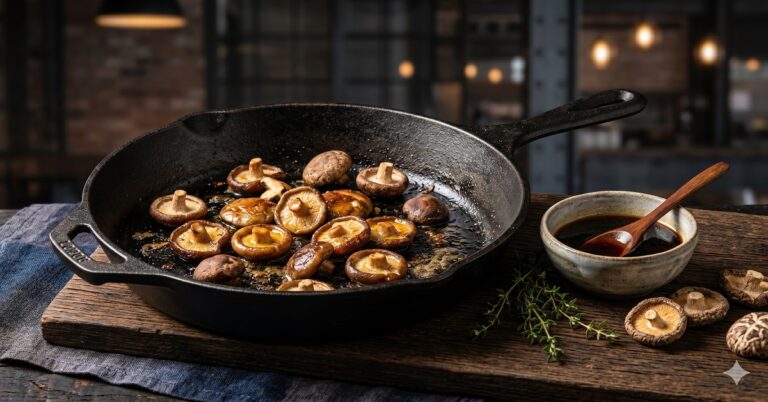
- Brown fresh or rehydrated mushrooms in butter over high heat until golden
- This caramelisation creates Maillard-reaction compounds unavailable from soaking
- Reserve some for garnish — the textural contrast between silky soup and seared mushroom garnish is essential
- Deglaze the browning pan with a splash of wine to capture all the fond
Blend or Chunky? The Texture Decision Guide by Species
The most common mid-recipe uncertainty in mushroom soup cooking: “Should I blend this or leave it chunky?” The answer depends on your mushroom species, the desired flavour intensity, and the eating occasion. Here is the complete decision framework:
| Species Used | Blend? | Why | Texture Result |
|---|---|---|---|
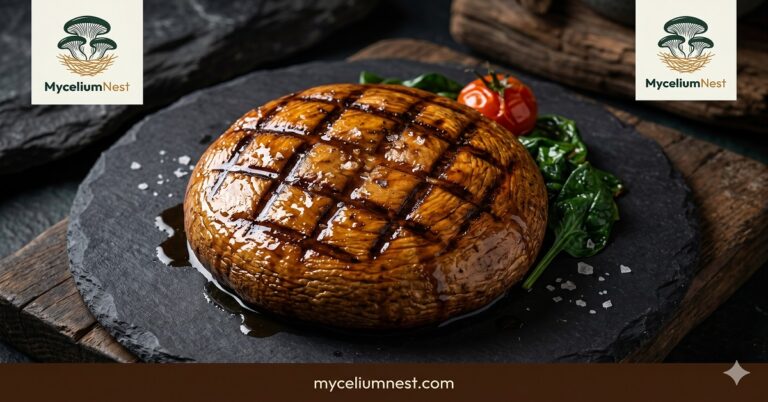
| Portobello (cream soup) | ✓ Fully blend | Dense flesh purees to a silky-thick consistency; dark gills create a beautiful deep brown colour when blended | Silky, restaurant-quality, deep umami |
| Shiitake dashi broth | ✗ Never blend | Clear broth clarity is the aesthetic and sensory goal; blending creates a murky grey result that defeats the purpose | Clear amber broth, sliced mushrooms visible |
| Mixed wild mushrooms | ½ blend | Blend half for body/thickness; leave half chunky for texture contrast. The best of both — thick but with visible mushroom pieces | Rustic, hearty, layered texture |
| Oyster mushroom | Light blend or none | Oyster’s delicate texture disintegrates to mush if over-blended; keep chunky or pulse briefly for semi-thick texture | Light-bodied with visible mushroom pieces |
| Mushroom barley | ✗ Never blend | The whole barley grains are the textural counterpoint that makes this soup satisfying — blending destroys the contrast | Hearty, brothy, grain texture integral |
| Thai coconut soup | ✗ Never blend | The aromatics (lemongrass, galangal) are strained out; mushrooms remain whole to provide texture in the clear coconut broth | Clear coconut broth with whole mushroom pieces |
6 Essential Mushroom Soup Recipes
1. Silky Cream of Mushroom Soup
THE CLASSIC, DONE RIGHTNot the tinned version — the version that makes people understand why mushroom soup is one of the great dishes. Build the double mushroom base. Sauté shallots and garlic in butter until soft. Add the browned mushrooms, the soaking liquid, and additional vegetable stock. Simmer 20 minutes. Blend completely smooth with an immersion blender. Return to low heat and add 150ml double cream and 1 tsp truffle oil (optional). Season with white pepper and sea salt. The blending completely emulsifies the mushroom solids into the liquid — the result is silky, luxuriously thick, and intensely mushroom-flavoured.
2. Shiitake Dashi Noodle Soup
The Japanese approach to mushroom soup — entirely broth-based, no cream. Prepare shiitake dashi (the cold-steep method from our shiitake guide). Season with soy sauce, mirin, and a small piece of ginger. Add blanched bok choy, ramen or soba noodles, and the rehydrated shiitake caps sliced thin. Top with a soft-boiled egg, sesame oil, spring onion, and togarashi. The clarity and depth of a proper dashi makes this soup extraordinary without any dairy or fat.
3. French Onion-Style Wild Mushroom Soup
Caramelise onions deeply for 45 minutes (they must be truly dark amber and jammy — this cannot be rushed). Add a mixed mushroom medley (portobello, shiitake, oyster), the double mushroom base, red wine, and beef-style stock. Ladle into oven-proof bowls, top with sourdough croutons and generous Gruyère. Grill until the cheese is bubbling and brown at the edges. The mushrooms provide the umami depth that makes this soup extraordinary without requiring the original beef stock foundation.
4. Roasted Mushroom & Tomato Soup
An unexpected pairing that works through complementary umami. Roast portobello caps and cherry tomatoes together at 200°C with garlic, olive oil, and balsamic — the tomato’s glutamic acid amplifies the mushroom’s GMP synergistically. Blend with the double mushroom base and vegetable stock. The natural acidity of tomato cuts through the earthiness of mushroom, creating a brighter, more complex flavour than either ingredient alone.
5. Thai Coconut Mushroom Soup (Tom Kha Style)
The mushroom version of Thailand’s famous coconut soup. Simmer coconut milk with galangal (or ginger), lemongrass, kaffir lime leaves, and fish sauce (or soy for vegan). Add oyster mushrooms and king oyster rounds. Finish with lime juice — add off the heat to preserve brightness. The fat of coconut milk carries the aromatic compounds beautifully; the mushrooms provide body and texture in what would otherwise be a purely liquid experience. See our USDA oyster mushroom data for the nutritional profile of the base mushrooms in this soup.
6. Mushroom Barley Soup (Hearty Winter Version)
The most satisfying cold-weather mushroom soup. Build the double mushroom base. Sauté mirepoix (onion, carrot, celery), add a can of tomatoes, the mushroom stock, pearl barley, and a bouquet garni. Simmer 45 minutes until barley is tender. Add the browned mushrooms in the final 10 minutes. Season generously. The barley absorbs the mushroom stock as it cooks, every grain carrying concentrated mushroom flavour. This is a meal, not a starter — serve with rye bread and butter.
See our full disclosure.