Written by the MyceliumNest Team · Independently Tested
All supplements on this list were purchased at full price and used for a minimum of 60 days. Rankings based on triterpene content, beta-glucan levels, extraction quality, and third-party testing — not commission rates. Last updated: 2025.
⚕ Medical Disclaimer: Reishi supplements are not approved by the FDA to treat, cure, or prevent any disease. This article is for educational purposes only. Consult your healthcare provider before starting any new supplement.
Quick Verdict
Real Mushrooms Reishi Extract is our #1 pick — 100% fruiting body, standardised triterpenes and beta-glucans (≥25%), certified organic, dual-extracted, and fully third-party tested. For those seeking a specifically dual-extracted product with the highest triterpene content, Freshcap’s Reishi is an outstanding alternative.
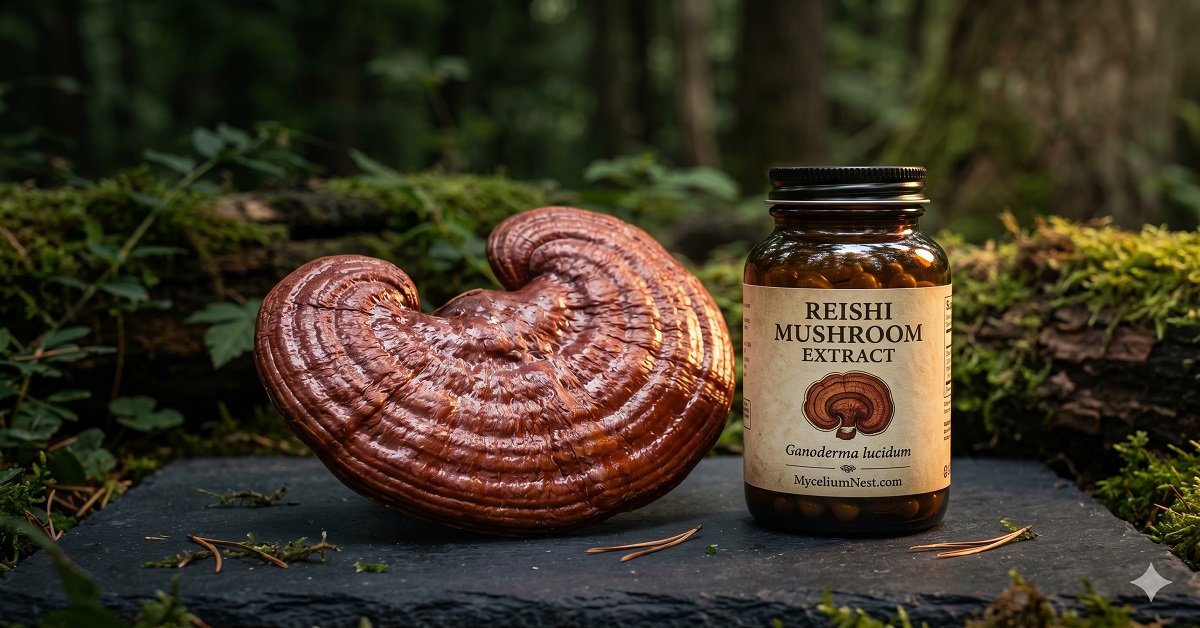
Reishi (Ganoderma lucidum) has been used in Traditional Chinese Medicine for over 2,000 years — where it is known as Lingzhi (spirit mushroom) or the “mushroom of immortality.” The modern supplement market has elevated this reputation into a $300 million global category.
The challenge: reishi is one of the most adulterated supplement categories on the market. Because the bioactive compounds that make reishi interesting — particularly ganoderic acids (triterpenes) and beta-glucans — are expensive to produce in concentrated form, a significant proportion of commercial reishi supplements contain mostly grain starch from mycelium-on-grain production. Before buying any reishi supplement, understanding the quality spectrum is essential. Read our foundational guide to fruiting body vs mycelium on grain first. This guide provides information on the best reishi mushroom supplements presntly in the market.
Unlike lion’s mane (which is primarily studied for hericenones and NGF effects) or turkey tail (primarily beta-glucans for immune support), reishi’s most pharmacologically interesting compounds are its triterpenes — specifically ganoderic acids. More than 400 distinct triterpenes have been identified in Ganoderma species.
Ganoderic acids are responsible for reishi’s distinctive bitter taste — which is a useful quality indicator. Genuine, potent reishi extracts taste noticeably bitter. A reishi product that tastes neutral or mildly sweet is almost certainly low in triterpene content.
Research on ganoderic acids has examined their potential role in:
Supporting healthy immune function (immunomodulation via beta-glucans and triterpene interactions)
Adaptogenic stress response (multiple small human trials show modest cortisol modulation)
Supporting healthy sleep — one of the most commonly reported benefits from consistent reishi use
Liver support (triterpenes in animal studies; limited human data)
Evidence note: Reishi research consists primarily of in vitro (cell culture), animal studies, and small human trials. The evidence base for most claims is preliminary. The immune modulation and adaptogenic stress effects have the best-supported human data.
Beta-Glucans — The Immune Modulation Component
Like all edible mushrooms, reishi contains beta-1,3/1,6-glucans — the structural polysaccharides with the strongest evidence for immune modulation. A quality reishi extract should specify beta-glucan content independently from total polysaccharides. Look for ≥20% beta-glucans on the supplement facts panel.
What to Look for in a Reishi Supplement
Reishi has one quality criterion that is unique among mushroom supplements: triterpene content. Because triterpenes (ganoderic acids) are heat-stable and alcohol-soluble but NOT water-soluble, they require alcohol extraction to concentrate in a supplement. This makes dual extraction (water + alcohol) particularly important for reishi — more so than for lion’s mane or turkey tail.
Quality Indicator
What to Look For
Why It Matters
Source
“Fruiting body” specified
Mycelium on grain produces negligible triterpene content; most ganoderic acids are concentrated in the fruiting body and spores.
Extraction method
Dual extract (water + alcohol)
Water extracts beta-glucans; alcohol extracts triterpenes. You need both for a complete reishi extract.
Freshcap’s dual-extracted reishi is the strongest choice for those specifically seeking triterpene (ganoderic acid) content alongside beta-glucans. The alcohol extraction step concentrates the bitter, liver-supporting, adaptogenic compounds that water extraction alone misses. Noticeably more bitter than single-extract products — a reliable indicator of genuine triterpene content. Excellent transparency and educational content from the brand.
Paul Stamets’ Host Defense uses mycelium — not fruiting body — for their reishi. While this is generally a quality flag in our framework, Host Defense is transparent about this and uses an alcohol fermentation process that does concentrate some ganoderic acid precursors from the mycelial stage. The brand’s scientific credibility and Stamets’ standing in mycology make this a more trustworthy mycelium product than most. Our third pick but recommended for those who specifically want a US-grown, organic product with strong brand credentials.
Source: Mycelium + Fruiting Body Blend · USDA Organic · Widely Available
Om Mushrooms blends mycelium and fruiting body — which is a step above pure mycelium-on-grain products but falls short of the 100% fruiting body standard we prefer. Their polysaccharide claims are not specified as beta-glucans, which limits our ability to independently verify potency. However, as a widely available, reasonably priced option from a brand with some transparency about their process, it’s an acceptable starting point. Available at Whole Foods and Target as well as Amazon.
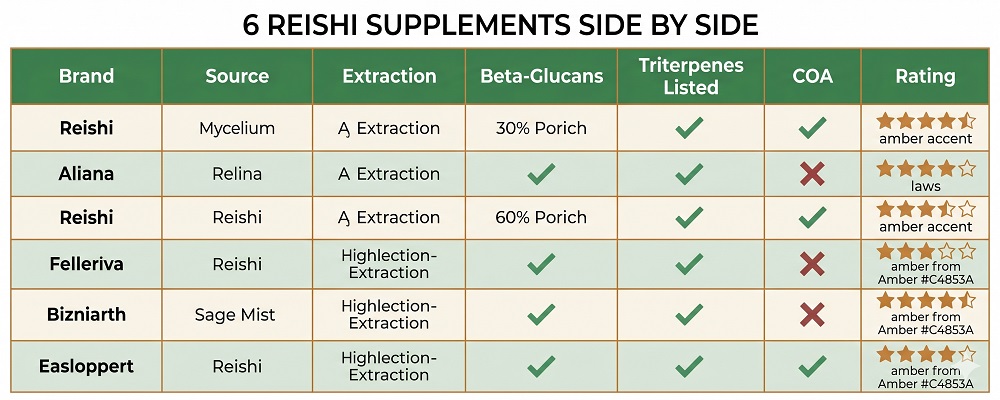
Full Comparison Table
Brand
Source
Extraction
Beta-Glucans
Triterpenes
COA
Rating
Real Mushrooms
Fruiting Body ✓
Hot Water
≥25% ✓
Not specified
Yes ✓
★★★★★
Freshcap
Fruiting Body ✓
Dual Extract ✓
≥20% ✓
Yes ✓
Yes ✓
★★★★★
Host Defense
Mycelium
Alcohol
Not specified
Partial
Yes ✓
★★★★☆
Om Mushrooms
Blend
Water
Not as Beta-G
No
Partial
★★★★☆
Reishi Dosage: What the Research Used
Reishi dosing in published studies varies significantly depending on the form and the outcome being studied:
1,500–3,000mg
Dried powder equivalent
Most human trials studying immune modulation used this range daily for 8–12 weeks.
500–1,000mg
Extract equivalent
Concentrated dual extracts at 10:1 ratio — effective dose equivalent to 5,000–10,000mg powder.
8–12 weeks
Minimum trial duration
Reishi works cumulatively. Most users report sleep and stress effects before immune benefits become apparent.
Side Effects and Safety
Medical Caution: Who Should Exercise Care with Reishi
While reishi has an excellent safety profile for most healthy adults, the following groups should consult their healthcare provider before use:
!
Blood Thinners & Anticoagulants
Reishi may have mild antiplatelet (blood-thinning) properties. If you take warfarin (Coumadin), heparin, aspirin therapy, clopidogrel (Plavix), or any other anticoagulant medication, discuss reishi supplementation with your prescribing physician before starting. The combination may increase bleeding risk.
!
Scheduled Surgery — Stop 2 Weeks Before
Discontinue reishi supplementation at least 2 weeks before any scheduled surgical procedure. The mild antiplatelet effect, while not clinically significant in most everyday situations, could be relevant in a surgical context where bleeding control is critical. Inform your surgeon and anaesthesiologist of any supplements you take.
!
Immunosuppressant Medications
Reishi is an immunomodulator — it influences immune system activity. This property is the source of its most studied benefits, but it creates a theoretical concern for those taking immunosuppressant drugs (used after organ transplants or for autoimmune conditions). Consult your transplant team or rheumatologist before use.
!
Liver Disease
Several isolated case reports exist of liver injury associated with reishi supplementation — most linked to powdered whole reishi rather than standardised extracts, and most in individuals with pre-existing liver conditions. Those with liver disease (cirrhosis, hepatitis, fatty liver disease) should consult a hepatologist before use.
✓ Most healthy adults: No significant safety concerns at typical doses (500–2,000mg daily of standardised extract) in published research up to 16 weeks. Minor GI discomfort in the first few days is the most commonly reported effect and typically resolves within a week. The bitter taste of genuine extracts is not a side effect — it’s a quality indicator.
This information is for educational purposes only and does not constitute medical advice. Always disclose all supplements to your healthcare provider.
Frequently Asked Questions
What does reishi mushroom do exactly?
Reishi is primarily studied as an immunomodulator (it may help regulate immune function — supporting it when underactive, moderating it when overactive) and as an adaptogen (helping the body manage physiological stress responses). It is also one of the most commonly reported supplements for improving sleep quality, particularly for falling asleep faster and experiencing deeper sleep. The mechanism for sleep effects is not yet well characterised in research but is consistently reported anecdotally and in small trials.
Is reishi safe to take every day?
For most healthy adults, daily reishi supplementation at typical doses (500–2,000mg extract daily) appears safe based on published human trial data. Several studies have run daily supplementation for 12–16 weeks without significant adverse events. Long-term (years-long) safety data in humans is limited — as with any supplement, periodic breaks (4 weeks on, 1 week off) are a reasonable precaution. Those with autoimmune conditions, liver disease, or who take immunosuppressant drugs should consult their physician before daily use.
Why does good reishi taste so bitter?
The bitterness of reishi comes from its triterpene content — specifically the ganoderic acids. These are intensely bitter compounds. In traditional preparation, reishi was always prepared as a long-simmered tea (the extended cooking extracts the bitter triterpenes) — not consumed as a neutral-tasting powder. A reishi supplement that tastes mild or neutral when you open the capsule and taste the powder has almost certainly been processed in a way that removed or never concentrated these compounds. Bitterness is a proxy for quality.
Can I take reishi with lion’s mane together?
Yes. There are no known adverse interactions between reishi and lion’s mane, and many supplement users take both as a “mushroom stack.” Lion’s mane is primarily taken for cognitive support (NGF stimulation); reishi for immune and stress support. They operate through different mechanisms on different body systems. Several combination supplements bundle these species — see our lion’s mane guide and this reishi guide for evaluating whether combination products deliver effective doses of each species.
Disclosure: This article contains Amazon affiliate links and may include links to supplement brand affiliate programmes. Commission rates do not influence rankings. See our full disclosure. This is not medical advice.
Written by the MyceliumNest Team · Supplements Independently Assessed Rankings are based on published beta-glucan content, extraction quality, source verification, and third-party testing transparency. We do not accept payment for rankings — commission rates play zero role in our placement decisions.We ranked the best turkey tail mushroom supplements based on the factors highlighted earlier. The…
Written by the MyceliumNest Team · Independently Tested Every supplement on this list was purchased at full price and used for a minimum of 30 days. Rankings are based on fruiting body sourcing, documented beta-glucan content, extraction method, and third-party testing — not commission rates. Quick Verdict Real Mushrooms Lion’s Mane Extract is our #1…
Written by the MyceliumNest Team · Supplements Independently Assessed Chaga is one of the most misunderstood supplements on the market — simultaneously overhyped and legitimately interesting. This guide cuts through the noise to tell you what the science actually shows, what makes a quality product, and the one risk almost no chaga guide mentions. Before…
Written by the MyceliumNest Team · Both Brands Purchased and Assessed Independently This comparison is based on publicly available lab data, published certificates of analysis, and direct cost-per-dose calculation. We have purchased products from both brands with our own funds. No sponsored content or brand partnership influences this review. The Quick Verdict Four Sigmatic vs…
Written by the MyceliumNest Team · Products Purchased and Tested Independently Mushroom Coffee Review: We tested every major mushroom coffee brand over a 6-week period, assessing coffee quality, mushroom dose transparency, taste profile, and cost per serving. No brand paid for placement in this guide. The Question Nobody Asks Every mushroom coffee brand talks about…
Written by the MyceliumNest Team This article cites published mycological literature and independent laboratory analyses of commercial mushroom supplement products. All claims are sourced and verifiable. This is not medical advice. The Short Answer Fruiting bodies are the actual mushrooms — the part with the highest concentration of bioactive compounds (hericenones, beta-glucans, triterpenes). Mycelium on…