Written by the MyceliumNest Team
We have been researching and personally using functional mushroom supplements since 2019. The stacking protocols in this guide are informed by the clinical literature and refined through personal application across multiple health goals over five years.
The Stacking Principle
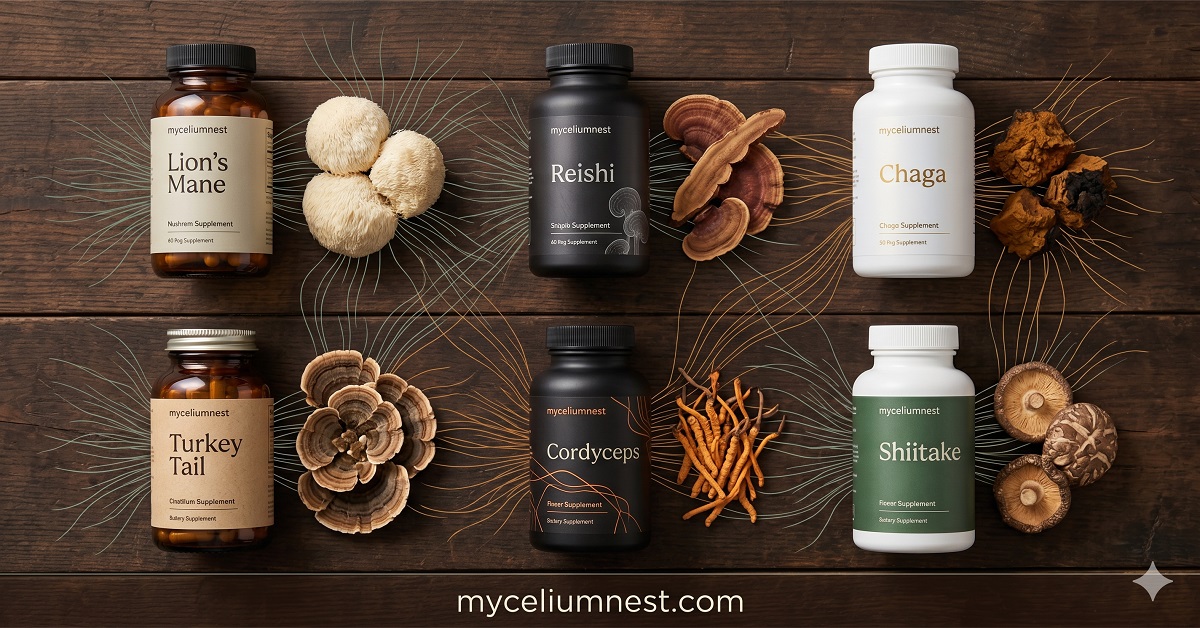
Combining functional mushrooms is not just about convenience — certain species provide genuine synergistic effects when taken together. But not all combinations are equal: some are additive (two species doing similar things better), some are synergistic (two species amplifying each other’s effects), and some are simply redundant. This guide gives you the science to build intentional stacks rather than taking six species and hoping for the best.
Medical disclaimer: Mushroom supplements are not approved to treat, diagnose, or prevent any medical condition. Consult your healthcare provider before beginning any supplement protocol, particularly if you have health conditions or take medications.
The Synergy Science: Why Some Combinations Work Better Than Others
The functional mushroom supplement market frames stacking primarily as a convenience — take one capsule with six species instead of six capsules. But the scientific basis for stacking goes deeper: different mushroom species work through different biological pathways, and combining species that target complementary pathways can produce effects that neither species achieves alone.
A 2021 review in Frontiers in Immunology, available through PubMed PMID 34668772, documented that polysaccharides from different mushroom species activate different receptor subtypes on immune cells — suggesting that multi-species immune stacks may provide broader coverage than single-species protocols at equivalent doses.
🧠
Additive Effect
Two species doing similar things. Effect = sum of individual effects. Example: Lion’s mane + Cordyceps both support energy — combined effect is additive, not multiplied.
⚡
Synergistic Effect
Two species amplifying each other. Effect > sum of individual effects. Example: Turkey tail + Reishi working on different immune receptor subtypes — combined immune coverage is broader.
♻️
Redundant
Two species doing the same thing through the same pathway. Doubling the dose without proportional benefit. Example: Turkey tail + Chaga beta-glucans at full dose of both.
The Four Goal-Based Stacks
Stack 1 — Cognitive Function
The Focus & Clarity Stack
Lion’s Mane + Cordyceps + Reishi
Lion’s Mane (AM)
Primary cognitive agent. Hericenones and erinacines stimulate NGF synthesis — the mechanism behind neuroplasticity support. 1,000mg extract daily AM. See our
lion’s mane guide.
Cordyceps (AM)
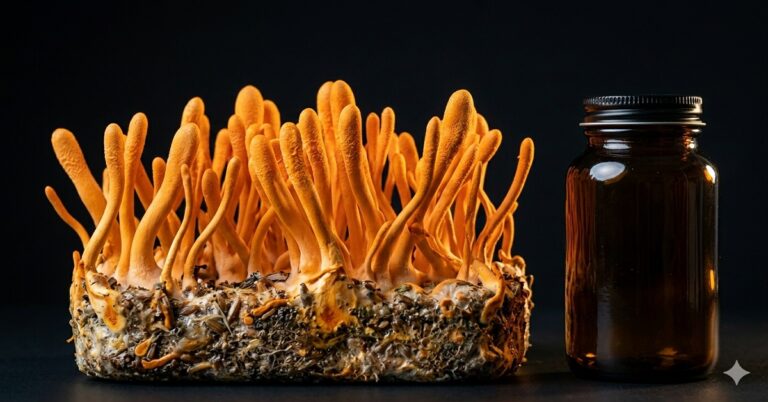
Synergistic with lion’s mane for AM energy — supports ATP synthesis and oxygen utilisation, providing the energy substrate for the cognitive work lion’s mane enables. 750–1,000mg AM.
Reishi (PM)
Stress buffer and sleep quality support. The cognitive benefits of lion’s mane are maximised when sleep quality is high — reishi’s adaptogenic effects on cortisol and sleep architecture complete the stack. 1,000mg PM. See our
reishi guide.
Why this combination is synergistic: Lion’s mane drives neuroplasticity; cordyceps provides cellular energy for that neuroplastic activity; reishi reduces the stress hormones that impair memory consolidation during sleep. Each species addresses a different bottleneck in the cognitive performance chain.
Stack 2 — Immune Resilience
The Immune Defence Stack
Turkey Tail + Reishi + Chaga
Turkey Tail
PSK/PSP primary immune modulation. Toll-like receptor activation and NK cell stimulation. The most clinically researched immune mushroom. 2,000mg daily. Full guide:
turkey tail supplement.
Reishi
Ganoderic acid anti-inflammatory action and T-cell modulation through a different receptor pathway than turkey tail. Provides anti-inflammatory balance to turkey tail’s stimulatory immune effects. 1,000mg daily.
Chaga
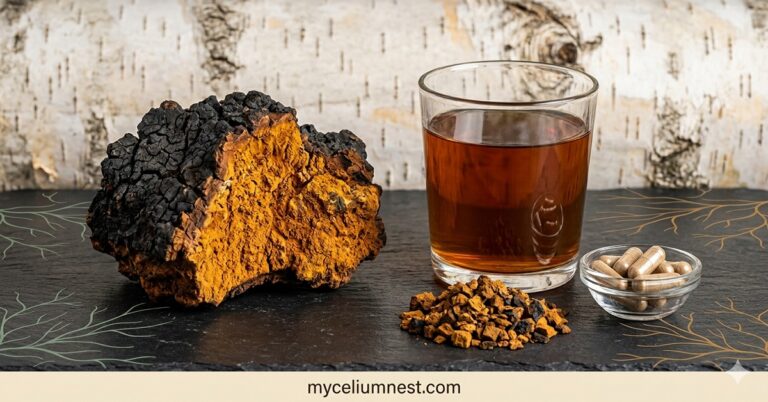
Antioxidant and anti-inflammatory support (betulinic acid from birch). Complementary pathway — reduces oxidative stress that impairs immune function. Use wild-sourced for betulinic acid content. See
chaga guide.
Why this combination works: Turkey tail activates, reishi modulates, chaga protects. These three work on different aspects of immune function — innate immune stimulation (turkey tail), adaptive immune balance (reishi), and oxidative protection (chaga). True synergy through complementary mechanisms.
Stack 3 — Athletic Performance
The Performance & Recovery Stack
Cordyceps + Lion’s Mane + Turkey Tail
Cordyceps (Pre-workout)
Primary performance agent. Adenosine receptor effects support ATP production and oxygen utilisation during exercise. Take 1,000–2,000mg 45 minutes before training.
C. militaris (cultivated) is appropriate here —
C. sinensis not required.
Full guide →
Lion’s Mane (Daily)
Neurorecovery support — exercise creates neurological stress alongside physical stress. Lion’s mane NGF support assists in the cognitive clarity that follows intense training. 1,000mg daily, timing flexible.
Turkey Tail (Post-workout)
Gut microbiome support and immune defence during the post-exercise immunosuppressive window (the “open window” theory — immune function dips for 24–72 hours after intense training). 1,000–2,000mg post-training.
Stack 4 — Stress Resilience & Recovery
The Calm & Recovery Stack
Reishi + Chaga + Turkey Tail
Designed for high-stress periods (deadline seasons, life transitions, high-intensity work phases). This stack prioritises adaptogenic support, sleep quality, and immune resilience against the immunosuppressive effects of chronic stress.
Reishi (1,500mg PM): Primary adaptogen. Modulates cortisol response, improves sleep architecture, reduces psychological stress reactivity. The evidence base is strongest for evening use.
Chaga (500mg AM): Antioxidant support — chronic stress elevates reactive oxygen species. Chaga’s high antioxidant load (highest ORAC score of any measured mushroom) addresses this specifically.
Turkey Tail (1,000mg daily): Immune maintenance — chronic stress significantly suppresses immune function. Turkey tail PSK/PSP maintains immune activity during stress-induced immunosuppression.
Duration: This stack shows most significant effects at 4–8 weeks of consistent daily use. Stress-related supplement benefits are rarely acute — patience is required.
Real Mushrooms — Exclusive Discount
Use our link to save 15%–20% on all extracts. Third-party tested, beta-glucan verified.
Shop & Save 15%–20% →
Timing Protocol: AM vs PM Stacking
| Species |
Optimal Timing |
Why |
| Lion’s Mane | AM — with breakfast | NGF effects support focus and productivity during the day; no stimulant effect but energy-associated timing is optimal |
| Cordyceps | AM or pre-workout | Adenosine effects may mildly stimulate; avoid PM to prevent potential sleep interference |
| Reishi | PM — 1–2 hours before bed | Ganoderic acid effects on cortisol and GABAergic activity are most beneficial during evening wind-down and sleep transition |
| Turkey Tail | Any time — with food | PSK/PSP timing-independent; beta-glucan absorption improved with food |
| Chaga | AM — ideally as tea | Antioxidant effects most useful in the AM before environmental exposure; tea format increases hydration simultaneously |
| Chaga + Reishi | Avoid stacking PM together | Both have mildly sedating potential effects — combining both PM may be too sedating for some individuals |
Budget Stacking: The Right Order of Priority
If budget constrains you to one or two species, the priority order depends entirely on your primary health goal:
Primary Goal: Cognitive Performance
Buy first: Lion’s mane (1,000–3,000mg daily, 8+ weeks consistent use). Everything else is secondary until you have confirmed lion’s mane tolerance and baseline effect. Add reishi second for sleep quality.
Primary Goal: Immune Support
Buy first: Turkey tail — highest research evidence for immune applications. Add reishi second for anti-inflammatory balance. Chaga is the logical third addition.
Primary Goal: Athletic Performance
Buy first: Cordyceps (CS4 strain specifically for adenosine effects). Add lion’s mane second for cognitive recovery. Turkey tail third for immune window protection.
Primary Goal: General Wellness / Daily Maintenance
Buy first: Reishi — the most broadly applicable adaptogen for general stress resilience, sleep, and baseline immune support. Most versatile single species for a general wellness protocol.
What Not to Stack: Recognising Redundancy
The supplement market profits from selling you more species than you need. Some popular combinations are genuinely redundant — they use the same mechanism and provide minimal additive benefit at doubled cost:
Redundant Combinations — Save Your Money
Turkey Tail + Chaga at full dose of both: Both are primarily beta-glucan immune modulators. At research-equivalent doses of both simultaneously, you are effectively doubling the beta-glucan load on one pathway. Consider halving the dose of each rather than running both at full dose.
Two different lion’s mane products simultaneously: Taking Real Mushrooms lion’s mane AND Four Sigmatic lion’s mane coffee means you’re paying premium for two delivery formats of the same compound. Choose one delivery format and increase the dose if needed.
Reishi + Ashwagandha at high doses: Both modulate the HPA axis (cortisol response). Both are effective alone. Together at high dose, the combined sedating potential may be more than intended and the mechanisms overlap meaningfully.
The 3-Question COA Checklist: What to Ask Every Supplement Brand
A Certificate of Analysis (COA) is a lab report from an independent testing facility confirming a supplement contains what its label claims. Reputable brands publish these. Brands that cut corners avoid them. Before buying any mushroom supplement from any brand at any price point, ask these three questions:
1
“Can I see the COA for this specific batch?”
Not a COA from last year. Not a sample COA. The Certificate of Analysis for the specific lot number on the bottle you are considering purchasing. Batch-specific COAs prove that the individual product you’re buying was tested — not that a representative sample from a different production run was tested.
✓ Pass: “Here is the COA for lot #MN240915 — all batches published on our website with lot number lookup.”
✗ Fail: “We use high-quality third-party testing.” (No link. No lot number. No specific document.)
2
“What is the beta-glucan percentage — specifically, not just polysaccharides?”
Total polysaccharide content includes starch, which is not medicinally active. Beta-glucans are the specific bioactive compounds in mushrooms — the ones studied in clinical research. A brand reporting “40% polysaccharides” from mycelium grown on grain may be reporting starch content. A brand reporting “32% beta-glucans” from fruiting body is reporting actual mushroom compound content.
✓ Pass: COA specifies “Beta-glucan content: 32.5%” as a distinct line item from total polysaccharides.
✗ Fail: “40% polysaccharide content” with no breakdown between beta-glucans and alpha-glucans (starch).
3
“Which independent lab performed the testing, and can I verify this?”
Third-party testing means an accredited laboratory with no commercial relationship to the brand performed the analysis. The lab name should be on the COA document itself, with an accreditation number. “Tested in our facility” or “tested by our quality team” is not third-party testing. Search the lab name independently to verify it exists and is accredited.
✓ Pass: COA shows “Tested by: Eurofins | Anatek Labs | NSF” with accreditation number visible on the document.
✗ Fail: “Quality tested” with no lab name. Or internal quality department listed as testing entity.
The rule: Any brand that passes all three questions is likely a trustworthy supplier. Any brand that fails any one of them should be reconsidered regardless of price, packaging, or influencer endorsement. The brands recommended in this guide — Real Mushrooms, Freshcap — pass all three consistently. Ask these questions of any new brand before you spend money.
Product Recommendations Per Stack
For all four stacks, the brands that meet the quality standards (fruiting body, published beta-glucan, third-party COA) are consistent: Real Mushrooms for standalone species and verified potency, Freshcap Thrive 6 for those who prefer a multi-species capsule with documented quality. The complete brand comparison is in our Four Sigmatic vs Real Mushrooms guide. For the quality standards to look for in any brand, see our fruiting body vs mycelium analysis.
Frequently Asked Questions
How long before I feel effects from a mushroom stack?
Most mushroom supplement effects are cumulative and not immediately noticeable. Lion’s mane typically shows cognitive effects most clearly after 4–8 weeks of daily use. Turkey tail immune effects develop over 3–6 weeks. Cordyceps performance effects are among the fastest — some users notice improved endurance within 2–3 weeks. Reishi sleep quality effects can be noticeable within 1–2 weeks for some individuals. Set a consistent protocol for 8 weeks minimum before evaluating whether the stack is working.
Should I cycle mushroom supplements or take them continuously?
The research basis for cycling functional mushrooms is weak — most clinical trials ran supplements continuously without cycling breaks. Some practitioners recommend periodic breaks (e.g., 5 days on, 2 days off; or 3 months on, 1 month off) to prevent tolerance development, but this is not well-supported by human trials. The most practical approach is continuous use for goal-specific stacks during periods of high demand, with reduced or simplified protocols during lower-demand periods. Reishi is the most commonly recommended for cycling due to its potent hormonal effects in high doses.
Individual Species Deep Dives
This article contains Amazon affiliate links. See our full disclosure.