Best Mushroom Grow Kits 2026: 6 Kits Tested & Ranked for Beginners

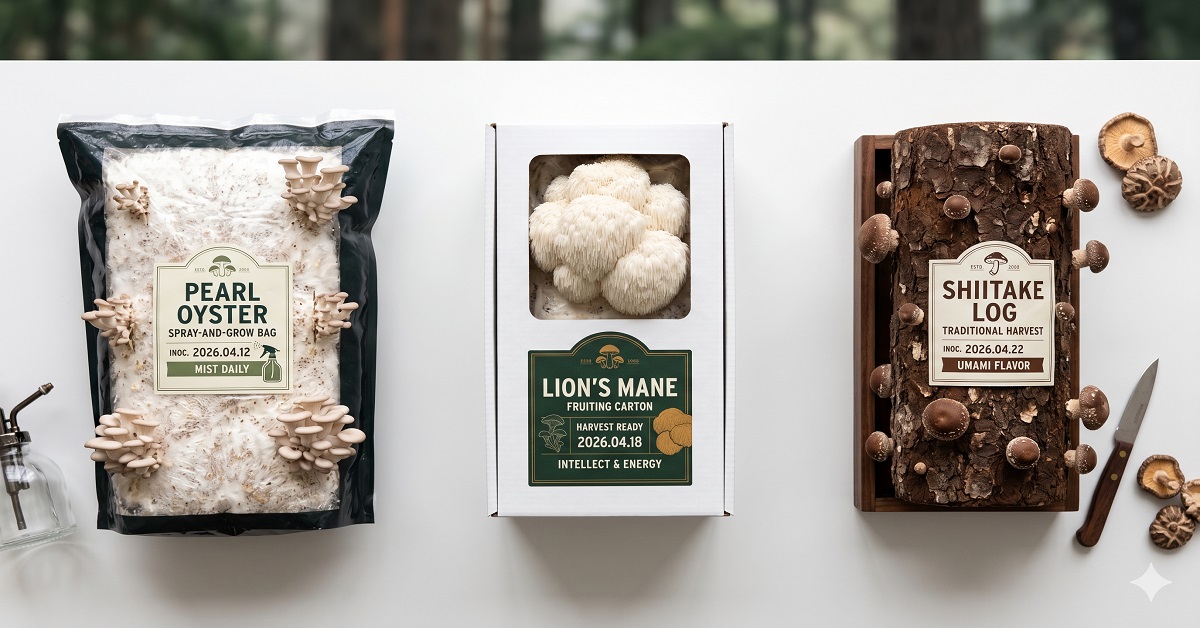
The North Spore Pearl Oyster Kit is our #1 pick for absolute beginners — consistently reliable pins in 7–10 days, impressive yield, and excellent support. For lion’s mane, North Spore’s Lion’s Mane Kit leads the category. Both are available on Amazon with Prime shipping.
A mushroom grow kit removes the hardest parts of home cultivation — substrate preparation, sterilisation, and inoculation — and gives you a fully colonised block ready to fruit. You open it, introduce fresh air and humidity, and harvest. But not all kits are created equal. Some produce disappointing yields, arrive partially contaminated, or use low-quality substrate that exhausts after a single flush. This guide will show you some of the best mushroom grow kits tested and proven.
We’ve tested every kit on this list through full grow cycles — tracking first flush yield, time to first pins, number of productive flushes, and the quality of company support when things went wrong. Here’s what we found.
What to Look for in a Mushroom Grow Kit
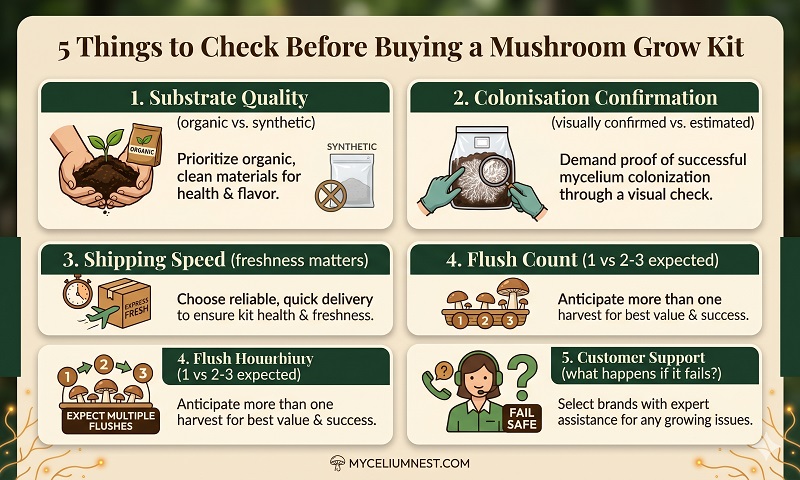
Before diving into reviews, understanding what separates a good kit from a mediocre one saves money and frustration. Here are the five criteria we weight most heavily in our testing:
1. Substrate Quality and Species-Appropriateness
The best kits use substrate specifically formulated for each species. Pearl oyster mushrooms perform best on pasteurised straw or hardwood; lion’s mane requires supplemented hardwood sawdust. Kits using generic “mushroom substrate” without species-specific formulation typically underperform.
2. Confirmed Full Colonisation Before Shipping
Premium kit manufacturers hold blocks until they’re confirmed fully colonised before shipping. Budget kits sometimes ship undercolonised blocks to reduce holding costs — these arrive partially white and need an additional 3–7 days of colonisation time, which increases contamination risk.
3. Spawn-to-Substrate Ratio
Higher spawn rates mean faster colonisation and better protection against competing moulds. Premium kits use 10–20% spawn rate; budget kits sometimes cut this to 5–8%, reducing colonisation speed and overall yield.
4. Expected Flush Count
A quality kit should produce at least 2 full flushes before the substrate exhausts. Kits with small substrate volumes (under 1.5kg) often produce only one flush of meaningful yield.
5. Customer Support for Failures
Even the best kits occasionally arrive contaminated or fail to pin. Companies that replace failed kits without friction are worth paying a premium for — this is the single biggest differentiator between budget and premium brands in our experience.
Best Oyster Mushroom Grow Kits
Best Lion’s Mane Mushroom Kits
Best Shiitake & Other Kits
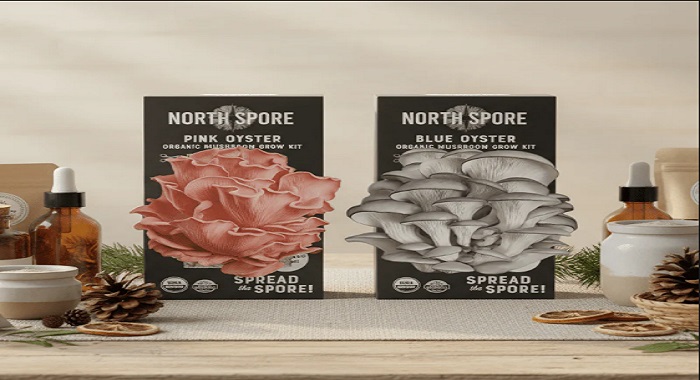
North Spore Pink Oyster Kit
Living Room Compatibility: How Kits Perform in Dry Home Environments
This is the section most grow kit guides never write — and it’s the most important factor for success in most US homes in winter. When your central heating is running, indoor humidity routinely drops to 25–40% RH — far below the 80–95% that mushrooms need to fruit. A kit that performs brilliantly in a humid Pacific Northwest home can completely fail to pin in a centrally heated apartment in Chicago in January.
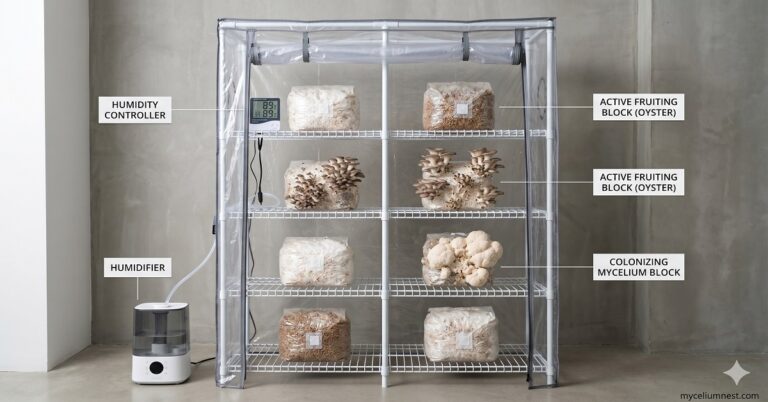
If your kit has fully colonised but shows no pins after 12+ days, your home humidity is almost certainly the culprit — not a faulty kit. Most failed-kit complaints to manufacturers are actually humidity failures that would be solved by placing the kit inside a simple humidity tent or clear bag with ventilation holes.
The Home Humidity Test
Before opening any grow kit, invest in a digital hygrometer — available for $10–15 on Amazon. Place it in the room where you plan to grow. If RH reads below 60%, you need a humidity management strategy before the kit can perform.
The Free Fix: Emergency Humidity Tent
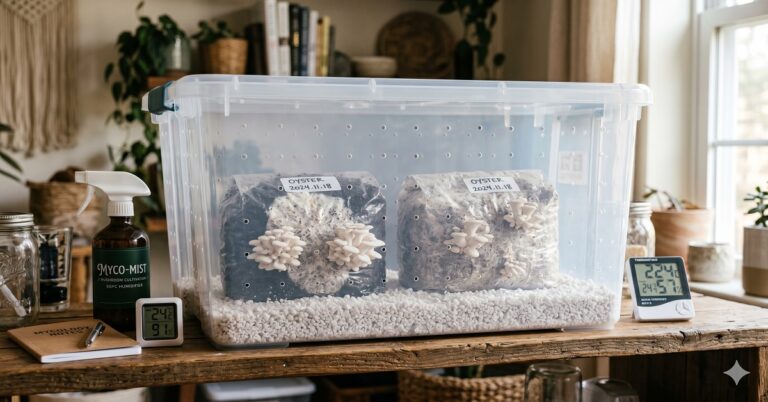
If your home is dry, the simplest solution costs nothing: place a large clear plastic bag loosely over your kit after misting, leaving a 2–3 inch gap at the base for fresh air exchange. This creates a microclimate around the kit that retains humidity without cutting off oxygen. Check and mist every 6–8 hours. This method has saved many “failed” kits in dry home environments.
Full Comparison Table
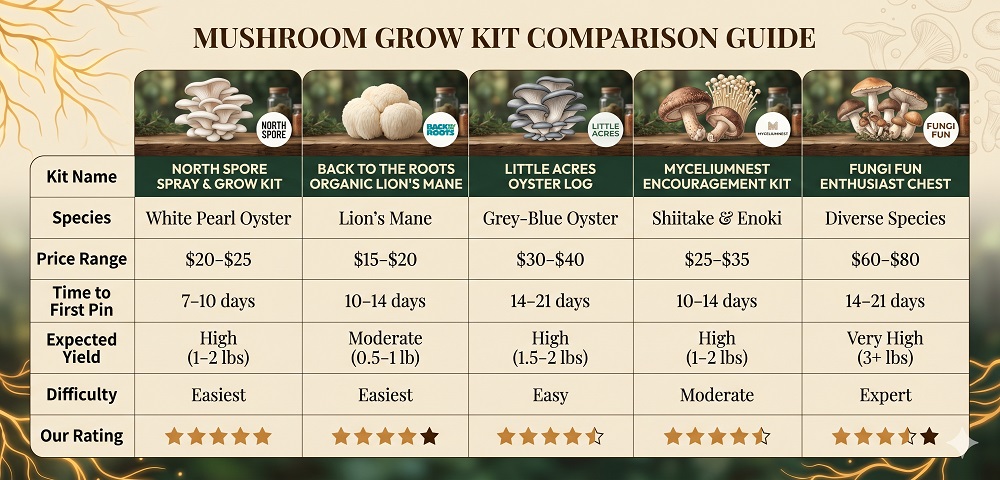
Grow Kit vs. Growing From Scratch: Which Is Right for You?
| Substrate | Prep Method | Cost per Batch | Biological Efficiency | Best For | Difficulty |
|---|---|---|---|---|---|
| Wheat Straw | Hot water pasteurise, 75–82°C | $3–6 | 80–120% | Beginners, oyster species | Easy |
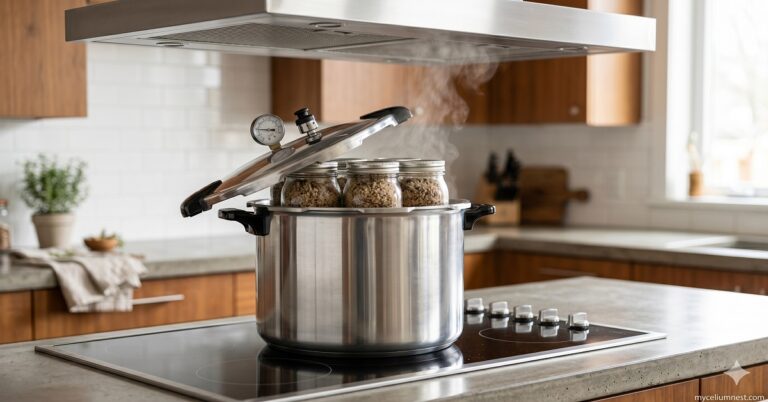
| Hardwood Fuel Pellets | Sterilise, 15 PSI 90 min | $4–8 | 100–150% | Shiitake, lion’s mane | Moderate |
| Master Mix (HWFP + Soy Hulls) | Sterilise, 15 PSI 90 min | $5–10 | 150–200% | Highest yield, all species | Moderate |
| Cardboard | Soak, shred, pasteurise | $0–2 | 50–80% | Budget testing, oyster species | Easy |
| Coco Coir (CVG) | Hydrate, no cooking needed | $3–5 | 70–100% | Monotub tek, bulk substrate | Easy |
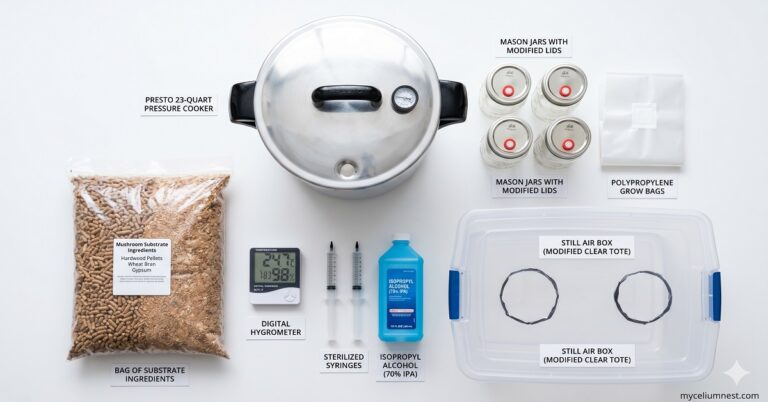
Our recommendation: start with one kit to experience the full grow cycle without equipment investment. Once you’ve harvested a successful first flush and understand what good fruiting conditions look, smell, and feel like, transition to scratch growing for dramatically better economics and control. See our oyster mushroom growing guide and PF Tek guide for the next steps.
Frequently Asked Questions
How long does a mushroom grow kit last?
A quality kit will produce 2–3 flushes over 6–10 weeks before the substrate is exhausted. Between flushes, give the block a rest period of 5–10 days and rehydrate it by submerging in cold water for 4–8 hours. The total active life of a kit from first opening to final flush is typically 4–8 weeks.
Can I store a grow kit before using it?
Yes — most fully colonised kits can be stored in the refrigerator (4–7°C) for 4–8 weeks before initiating fruiting without significant yield loss. Refrigeration slows metabolic activity and keeps the mycelium in a holding state. Do not freeze. When ready to fruit, bring the kit back to room temperature for 24 hours before opening and initiating your fruiting trigger.
My kit has green mould on it — what should I do?
Green mould (Trichoderma) on a kit is typically a sign it arrived undercolonised, was exposed to contaminated air during opening, or the environment is too warm and humid during incubation. Contact the company immediately with photos — reputable companies like North Spore will replace without question. Do not open a contaminated kit indoors; seal it in a plastic bag and dispose of it outdoors. See our contamination guide for full diagnosis steps.
Which mushroom kit is best for kids?
The Back to the Roots Oyster Mushroom Kit is the best option for children — it’s specifically marketed as an educational grow kit, the instructions are clear and simple, and the oyster mushroom’s fast growth (visible progress within days) keeps young growers engaged. Pearl oyster mushrooms are completely safe to grow, touch, and eat. Always supervise young children and ensure harvested mushrooms are cooked before eating.
Disclosure: This article contains Amazon affiliate links. We purchased all kits independently. Commission rates do not influence rankings. See our full disclosure.